News

Where hypotheses become headlines: Featured coverage of the breakthroughs—and the people—driving our research forward

For media inquiries, email us: [email protected]

Featured News
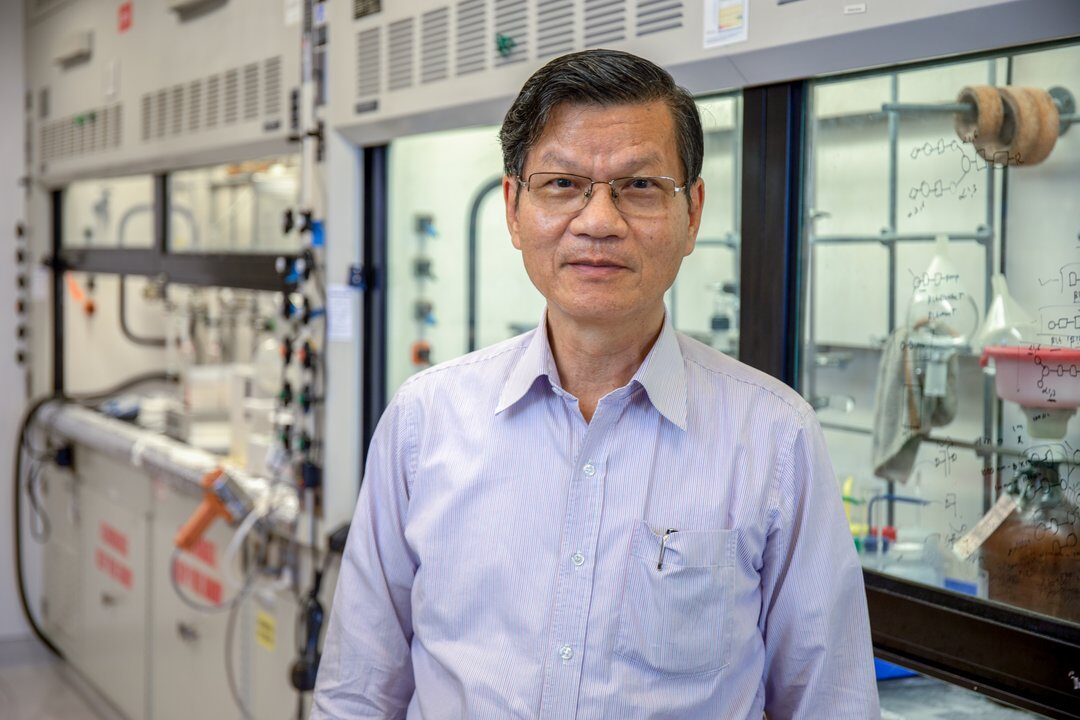
Chi-Huey Wong.
News

Scripps Research professor Chi-Huey Wong to receive ACS Alfred Bader Award

Dissociation of the four-part TTR protein. The energy landscape shows stable states toward the bottom and unstable transition states toward the top. In the canonical pathway (red), the tetramer (T) dissociates via a native-like, compact transition state (‡1) into transient dimer intermediates (D) before full dissociation into monomers (M). In the newly discovered alternative pathway (blue), the tetramer dissociates through a more expanded transition state (‡2) directly into monomers. Credit: Jan-Hannes Schäfer, Scripps Research
News

Scientists discover a new way that a disease-linked protein comes apart

Filter by:
  • Study evaluates potential of online consultation platform for physicians
    News

    Study evaluates potential of online consultation platform for physicians

    Researchers investigate the potential of such platforms for leveraging expert medical knowledge for patient care around the world.

  • News

    Noted mathematician Benedict Gross joins Scripps Research Board of Directors

    Gross is widely recognized for his contributions to number theory and was named a MacArthur Fellow in 1986.

  • Scripps Research scientist Ben Cravatt receives Outstanding Investigator Award from National Cancer Institute
    News

    Scripps Research scientist Ben Cravatt receives Outstanding Investigator Award from National Cancer Institute

    "The NCI expects big things from us, and we embrace that challenge," Cravatt says.

  • Newly discovered long noncoding RNA plays critical role in brain growth and signaling
    News

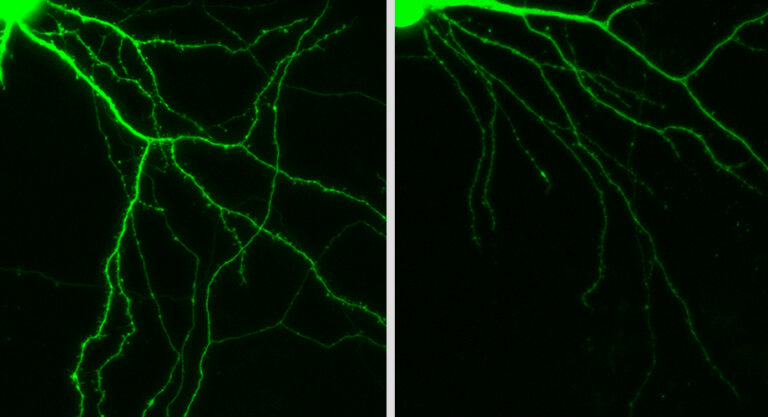
    Newly discovered long noncoding RNA plays critical role in brain growth and signaling

    The results suggest that healthy growth and development of brain cells and brain circuits depends not just upon specific proteins but also upon specific long noncoding RNAs

  • News

    ‘Double agent’ in the immune system may make us vulnerable to bacterial infections

    “I call the molecule a ‘wolf in sheep’s clothing,’ ” says Namir Shaabani, PhD.

  • ReFRAME drug repurposing collection yields hope for treating diseases that kill millions worldwide
    News

    ReFRAME drug repurposing collection yields hope for treating diseases that kill millions worldwide

    Calibr scientists build and deploy new ReFRAME drug collection to find potential therapies against HIV, tuberculosis and parasites that causes severe illness in children.

  • Professor Wendy Havran named 2018 Outstanding Mentor
    News

    Professor Wendy Havran named 2018 Outstanding Mentor

    The recognition reflects Havran’s skills in encouraging trainees to find their place in the research world

  • Michael Erb receives NIH Director’s Early Independence Award
    News

    Michael Erb receives NIH Director’s Early Independence Award

    The award will support new research into how to design drugs to target cancer cells.

  • With new NIH support, Florida scientists to develop faster, cheaper way to screen potential drugs
    News

    With new NIH support, Florida scientists to develop faster, cheaper way to screen potential drugs

    Thomas Kodadek, PhD, will lead the project to make drug development more efficient and less expensive.

  • Former Scripps Research postdoctoral associate James P. Allison wins the 2018 Nobel Prize in Physiology or Medicine
    News

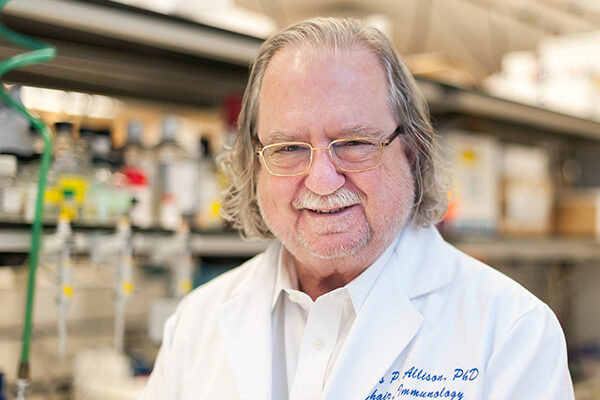
    Former Scripps Research postdoctoral associate James P. Allison wins the 2018 Nobel Prize in Physiology or Medicine

    In addition to his legacy in advancing cancer therapeutics, Scripps Research scientists know him as a determined scientist and skilled mentor.

  • What you need to know about the new ‘hoppy beer’ study
    News

    What you need to know about the new ‘hoppy beer’ study

    A molecule in hoppy beers, like IPAs, appears to fuel weight loss and have benefits for type 2 diabetes in mice. But how?

  • Potential drugs for ALS, Alzheimer’s and Parkinson’s garner $3 million grant
    News

    Potential drugs for ALS, Alzheimer’s and Parkinson’s garner $3 million grant

    A new four-year, $3 million grant will enable scientists to advance compounds that may protect neurons in diseases including Parkinson’s, ALS, Alzheimer’s and Creutzfeldt-Jakob disease.

  • Opioid users could benefit from meth-relapse prevention strategy, study finds
    News

    Opioid users could benefit from meth-relapse prevention strategy, study finds

    “This would be the first compound to directly target the motivational power of craving triggers.”

  • News

    Scientists design new metabolic technology to open scientific data for everyone

    "In an age where scientific results are being constantly questioned, open data has become an essential part the discovery process."

  • Rare antibodies show scientists how to neutralize the many types of Ebola
    News

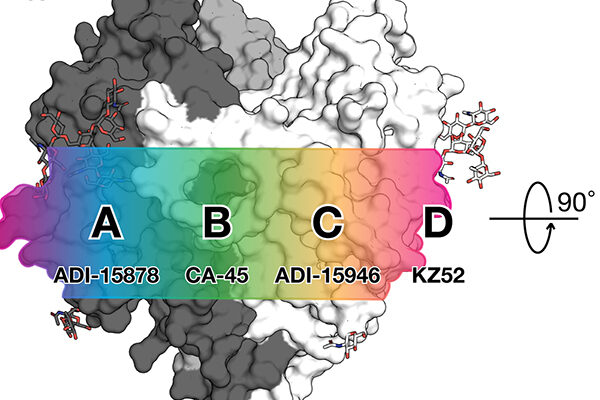
    Rare antibodies show scientists how to neutralize the many types of Ebola

    “This is like understanding how to kill five or six birds with one stone,” says Erica Ollmann Saphire, PhD, professor at Scripps Research.

  • Scientists test new cancer vaccine against melanoma
    News

    Scientists test new cancer vaccine against melanoma

    The findings suggest these vaccines could increase chances of recovery in cases where a drug therapy alone is not working.

  • Transforming pregnancy research with a smartphone app
    News

    Transforming pregnancy research with a smartphone app

    "Pregnant women are curious about their health. They want to understand what is normal for women like them..."

  • Want to know which mutations are really risky? New Scripps Research method may help
    News

    Want to know which mutations are really risky? New Scripps Research method may help

    New Scripps Research method may help.

  • World-leading scientific research institute debuts new name and look
    News

    World-leading scientific research institute debuts new name and look

    Scripps Research is Science Changing Life

  • New urine dipstick test detects cause of disease that blinds millions
    News

    New urine dipstick test detects cause of disease that blinds millions

    The new test could give public health officials and doctors critical information for tracking river blindness outbreaks and treating current infections.

  • Chemist Ryan Shenvi wins Tetrahedron Young Investigator Award
    News

    Chemist Ryan Shenvi wins Tetrahedron Young Investigator Award

    "I'm surprised and honored to be listed among the distinguished awardees," says Shenvi.

  • Professor John Yates receives international honor
    News

    Professor John Yates receives international honor

    Yates’s research in mass spectrometry has been fundamental in establishing the field of large-scale proteomics, a discipline that has shed light on diseases such as malaria and anthrax.

  • Quest for safer pain medications garners $3.6 million, five-year grant
    News

    Quest for safer pain medications garners $3.6 million, five-year grant

    With new funding, researchers aim to control pain without the risk of addiction.

  • How a ‘jellyfish’-shaped structure relieves pressure in your cells
    News

    How a ‘jellyfish’-shaped structure relieves pressure in your cells

    Scientists at Scripps Research have solved the structure of a key protein that senses when our cells swell.

Groundbreaking Science.
Life-changing Medicine.