Potential drugs for ALS, Alzheimer’s and Parkinson’s garner $3 million grant
September 18, 2018
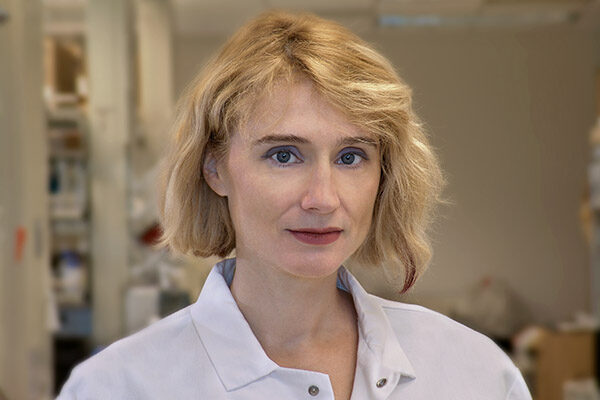
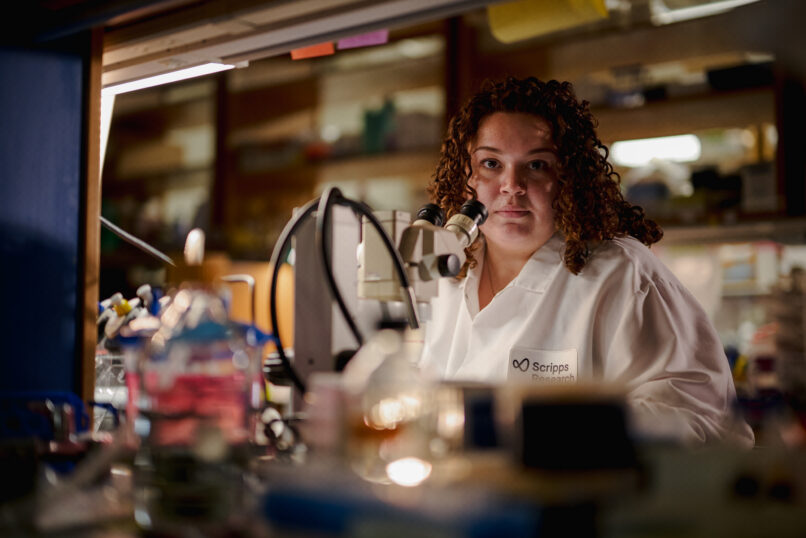
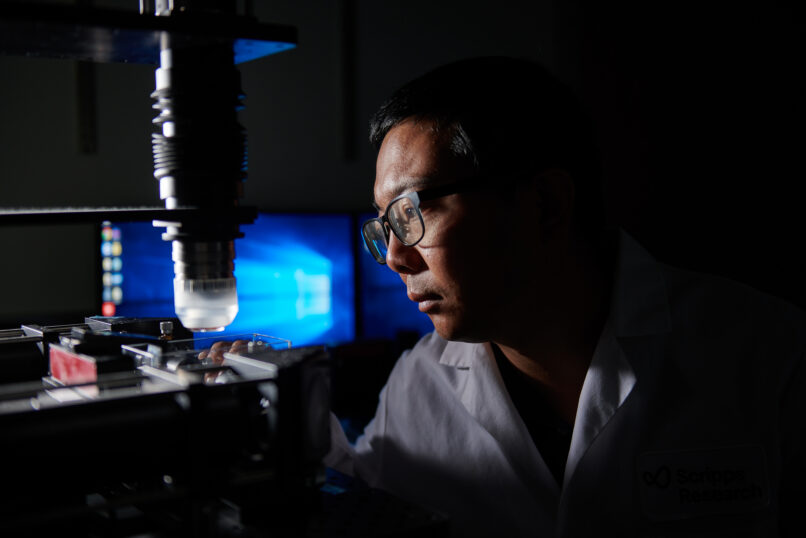
Professor Corinne Lasmézas will co-lead the new study with Scripps Research's Thomas Bannister.
A new four-year, $3 million grant will enable Scripps Research scientists to advance compounds that may protect neurons in diseases caused by toxic protein accumulation, including Parkinson’s, ALS, Alzheimer’s and Creutzfeldt-Jakob disease.
Those diseases appear to share a common mechanism, the clumping of improperly formed proteins, which leads to destruction of nerve cells’ energy supply—and cell death. ALS, also known as Lou Gehrig’s, is one such disease. The toxic protein accumulation in ALS leads to the death of the critical neurons that link the brain to muscles. In an animal model of ALS, the compounds developed at Scripps Research by professors Corinne Lasmézas, PhD, Thomas Bannister, PhD, and colleagues, improved the animals’ strength and ability to move.
“In 2015, we discovered this new mechanism in these diseases, so we set up a drug discovery strategy to turn it into much-needed treatments,” Lasmézas says. “We are now optimizing promising compounds.”
Lasmézas, a specialist in neurodegenerative diseases, and Bannister, a medicinal chemist, will use the award from the National Institute of Neurological Disorders and Stroke to refine and optimize the compounds, which were identified with the help of the Scripps Research robotic high-throughput molecular screening center. Their quest now is to move those compounds toward the clinic.
To accomplish this, the scientists are studying nicotinamide adenine dinucleotide, or NAD, a metabolite necessary for energy production in cells, as well as for other important cellular processes. The compounds developed by Lasmézas, Bannister and colleagues protect neurons by restoring healthy NAD metabolism in the cells, Lasmézas says.
“We are going to optimize the compounds to make them more efficient and brain-penetrant,” Lasmézas says. “Ultimately, they will become drugs able to treat these devastating neurodegenerative diseases.”
The grant number is 1R01NS103195-01A1.
Calibr-Skaggs advances CLF065, a regenerative GLP-2 therapy, into two Phase 2 IBD studies
CLF065, a long-acting, once-weekly GLP-2 receptor agonist, advances in two inflammatory bowel disease indications. The studies aim to bring a regenerative treatment option to patients living with IBD, who currently have few therapies that repair the damaged intestinal lining at the root of their disease.