NIH awards $7 million to study what makes immune responses last

Two grants from the National Institutes of Health will support Scripps Research work about why certain protective plasma cells persist while others die—insight that could inform longer-lasting vaccine protection.

November 11, 2026

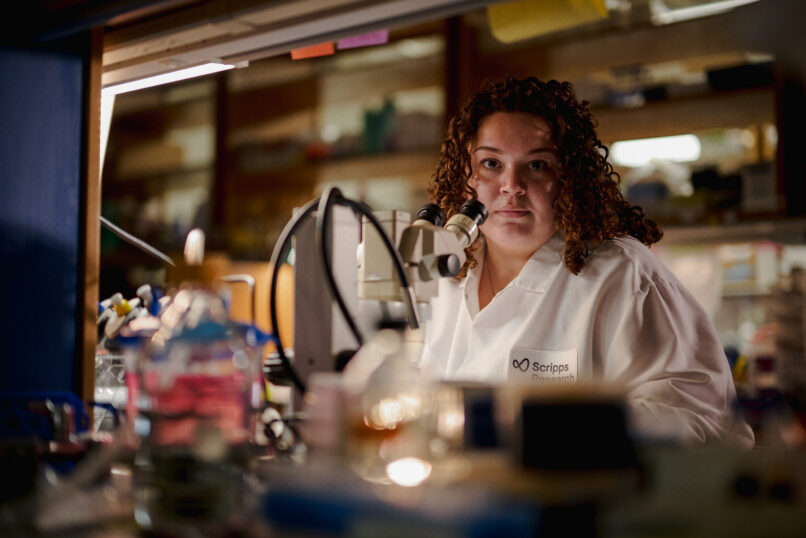
Renan V.H. de Carvalho

Renan V.H. de Carvalho Credit: Scripps Research


LA JOLLA, CA—Central to many immune responses are antibodies, which identify foreign substances and help remove them from the body. The immune cells that produce them are called plasma cells, and they can mature into long-lived plasma cells that persist and provide protection for years or even decades. But not all vaccines efficiently produce long-lived plasma cells, which can mean their protection fades over time.

Now, two grants from the National Institute of Allergy and Infectious Diseases (NIAID), part of the National Institutes of Health—a $4.5 million R01 and a $2.7 million DP2, both spanning five years—will support Assistant Professor Renan de Carvalho and his team at Scripps Research in advancing understanding of why some protective plasma cells persist over time while others die out. The de Carvalho lab will use innovative preclinical models that unlock the ability to probe plasma cell function and fate, potentially allowing them to uncover how plasma cells become long-lived and explore their functions beyond antibody production in multiple tissues and sites. Insights from the work could eventually help design vaccines to promote longer lasting protection.

“For some vaccines, like the one for measles, childhood vaccination can provide lifelong protection. But for others, like the tetanus, diphtheria and pertussis (Tdap) vaccine, booster doses may be needed. We don’t really understand how to explain these discrepancies,” says de Carvalho. “These two grants focus on the question: What are the factors that make plasma cells last and effectively perform their functions?”

The NIH awards R01 grants to support specific, independent research projects and DP2 grants, also called Director’s New Innovator Awards, to support early-career scientists pursuing high-risk, high-reward research.

Despite the importance of long-lived plasma cells for immune protection, a lack of efficient preclinical models has made it difficult for scientists to determine what factors influence the “decision” to become long-lived. To tackle this problem, de Carvalho’s lab developed a mouse model that enables tracking of plasma cells across their lifespan—an approach that holds promise for answering these questions with high resolution.

With support from the R01, de Carvalho plans to use the new model to “timestamp” plasma cells produced during infection or vaccination in mucosal sites, then characterize those cells throughout their lifetime using various high-throughput sequencing techniques. One of these techniques, called spatial transcriptomics (which maps gene activity to specific locations in tissue), will be conducted by collaborator Miguel Reina-Campos, an assistant professor at the La Jolla Institute for Immunology. Using the detailed plasma cell data from these approaches, the team hopes to identify specific signals that instruct their longevity.

The DP2 award will support additional research exploring plasma cell roles beyond antibody production, such as producing immune molecules like cytokines and mediators that help maintain balance in different body tissues.

“Many available vaccines rely on the induction of long-lived plasma cells for durable protection. For malaria, HIV and dengue, a big challenge is that we can induce these cells, but they don’t last,” says de Carvalho. “We want to take a step back and look at their biology to see what dictates their ability to become long-lived. And if we learn these rules, we may be able to overcome these vaccination barriers.”

Science Changing Life.
Life-changing Medicine.