NIH awards $16.4 million to establish multi-institution hepatitis C vaccine development center
October 27, 2026
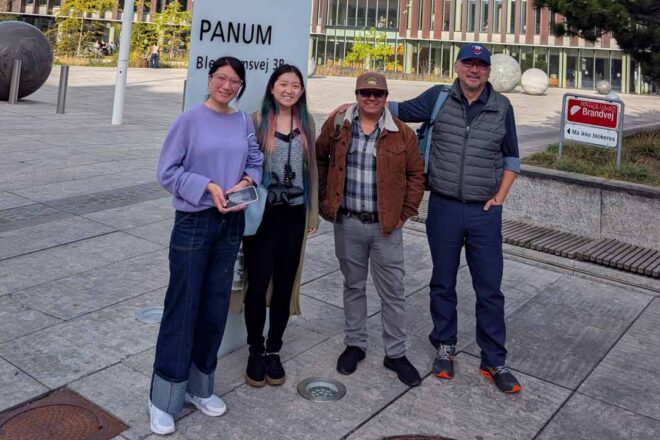
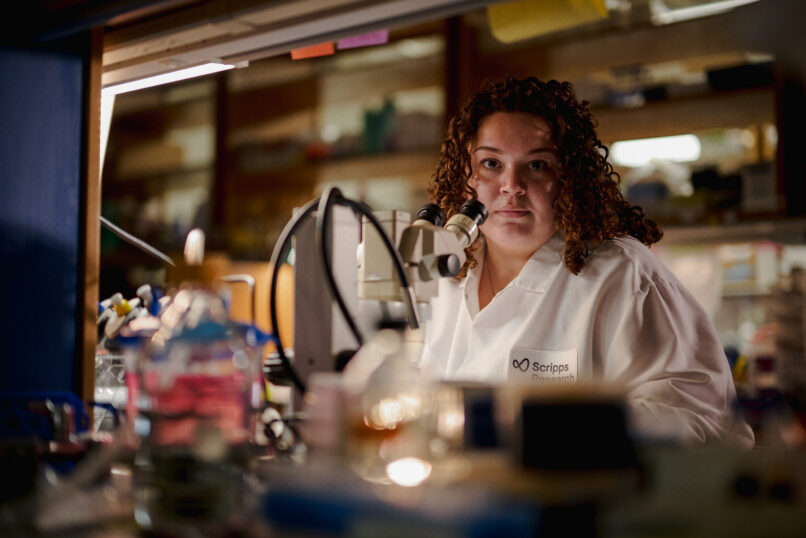
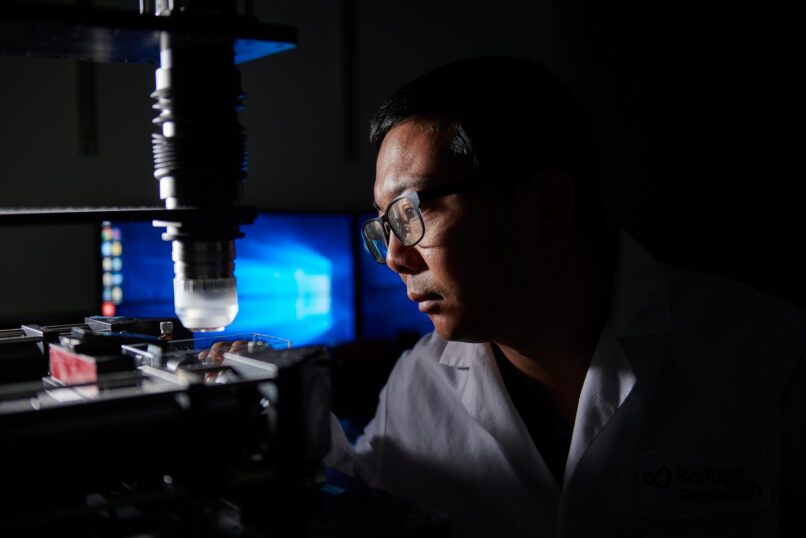
Members of the Law and Park labs during the recent International Symposium on Hepatitis C Virus, Flaviviruses and Related Viruses in Copenhagen. From left: Fang Chen, Yukiye Koide, Joseph Cruz, and Mansun Law. Credit: Scripps Research
LA JOLLA, CA—The shifty hepatitis C virus (HCV) has a knack for outmaneuvering the immune system. Its secret is an especially high mutation rate, which has generated an abundance of viral variants with extreme genetic diversity. This striking diversity has so far impeded successful vaccine development because a broadly effective vaccine needs to target viral regions that remain relatively stable across variants.
Now, the National Institutes of Health (NIH) has awarded $16.4 million over five years to establish a new U19 “Cooperative Center for Rational HCV Vaccine Design & Evaluation,” which will bring together scientists across Scripps Research, the National Institute of Diabetes and Digestive and Kidney Diseases (NIDDK), the University of Pennsylvania, and the Oregon National Primate Research Center (ONPRC) to uncover how the virus escapes immune responses and create vaccine candidates designed to trigger strong antibody and T cell immune protection.
“There are certain human viral diseases that can be eradicated if we plan for it, and I think that could happen for hepatitis C,” says project leader Mansun Law, a professor at Scripps Research. “This virus is very strictly human, and that means if there’s a vaccine to prevent new infection, and we have the means to contain the last bit of virus, there’s a chance we could eradicate it like was done in smallpox.”
The new center is funded through the NIH’s U19 Cooperative Agreements research program, which aims to unify multiple interdisciplinary projects around a specific objective—in this case, to develop a broadly effective HCV vaccine.
Around 50 million people worldwide are living with chronic HCV infection, which can lead to severe diseases including liver cirrhosis (in which damaging scar tissue builds up and impairs liver function), liver cancer and autoimmune disorders. While antiviral drugs successfully cure most people with the infection, gaps in diagnosis, reinfection and ongoing transmission highlight the persisting need for a preventative vaccine.
To develop a vaccine that effectively protects against diverse HCV variants, scientists seek to target conserved regions that vary less across viral variants. Research over the last decade points to a few specific sites recognized by antibodies or T cells.
“This funding will allow us to take a more detailed and systematic approach, recruiting experts to focus on both the antibody and T cell immune components,” says Law. “Then, we will combine all that knowledge to generate one vaccine candidate that can stimulate both immune arms and hopefully protect people against hepatitis C virus.”
The program is organized around two central projects. The first will focus on developing a comprehensive understanding of the HCV structures recognized by antibodies and how these structures are displayed on the vaccine candidates designed in the second project. The team, which includes Law, Professor Ian Wilson, Institute Investigator Robyn Stanfield and Assistant Professor Donghyun Raphael Park, all at Scripps Research, will determine these structures using advanced biophysical and structural methods such as X-ray crystallography, cryo-electron microscopy (cryo-EM) and cryo-electron tomography (cryo-ET).
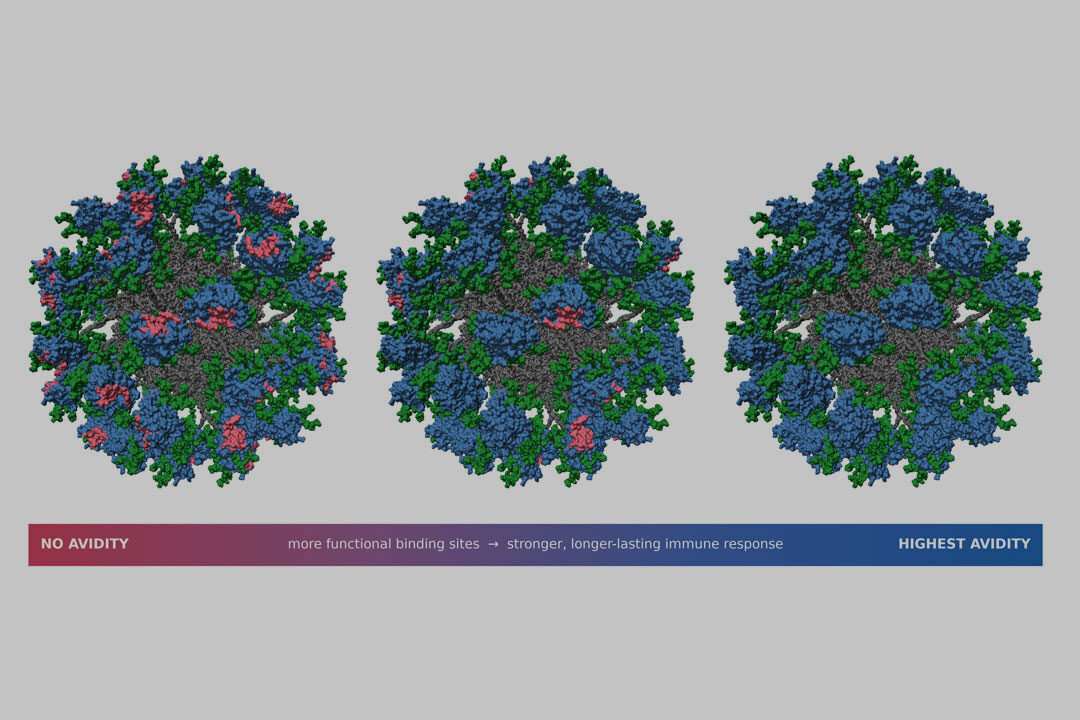
“We want to know what specific proteins look like on the surface of HCV, and how they interact with antibodies,” says Park, who will lead the center’s cryo-EM/ET experiments. “While we can always isolate these proteins and look at their behavior, how the antibodies interact with them on a real virus is a different story.”
The second project will generate vaccine prototypes using various platform technologies, developed by Law and Professor Jiang Zhu at Scripps Research; Jake Liang, an NIH Distinguished Investigator and the chief of the Liver Diseases Branch at the NIDDK; and Drew Weissman, the Roberts Family Professor in Vaccine Research, and Norbert Pardi, an associate professor of Microbiology, both at the Perelman School of Medicine at the University of Pennsylvania. Each prototype will be optimized for its ability to generate strong antibody and T cell responses, then compared head-to-head to identify the most promising designs.
“We have a specific panel of hepatitis C viruses that we’ll use for neutralization so that all of the vaccine candidates are evaluated against the same viruses,” says Christopher Cottrell, an institute investigator at Scripps Research who will lead the center’s Virology Immunology Data Core. “We’ll also have standardized peptide libraries that we’ll use to look for T cell responses.”
In addition to Cottrell, Scripps Research professors Andrew Su, Chunlei Wu and Law will be part of the team working on analyzing the immune responses to the vaccine candidates with standardized methods. Preclinical testing of the top designs will be conducted by the Law lab and by Associate Professor Benjamin Burwitz’s lab at the ONPRC.
“This grant will also support the generation of a web-based HCV immune response database,” says Law. “In addition to helping us optimize our designs, this resource will be made available to the broader HCV vaccine development community.”
The overall goal of the center is twofold: first, to deliver new mechanistic insights on HCV biology and its vulnerabilities, and second, to provide optimized vaccine prototypes that are ready for Good Manufacturing Practice (GMP) translation, which is an important step before clinical trials.