Scripps Research scientist to receive $2.76 million NIAID New Innovators Award

The five-year award will support fundamental research on immune cell biology, which aims to advance therapeutic strategies that harness T cell responses to prevent and treat infectious diseases.

August 19, 2026

Tiantian Liu

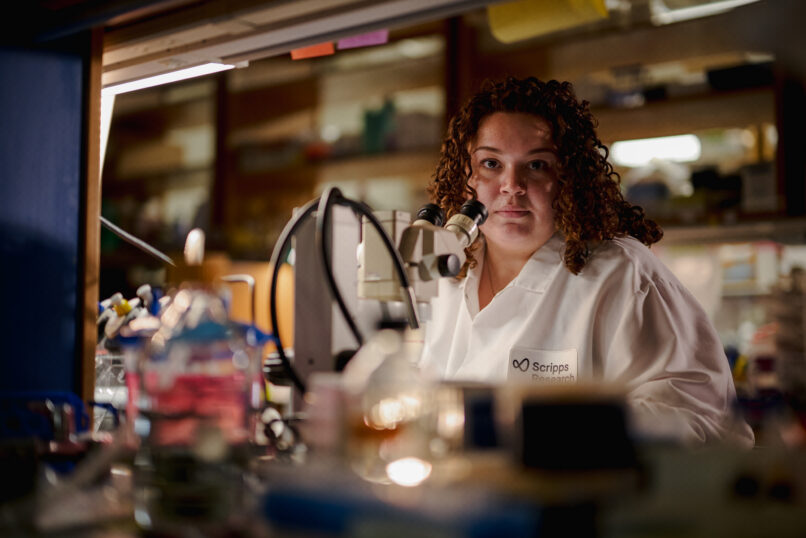
Tiantian Liu Credit: Scripps Research


LA JOLLA, CA—Scripps Research assistant professor Tiantian Liu has received a five-year NIAID DP2 award from the National Institute of Allergy and Infectious Diseases, part of the National Institutes of Health (NIH), to advance basic understanding of immune processes that could aid the design of next-generation immunotherapies. Scripps Research received $552,000 in first-year funding and is expected to receive up to $2.76 million over five years.

“I’m very honored to receive this award from the NIAID, which will support my lab’s work to understand the fundamental biology of T cell activation mediated by antigen-presenting cells,” says Liu. “This is a major branch of the immune response that plays an important role in protecting us from infectious diseases.”

The NIAID New Innovators Award, also called the NIAID DP2 award, was established in 2019 to support creative, novel and high-impact research from promising early-stage investigators. Those selected have demonstrated exceptional creativity by proposing original and insightful research concepts with the potential to produce a major impact, test scientific paradigms or advance key concepts on broad, important problems in biomedical research.

Many current vaccines offer robust protection by prompting the body to produce antibodies against disease-causing agents. But for some pathogens that live inside human cells, antibodies alone may not provide full protection. To eliminate such pathogens, white blood cells called T cells must be activated to kill infected cells, but current vaccines don’t efficiently induce the required T cell responses.

With the support of the NIAID DP2 award (grant number 1DP2AI201038-01), Liu aims to advance fundamental knowledge of how the immune system activates these killer T cells. She specifically wants to determine how immune cells called “antigen-presenting cells” assist in the activation process. These specialized immune cells display pieces of pathogens or other threats to T cells, helping activate and shape T cell responses.

“We want to better understand how the immune cells involved in the T cell activation work, then use those discoveries to manipulate it in ways that help treat infectious diseases,” says Liu.

The content of this press release is solely the responsibility of Scripps Research and does not necessarily reflect the views of the NIH or NIAID.

Groundbreaking Science.
Life-changing Medicine.