Research Programs

By integrating genomics, digital medicine and advanced informatics, we aim to deepen our understanding of each individual and improve health across their lifespan.
Overview

Translational science is the process of turning observations in the laboratory, clinic and community into interventions that improve the health of individual people and the public.

For decades, our scientists and clinicians have been using the latest innovations in genomics, digital medicine and bioinformatics to tailor medicine to the individual. We are dedicated to building a future where medicine is personalized, effective and accessible.


Digital Medicine

Our scientists are using digital technologies to transform health research, advancing our understanding of how to detect, prevent and manage disease for longer, healthier lives.

Artificial Intelligence

We harness the transformative power of artificial intelligence to push the frontiers of biomedical research and medicine.

Pathogen Genomics

Our scientists are transforming outbreak response by developing genomic tools to study the emergence, evolution and spread of highly pathogenic viruses.

Human Genomics

We combine advanced genomic and informatics technologies to understand the genetic causes and mechanisms of human disease.

All of Us Research Program

We are part of a pioneering national research effort led by the NIH to build the largest health database of its kind with the goal of accelerating precision medicine.

Medicine tailored to you: A century of science changing life

Every patient is unique, and scientists at the Scripps Research Translational Institute (SRTI) believe medicine should reflect this. Physician and professor Eric Topol founded SRTI in 2007 with a mission to individualize healthcare across the country, leveraging advancements in human genomics, wireless digital technologies and artificial intelligence.

Watch Now

News, Events & Media
In the Media

Scripps Research AI model that detects hidden diabetes risk 

KUSI News

Translational Medicine Artificial Intelligence Translational Institute
In the Media

A Q&A with Julia Vogel, a researcher fighting long COVID and searching for relief 

The San Diego Union-Tribune

Translational Medicine Long COVID Respiratory Disease Translational Institute
In the Media

What a longevity expert eats in a day 

The Washington Post

Translational Medicine Translational Institute
Scripps Research scientists launch new digital clinical trial to test repurposed drug for long COVID symptom relief
News

Scripps Research scientists launch new digital clinical trial to test repurposed drug for long COVID symptom relief

Study will investigate whether a GIP/GLP-1 dual receptor agonist, currently approved for type 2 diabetes, obesity and obstructive sleep apnea, can reduce symptoms of long COVID.

Scripps Research study links sleep variability with sleep apnea and hypertension
News

Scripps Research study links sleep variability with sleep apnea and hypertension

How consumers’ digital activity trackers could enable personalized health screening and early intervention for cardiovascular health and beyond.

Genomic data shows widespread mpox transmission in West Africa prior to 2022 global outbreak
News

Genomic data shows widespread mpox transmission in West Africa prior to 2022 global outbreak

Researchers show that mpox circulated among humans in Nigeria for eight years before the international outbreak, highlighting the need for improved surveillance.

Illustration of heart
News

A better way to predict a patient’s risk of coronary artery disease

Scripps Research scientists developed a model that more accurately identifies patients at risk of coronary artery disease and can inform tailored treatment.

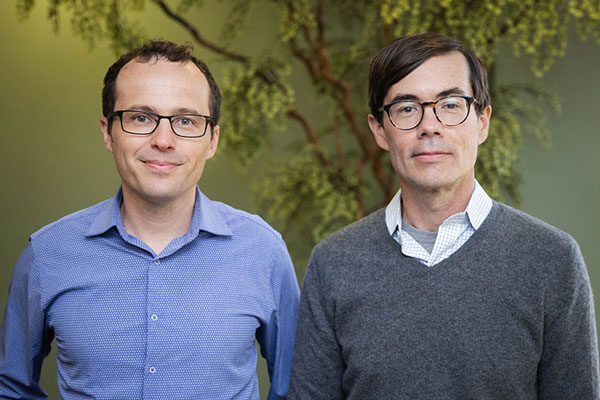
Giorgio Quer and Evan Muse
News

New AI tool simplifies heart monitoring: Fewer leads, same accuracy

Scripps Research scientists showed that, with help from an AI tool, cardiologists can diagnose heart attacks using a simpler, easier and more accessible electrocardiogram technology.

Groundbreaking Science.
Life-changing Medicine.