




Aging & Healthspan

Aging & Healthspan

We uncover the fundamental drivers of biological aging to fend off age-related diseases that undermine our health as we get older. Our scientists are using those insights to pioneer new drugs that slow, stop or even repair related damage.

Overview

As people live longer than ever before, science is creating new opportunities to understand, prevent, and treat age-related diseases.

Scripps Research is making the promise real. Under one roof, we uncover the drivers of aging, enable personalized prevention and early intervention, and field new drugs that slow or stop disease progression and repair damage. 

For more information on our aging research programs please contact us


News

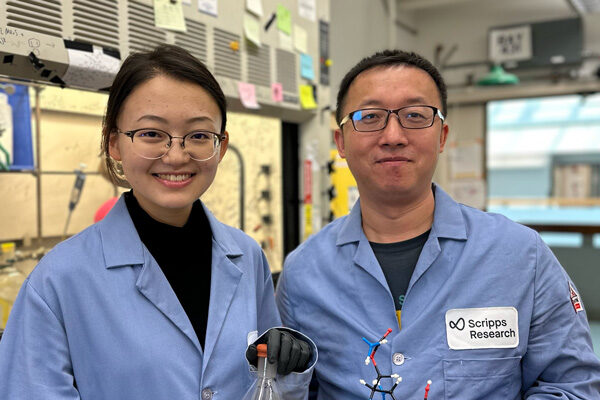
An easier approach to recreate the powerful nerve-blocking molecule found in shellfish

A Scripps Research-led study resolves the challenge of synthesizing saxitoxin, paving the way for new possibilities in pain management.

Read the Story
An easier approach to recreate the powerful nerve-blocking molecule found in shellfish
Getting older doesn’t have to mean getting sicker. This is our moment to ensure longer lives are also healthier lives.
Pete Schultz President and CEO, Scripps Research
News, Events & Media
Rejuvenating the aging brain
Magazine

Rejuvenating the aging brain

As humans live longer, they’re at increased risk of developing devastating neurodegenerative diseases. At Scripps Research, scientists are closer than ever to understanding how these diseases harm the brain and identifying possible drugs to stop them.

The science of longer, healthier lives
Video

The science of longer, healthier lives

How close are we to a future where aging is no longer a barrier to vitality? Scripps Research executive vice president and professor Eric Topol discussed the themes of his new book on longevity. Drawing on the latest breakthroughs, he explored how innovations in artificial intelligence and drug discovery are combating chronic diseases like cancer, diabetes and neurodegeneration. Topol revealed how these advances are not only extending lifespans but also improving health at every stage of life.

How a new drug prototype regenerates lung tissue
News

How a new drug prototype regenerates lung tissue

A new study from Scripps Research and Calibr-Skaggs scientists provides pharmacological proof of concept for an upcoming phase 1 clinical trial.

The future of healthy aging
Magazine

The future of healthy aging

You are only as old as you think you are. At least, that’s how the saying goes. But what does it mean to age, anyway? Increasingly, science has some surprising answers—and some promising solutions.

Rewinding the biological clock
Magazine

Rewinding the biological clock

How scientists are harnessing the body’s natural regenerative pathways to heal damaged organs and reverse age-related decline.

Calibr-Skaggs Inflammatory Bowel Diseases
Discovery of life-extension pathway in worms demonstrates new way to study aging
News

Discovery of life-extension pathway in worms demonstrates new way to study aging

New method could enable faster study of strategies to combat age-related diseases.

Drug Discovery

From Discoveries to Therapies

Scripps Research scientists are translating laboratory breakthroughs into life-changing medical advances.

Prevention

New preventive therapies in development aim to protect cells and organs from the oxidative stress and inflammatory damage that build up over time. By enhancing the body’s intrinsic defense mechanisms, these approaches aim to preserve brain and organ function and reduce the risk of neurodegenerative and other age-related diseases before symptoms arise. The emphasis is on maintaining cellular health early, when intervention can have the greatest long-term impact.


 

Longevity

We are developing therapies designed to extend healthspan by targeting fundamental drivers of aging. Programs in development aim to reduce chronic inflammation, safely mimic the benefits of caloric restriction, and restore cellular function by repairing telomeres. Rather than treating individual age-related diseases in isolation, these approaches seek to intervene in core biological pathways of aging itself, opening the door to therapies that improve resilience, function, and longevity across multiple organ systems.


Regeneration

Drawing on foundational research into the body’s reparative mechanisms, we are advancing regenerative therapies designed to repair tissue damaged by aging and disease. Programs in development aim to restore heart function after heart attacks, repair lung and intestinal tissue in chronic disease, and prevent age-related vision loss. These approaches move beyond slowing disease to potentially reversing damage.


Digital and Multimodal Health

Digital medicine approaches are transforming how aging and disease are measured, detected, and managed over time. The Scripps Research Translational Institute (SRTI) is validating biomarkers in real-world settings, running decentralized digital trials, and integrating wearables and at-home devices into care. This includes the first prospective clinical trial to prevent Alzheimer’s disease using brain pace-of-aging clocks and the breakthrough blood biomarker p-tau217.


Patient Impact

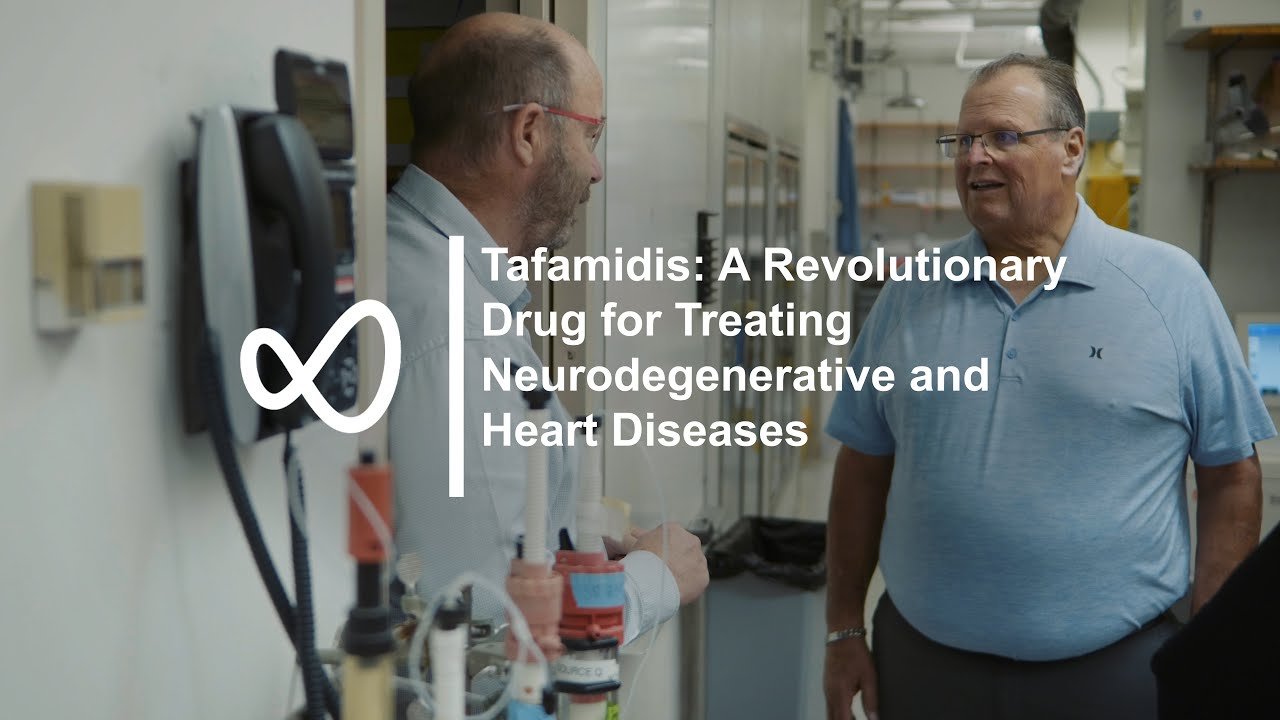
Tafamidis: A Revolutionary Drug for Treating Neurodegenerative and Heart Diseases

LA JOLLA, CA – The U.S. Food and Drug Administration has approved tafamidis, a medicine invented by Scripps Research professors Jeffery Kelly, PhD, and Evan Powers, PhD, for the treatment of heart disease (cardiomyopathy) caused by mutant or wild-type transthyretin aggregation in adults. The two formulations of the drug approved by the FDA, Vyndaqel (tafamidis meglumine) and Vyndamax (tafamidis) capsules, are the first FDA-approved treatments for transthyretin amyloid cardiomyopathy (ATTR-CM).

Groundbreaking Science.
Life-changing Medicine.