News

Where hypotheses become headlines: Featured coverage of the breakthroughs—and the people—driving our research forward

For media inquiries, email us: [email protected]

Featured News
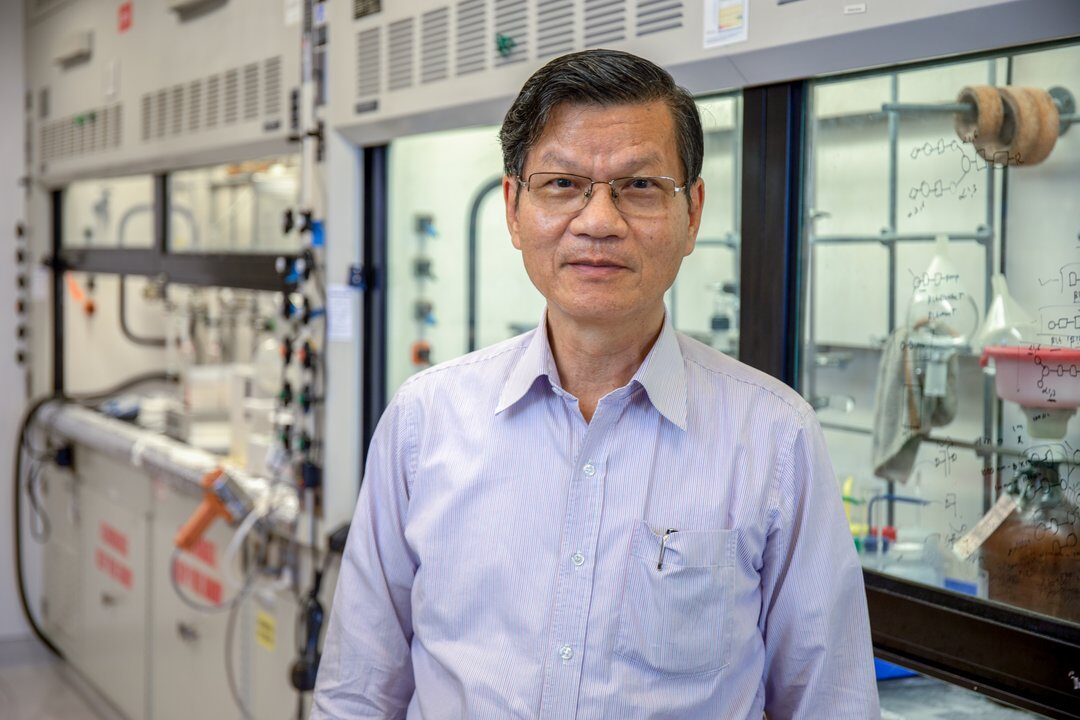
Chi-Huey Wong.
News

Scripps Research professor Chi-Huey Wong to receive ACS Alfred Bader Award

Dissociation of the four-part TTR protein. The energy landscape shows stable states toward the bottom and unstable transition states toward the top. In the canonical pathway (red), the tetramer (T) dissociates via a native-like, compact transition state (‡1) into transient dimer intermediates (D) before full dissociation into monomers (M). In the newly discovered alternative pathway (blue), the tetramer dissociates through a more expanded transition state (‡2) directly into monomers. Credit: Jan-Hannes Schäfer, Scripps Research
News

Scientists discover a new way that a disease-linked protein comes apart

Filter by:
  • Scripps Research professor awarded $3.2 million to advance type 1 diabetes research
    News

    Scripps Research professor awarded $3.2 million to advance type 1 diabetes research

    Support from the National Institute of Diabetes and Digestive and Kidney Diseases will help reveal how a newly discovered rare cell impacts the autoimmune disease.

  • Scripps Research awarded $4 million to advance platform for neurodevelopmental disorders
    News

    Scripps Research awarded $4 million to advance platform for neurodevelopmental disorders

    The California Institute for Regenerative Medicine (CIRM) grant supports the development of a new technology designed to restore normal gene function in select neurodevelopmental disorders.

  • Scripps Research-led team receives $14.2M NIH award to map the body’s “hidden sixth sense”
    News

    Scripps Research-led team receives $14.2M NIH award to map the body’s “hidden sixth sense”

    An NIH-backed effort aims to decode how the nervous system monitors internal organs.

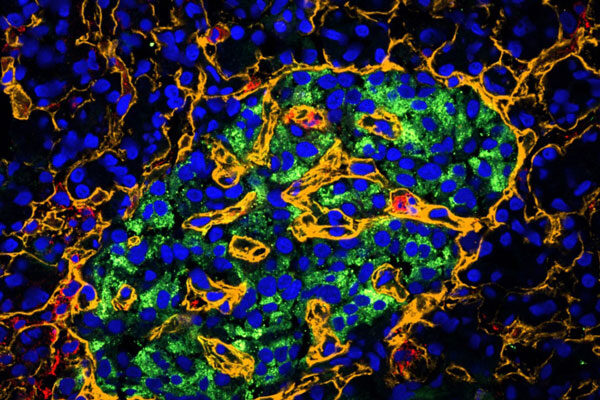
  • Scripps Research discovery could improve type 1 diabetes prevention and treatment
    News

    Scripps Research discovery could improve type 1 diabetes prevention and treatment

    New findings reveal how specialized cells shield the pancreas from autoimmune attack, providing new therapeutic strategies for type 1 diabetes.

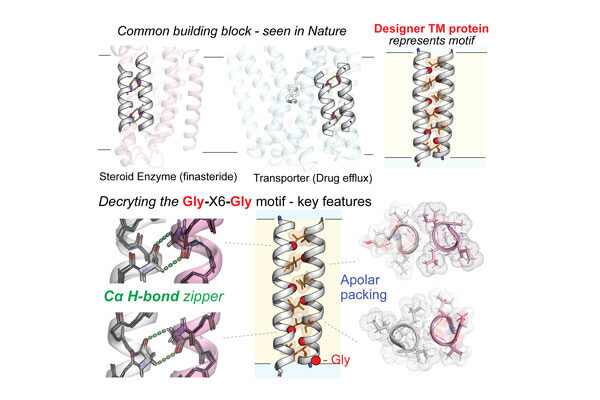
  • Scripps Research scientists unlock new patterns of protein behavior in cell membranes
    News

    Scripps Research scientists unlock new patterns of protein behavior in cell membranes

    The novel computer method to encode synthetic protein sequences within cell lipid environments offers insights into how membrane proteins fold and function, critical to understanding disease.

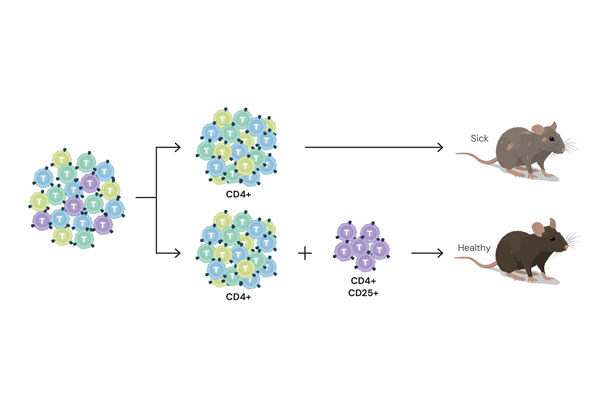
  • Former Scripps Research assistant professor awarded 2025 Nobel Prize in Physiology or Medicine
    News

    Former Scripps Research assistant professor awarded 2025 Nobel Prize in Physiology or Medicine

    Shimon Sakaguchi is honored for his revolutionary discovery of regulatory T cells—revealing how “immune tolerance” impacts autoimmune diseases, cancer and more.

  • Scripps Research associate professor named an HHMI Freeman Hrabowski Scholar
    News

    Scripps Research associate professor named an HHMI Freeman Hrabowski Scholar

    Associate Professor Xin Jin selected for up to two five-year terms, receiving up to $8.6 million over 10 years to support neuroscience and genomic research.

  • Researchers find brain region that fuels compulsive drinking
    News

    Researchers find brain region that fuels compulsive drinking

    Study by Scripps Research scientists shows how the brain learns to seek alcohol for relief, not just pleasurable effects, in an animal model.

  • Wearable devices could revolutionize pregnancy monitoring and detect abnormalities
    News

    Wearable devices could revolutionize pregnancy monitoring and detect abnormalities

    Scripps Research study shows how smartwatch and fitness tracker data align with hormonal changes, offering the potential for early detection of complications.

  • AI model helps boost pandemic preparedness
    News

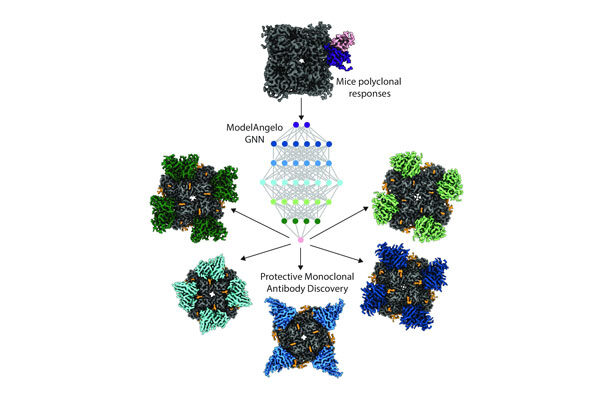
    AI model helps boost pandemic preparedness

    Scripps Research breakthrough reduces antibody discovery time from weeks to hours, potentially revolutionizing pandemic response and therapeutic development.

  • Researchers map key human proteins that power coronavirus replication, pointing to new treatment strategies
    News

    Researchers map key human proteins that power coronavirus replication, pointing to new treatment strategies

    Findings from Scripps Research reveal promising drug targets with potential to block coronaviruses at multiple stages of infection—even across different strains.

  • Researchers identify promising new compound to treat tuberculosis
    News

    Researchers identify promising new compound to treat tuberculosis

    Study led by Scripps Research, Texas A&M and additional institutions highlights that the world’s deadliest infectious disease needs novel, effective antibiotics.

  • Scientists build an “evolution engine” to rapidly reprogram proteins
    News

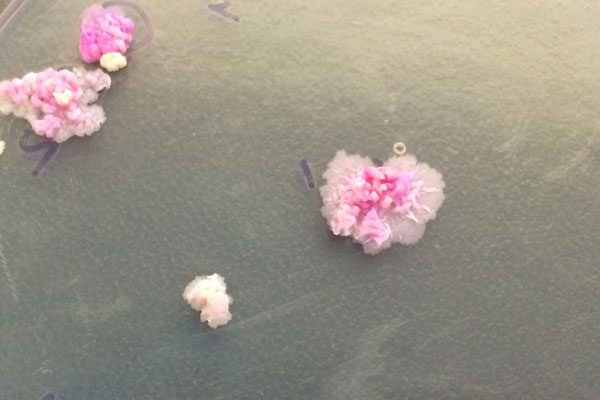
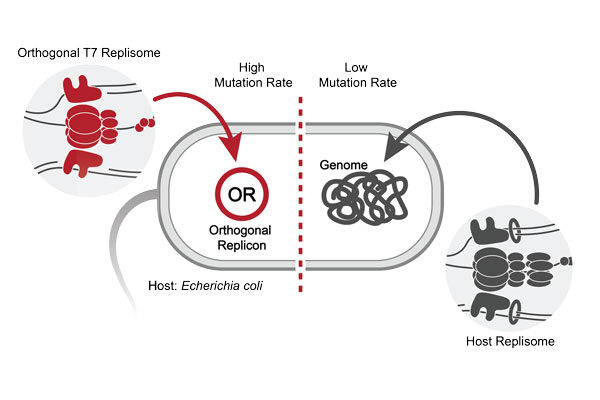
    Scientists build an “evolution engine” to rapidly reprogram proteins

    A new platform developed at Scripps Research enables fast, scalable protein evolution—opening the door to new therapies and diagnostics, and to predicting resistance mutations across many disease areas.

  • Study confirms long-term benefit of implant for blinding eye disease
    News

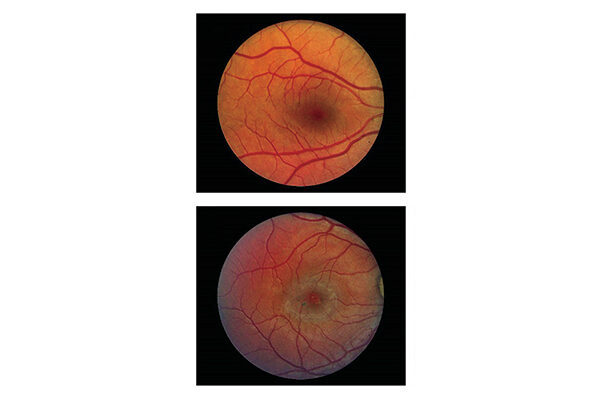
    Study confirms long-term benefit of implant for blinding eye disease

    Phase 3 trial results from Scripps Research and collaborators helped support FDA approval of ENCELTO, the first cell-based therapy for a neurodegenerative retinal condition called MacTel.

  • PROGRESS research app.
    News

    AI model detects hidden diabetes risk by reading glucose spikes

    Scripps Research scientists reveal how wearable sensors and artificial intelligence could transform the way we detect and manage pre-diabetes.

  • Scripps Research awarded $1.7 million by NIH to advance biomedical data integration and AI-powered discovery
    News

    Scripps Research awarded $1.7 million by NIH to advance biomedical data integration and AI-powered discovery

    The grant from the National Center for Advancing Translational Sciences (NCATS) supports the ongoing development of the Biomedical Data Translator—an open-source resource to accelerate human health insights.

  • Where did RNA come from?
    News

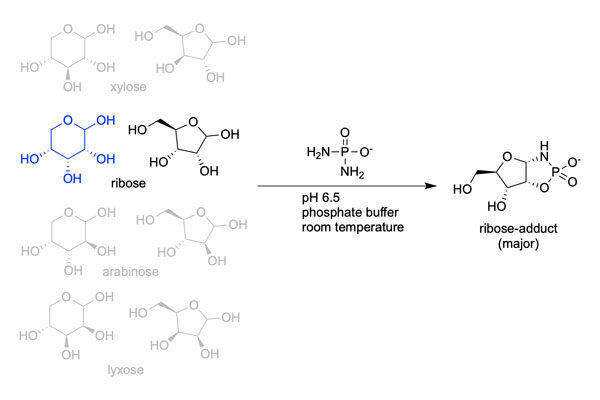
    Where did RNA come from?

    Origin-of-life scientists from Scripps Research reveal how the sugar ribose may have been selected as one of life’s building blocks.

  • Viome and Scripps Research partner to develop first at-home RNA screening test to prevent colon cancer before it strikes
    News

    Viome and Scripps Research partner to develop first at-home RNA screening test to prevent colon cancer before it strikes

    First-of-its-kind 1,000-patient clinical study will use RNA-based stool and saliva tests to detect colon polyps — early warning signs of colorectal cancer — before they become cancerous.Study aims to enhance colorectal cancer prevention by identifying polyp molecular signals, offering improved sensitivity over at-home DNA tests, which have limited ability to detect precancerous lesions.

  • Tiny chip speeds up antibody mapping for faster vaccine design
    News

    Tiny chip speeds up antibody mapping for faster vaccine design

    By analyzing just a drop of blood, this microchip gives researchers quicker-than-ever insight into how a person’s antibodies are interacting with a virus or other pathogen.

  • Two-part vaccine strategy generates a stronger, longer-lasting immune boost against HIV
    News

    Two-part vaccine strategy generates a stronger, longer-lasting immune boost against HIV

    Scripps Research scientists’ new approach combines two immune-activating molecules known as adjuvants.

  • Calibr-Skaggs doses first patient with switchable CAR-T cell therapy in a phase 1 trial for metastatic breast cancer
    News

    Calibr-Skaggs doses first patient with switchable CAR-T cell therapy in a phase 1 trial for metastatic breast cancer

    CLBR001 + ABBV-461 is a novel, investigational, two-part, switchable chimeric antigen T cell (sCAR-T) immunotherapy designed to treat solid tumors.

  • FDA approves ENCELTO, a first-of-its-kind eye implant that slows vision loss in rare eye disease
    News

    FDA approves ENCELTO, a first-of-its-kind eye implant that slows vision loss in rare eye disease

    Cell-based therapy with roots at Scripps Research offers new hope for patients with macular telangiectasia type 2.

  • Females may be more biochemically sensitive to alcohol—long before dependence sets in
    News

    Females may be more biochemically sensitive to alcohol—long before dependence sets in

    Scripps Research’s insights into sex-based differences in brain chemistry could guide personalized treatment strategies for alcohol use disorder.

  • AI pinpoints new anti-aging drug candidates
    News

    AI pinpoints new anti-aging drug candidates

    More than 70% of the drugs identified by artificial intelligence extended the lifespan of C. elegans worms.

Groundbreaking Science.
Life-changing Medicine.