Scripps Research associate professor named an HHMI Freeman Hrabowski Scholar
September 30, 2025
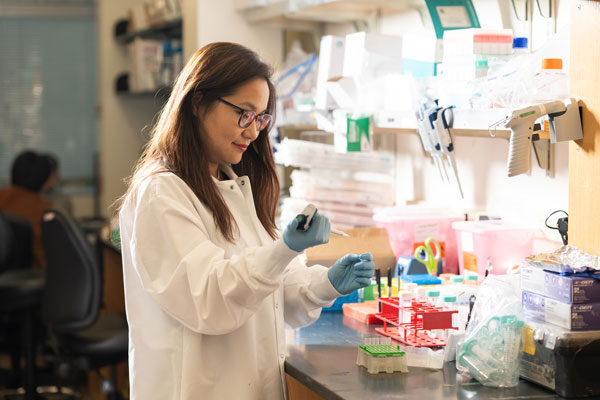
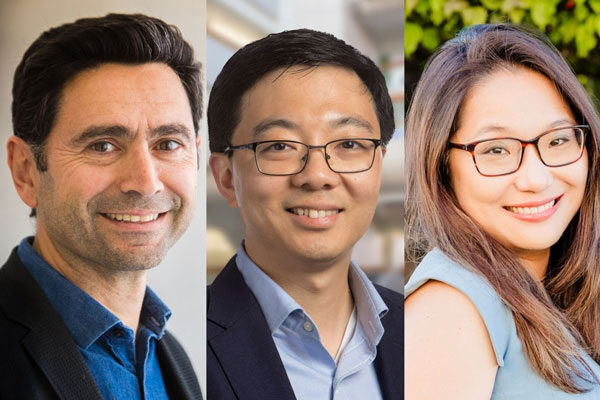
Xin Jin, Scripps Research Associate Professor and HHMI Freeman Hrabowski Scholar. Credit: HHMI
LA JOLLA, CA—The Howard Hughes Medical Institute has named Associate Professor Xin Jin as one of the 30 HHMI Freeman Hrabowski Scholars in recognition of her research to expand our understanding of biological and biomedical principles, as well as her dedication to mentoring the next generation of scientists and creating an inclusive lab environment.
The HHMI Freeman Hrabowski Scholar Program supports outstanding basic researchers who have strong potential to become leaders in their fields. Scholars prioritize scientific excellence while creating lab climates in which everyone can thrive. The program honors the contributions of Freeman A. Hrabowski III, president emeritus of the University of Maryland, Baltimore County, and a leader in efforts to increase the number of scientists and engineers from underrepresented communities.
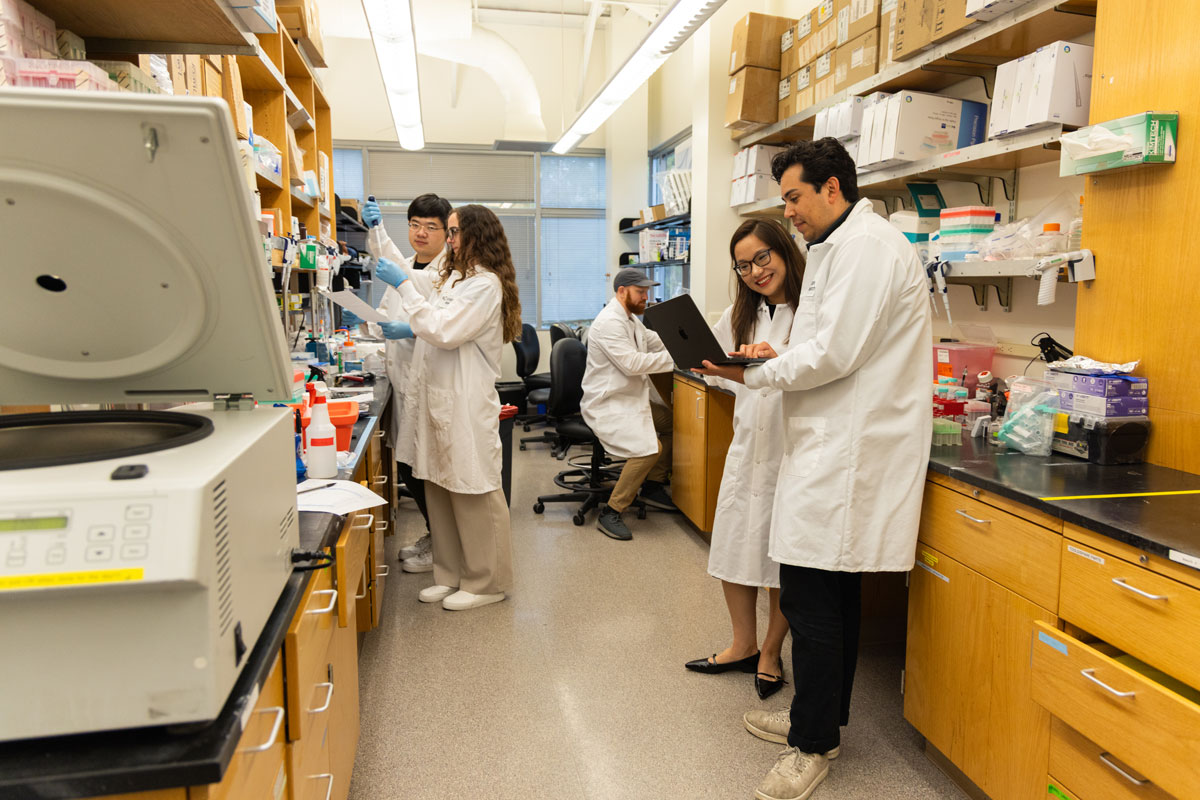 Jin (second from right) with lab members Boli Wu, Ellie Petty, Patrick Thompson and Ethan Badger (from left).
 Credit: HHMI
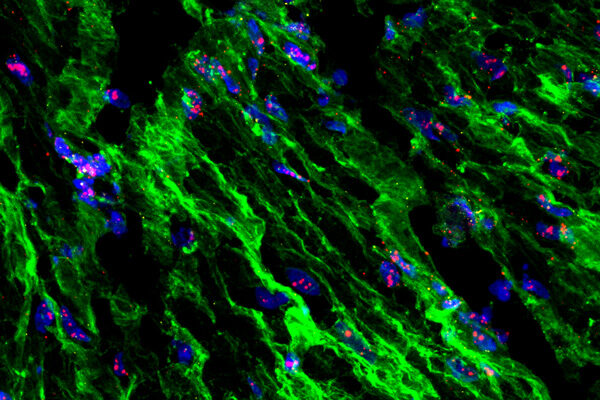
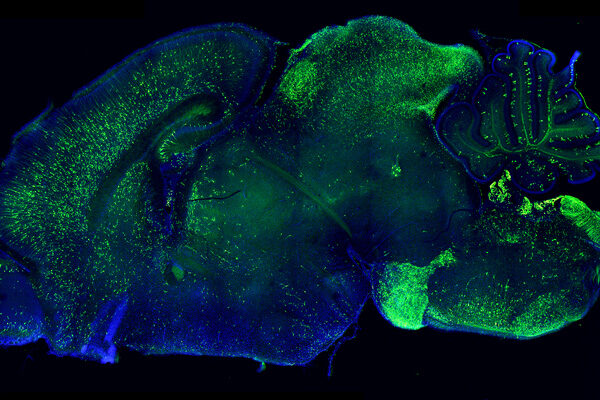
At Scripps Research, Jin’s lab builds scalable, in vivo genomic tools to map how genetic variation shapes brain circuits across space and time. By pioneering in vivo CRISPR screens with rich molecular and anatomical readouts, her team uncovers how risk genes influence distinct cell types and tissue architectures in early life. Integrating high-content functional genomics with whole-brain imaging, the lab seeks to illuminate convergent mechanisms in development, tissue homeostasis and aging. She pioneered the development of a gene-editing method called in vivo Perturb-seq, which she and her team used to profile hundreds of thousands of cells simultaneously when combined with CRISPR screening capabilities. This cutting-edge technique allowed scientists to study hundreds of genes in hundreds of cell types in just days. Ultimately, Jin hopes this technology will pave the way for genomics-inspired therapeutics for neurological conditions.
Jin is a Pew Scholar in the Biomedical Sciences, a McKnight Scholar, and was named one of MIT Technology Review’s “35 Innovators Under 35” in 2022. She’s also been awarded the One Mind Rising Star Award, the G. Harold & Leila Y. Mathers Foundation Award, the Donald E. & Delia B. Baxter Young Investigator Award, the Larry L. Hillblom Foundation Award and the Klingenstein-Simons Fellowship Award in Neuroscience.
Jin’s initial appointment is a five-year term, renewable for a second five-year term. Each Scholar receives up to $8.6 million over the ten-year period, including full salary, benefits, a research budget and scientific equipment. They also participate in professional development to advance their leadership and mentoring skills.