Neuroscientist Xin Jin granted Pew and McKnight awards
June 20, 2024

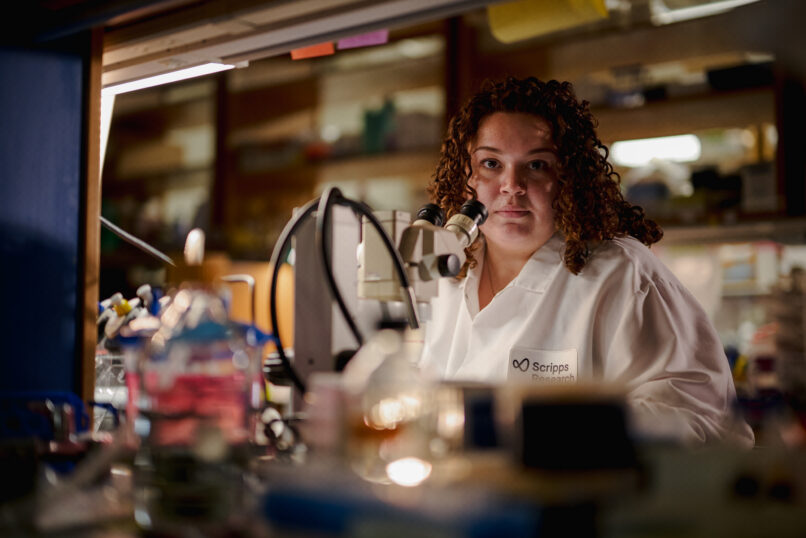
Xin Jin, PhD, assistant professor of neuroscience at Scripps Research. Credit: Scripps Research
LA JOLLA, CA—Early in life, networks of genes and molecules interact to form the body’s brain cells. Genetic variants can disrupt this process, sometimes leading to disorders or developmental disabilities. But these neurobiological pathways associated with disease risk remain poorly defined—leading to a lack of effective intervention strategies for neuropsychiatric conditions, as well as limited diagnostic tools.
Xin Jin, PhD, an assistant professor in the Department of Neuroscience at Scripps Research, has now been named a Pew Scholar in the Biomedical Sciences and granted the McKnight Scholar Award to support her research in this area and reveal the critical drivers of brain development and function.
“This generous support will allow us to build technologies connecting genetic variants with their causal functions in the brain,” Jin says. “I am very honored to be part of this intellectual community and looking forward to learning from everyone.”
Each year, the Pew Scholars Program in the Biomedical Sciences funds early-career scientists who demonstrate promise in the advancement of human health. Jin was selected from among 198 nominees submitted by leading U.S. institutions to receive funding for her exploratory research. Awards will be paid in the amount of $75,000 annually for four years, totaling $300,000.
The McKnight Foundation grants its prestigious awards to exceptional young scientists in the early stages of their research career, particularly those whose work will have an important impact on the study of the brain. As one of the 2024 McKnight Scholars, Jin will receive a total of $225,000 over the course of three years.
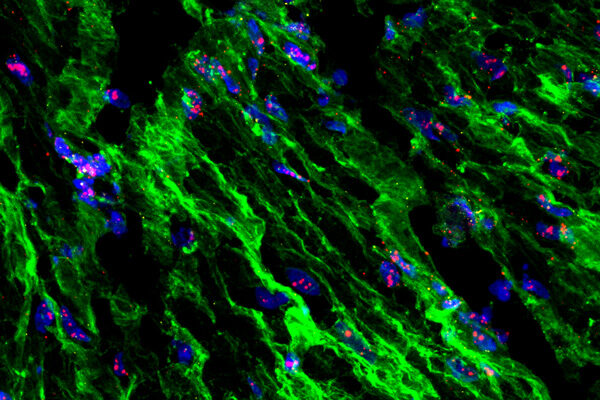
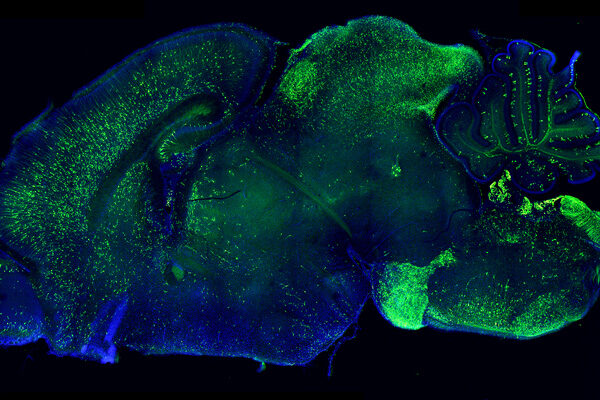
At Scripps Research, Jin is developing cutting-edge technologies to uncover the different genes, cells and brain regions involved in neurological conditions, such as autism spectrum disorder. With these novel tools—including the gene editing method she’s pioneered, called Perturb-seq—Jin’s lab is mapping the brain’s genome, one cell at a time.
Jin and her team recently published a study in Cell highlighting Perturb-seq and its CRISPR screening capabilities. They showed they could profile more than 30,000 cells at once, enabling the team to study hundreds of genes in hundreds of cell types in a mere two days. Using these methods, Jin’s ultimate goal is to pave the way toward genomics-inspired therapeutics and diagnostic tools.
Jin has received many awards and honors for her pioneering neuroscience work. She has been a recipient of the One Mind Rising Star Award and was named one of MIT Technology Review’s “35 Innovators Under 35” in 2022. She also received the G. Harold & Leila Y. Mathers Foundation Award, the Donald E. & Delia B. Baxter Young Investigator Award, the Larry L. Hillblom Foundation Award, and the Klingenstein-Simons Fellowship Award in Neuroscience. Prior to that, Jin garnered the Early Career Investigator Award from the International Society for Autism Research (INSAR), a Simons Foundation Collaborative Grant, a Young Investigator Award from the Brain and Behavior Research Foundation, and an Allison Doupe Fellowship from the McKnight Foundation, among other awards and honors.
Jin will attend the upcoming McKnight Neuroscience Conference in Aspen, Colorado, held June 13-16, 2025. She will also attend the Pew Biomedical Programs annual meeting in spring 2025 to network with other Pew-funded scientists.





Xin Jin: Building a ‘telescope’ for the brain
Galileo’s telescope revolutionized our modern understanding of the universe. Assistant neuroscience professor Xin Jin, PhD, wants to do just that—except for the brain. By building new tools that enable her and other neuroscientists to peer into the inner workings of the mind, Jin is uncovering the cells, genes and other complex drivers behind neurological diseases. Listen in as we explore the galaxy of the brain.

Editing genes to tackle neurological conditions
Networks of genes coordinate the formation of brain cells during early life development. However, diverse genetic variants can impact this process and ultimately manifest in different brain disorders and developmental disabilities. In this Front Row lecture, Scripps Research assistant professor Xin Jin shared how her lab is using cutting-edge technology to discover which brain regions and cell types are involved in disease pathology. Jin’s insights are revealing neurodevelopmental and other disorders, as well as defining a path for new diagnostic tools and therapeutic interventions.