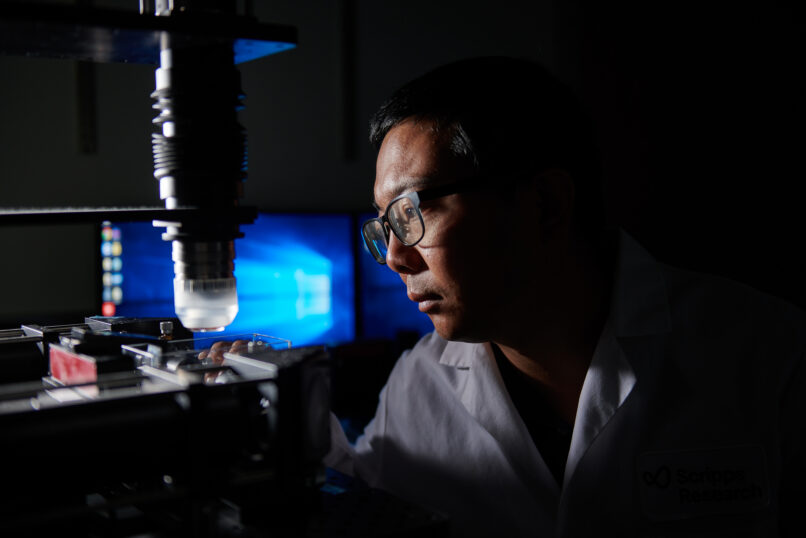
Michael Erb receives NIH Director’s Early Independence Award
October 2, 2018
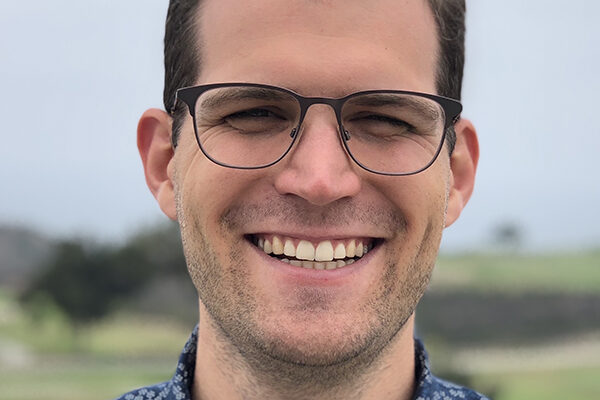
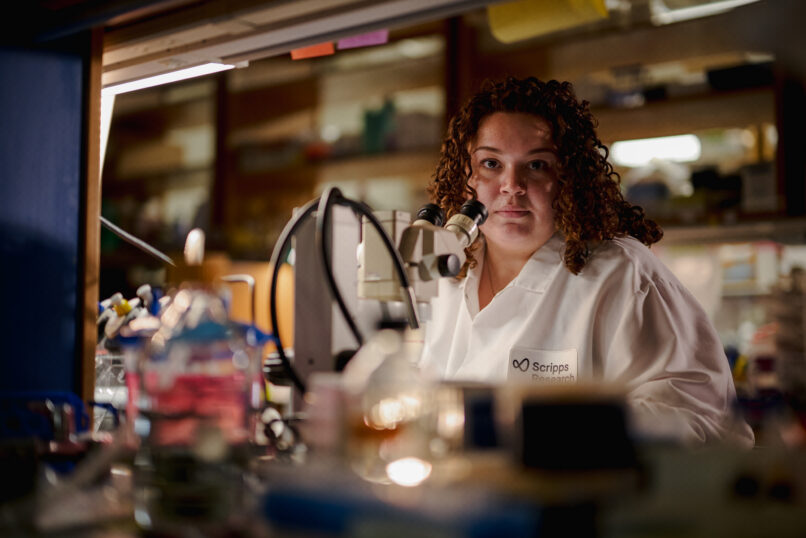
Michael A. Erb, PhD, a Scripps Fellow in the Department of Chemistry, has received a National Institutes of Health (NIH) Director’s Early Independence Award to support his research into identifying and developing drugs that target the transcriptional pathways supporting cancer cell survival. The Early Independence Award is given to junior scientists who quickly launch independent research careers, bypassing the traditional postdoctoral training period. Erb earned his doctoral degree in Biological and Biomedical Sciences at Harvard in 2017. With this award, he will receive $250,000 toward the direct costs of his research per year for up to five years.
“My team and I are honored and excited to receive this award,” says Erb. “The fundamental goal of our laboratory is to advance a mechanistic understanding of transcriptional regulation in human cancers. This support will empower us to advance the science of transcriptional regulation with new therapeutic hypotheses, capitalizing on the rich ecosystem of chemical biology investigation here at Scripps Research.”
The Early Independence Award is one of four Director’s Awards within the NIH’s High-Risk, High-Reward Research program, which supports “exceptionally creative scientists pursuing highly innovative research with the potential for broad impact in biomedical or behavioral science.” Awardees must begin independent research within 15 months after receiving their doctorate or they can apply for the award in the twelve months prior to completing their degree. Once the award is received, 80 percent of the investigator’s efforts must focus on the award project.
The award has grant ID: DP5-OD26380.
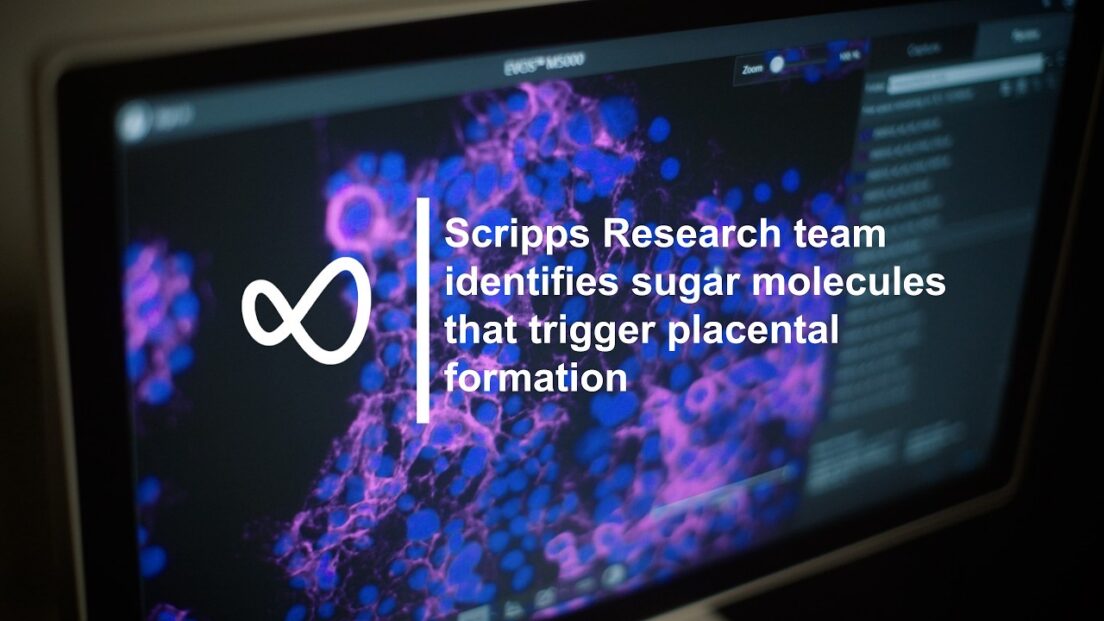
Scripps Research team identifies sugar molecules that trigger placental formation
During the first weeks of pregnancy, the developing placenta in a mother’s womb undergoes a dramatic change. Individual cells merge, forming a continuous barrier that will spend the next nine months ferrying oxygen and nutrients to the growing fetus while keeping the mother's immune system at bay. When this structure fails to form properly, pregnancies are at higher risk of complications, including preeclampsia and restricted fetal growth. Now, scientists at Scripps Research have identified a key player in the placenta’s transformation—a molecule called galectin-3 that binds to sugar molecules on specific cell surface proteins, likely holding placental cells tightly together to fuse.

Close encounters: Designing drugs that recruit the cell’s own machinery to fight cancer and beyond
Some of the most devastating diseases are driven by proteins that cannot be targeted with conventional drugs. Scientists are now discovering ways to control disease by recruiting the cell’s own machinery to tackle this challenge. In this Front Row lecture, Associate Professor Michael Erb took the audience inside the cell to explain how his team is developing “proximity” drugs. Erb’s innovation has implications to change how scientists and cells join forces to fight against breast, prostate and blood cancers. Learn how proximity drugs can eliminate proteins, rewire essential cellular pathways, and enable researchers to target previously “undruggable” proteins.