News

Where hypotheses become headlines: Featured coverage of the breakthroughs—and the people—driving our research forward

For media inquiries, email us: [email protected]

Featured News
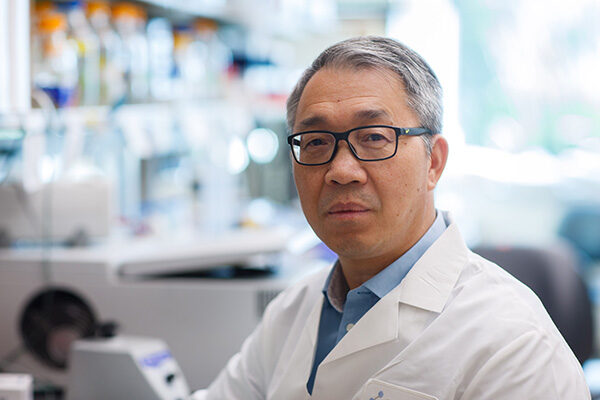
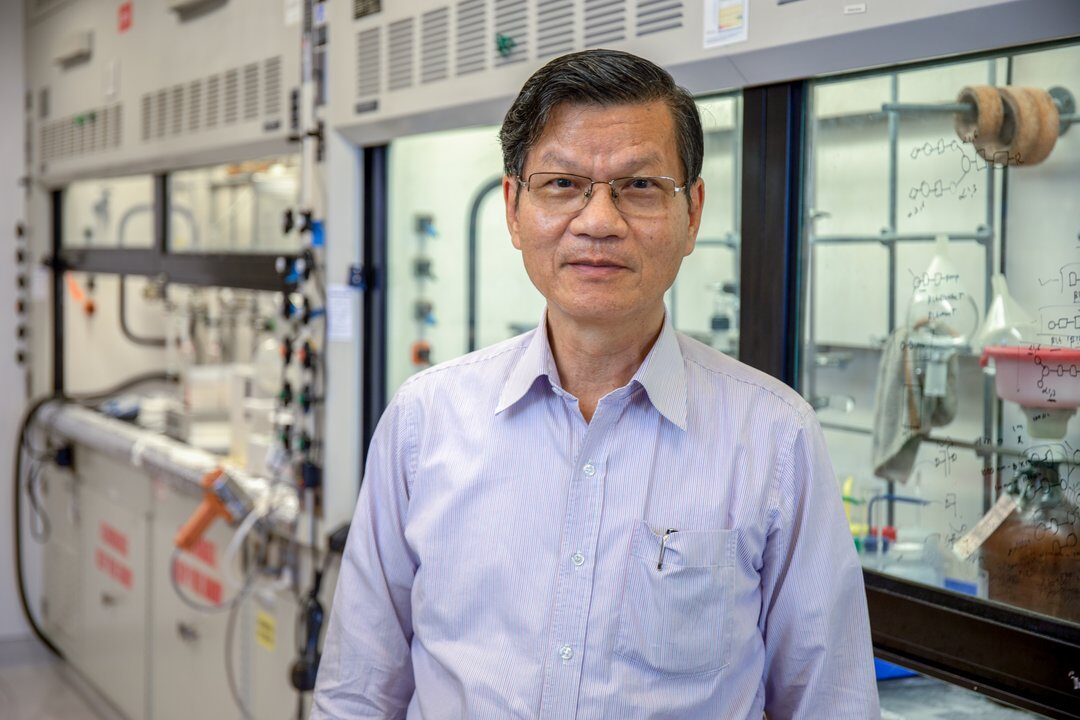
Chi-Huey Wong.
News

Scripps Research professor Chi-Huey Wong to receive ACS Alfred Bader Award

Dissociation of the four-part TTR protein. The energy landscape shows stable states toward the bottom and unstable transition states toward the top. In the canonical pathway (red), the tetramer (T) dissociates via a native-like, compact transition state (‡1) into transient dimer intermediates (D) before full dissociation into monomers (M). In the newly discovered alternative pathway (blue), the tetramer dissociates through a more expanded transition state (‡2) directly into monomers. Credit: Jan-Hannes Schäfer, Scripps Research
News

Scientists discover a new way that a disease-linked protein comes apart

Filter by:
  • ‘Relaxed’ enzymes may be at the root of Charcot-Marie-Tooth disease
    News

    ‘Relaxed’ enzymes may be at the root of Charcot-Marie-Tooth disease

    Scripps Research scientists make a key discovery into the underpinnings of a complex disease that damages patients' peripheral nervous system. 

  • New study reveals Scripps Research, Florida has produced $3 billion worth of economic impact since 2004
    News

    New study reveals Scripps Research, Florida has produced $3 billion worth of economic impact since 2004

    The launch of the Florida campus of Scripps Research has produced an economic impact of $3 billion since the nonprofit biomedical institute opened an East Coast branch 15 years ago. 

  • Scripps Research professor Peter Vogt honored with Horwitz Prize for key contributions to targeted cancer treatment
    News

    Scripps Research professor Peter Vogt honored with Horwitz Prize for key contributions to targeted cancer treatment

    Vogt's work led to the discovery of the first oncogene and many other other genetic drivers of cancer. Of the 100-plus Horwitz Prize winners to date, 50 percent have gone on to receive Nobel Prizes. 

  • All shook up: Researchers mix RNA and DNA to study how life’s process began billions of years ago
    News

    All shook up: Researchers mix RNA and DNA to study how life’s process began billions of years ago

    A hypothesis known as RNA World is a fascinating explanation for how life began, but it may not hold true. The problem is that the ingredients needed to make RNA World work just didn’t exist on early Earth.

  • Scientists find cause of debilitating eye disease
    News

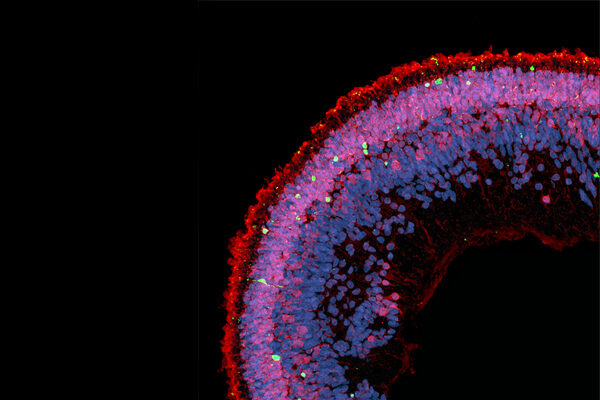
    Scientists find cause of debilitating eye disease

    A 15-year effort points to treatments to help MacTel patients and offers potential new insights into other eye diseases.

  • Electrochemistry breakthrough simplifies creation of coveted molecules needed for drugs, electronics
    News

    Electrochemistry breakthrough simplifies creation of coveted molecules needed for drugs, electronics

    A new method for making valuable compounds known as “hindered ethers” significantly improves production yield while reducing expense and reaction steps.

  • Brain cells that suppress drug cravings may be the secret to better addiction medicines
    News

    Brain cells that suppress drug cravings may be the secret to better addiction medicines

    Rather than continue to dig for clues on what drives relapse among those who struggle with compulsive drug use, a Scripps Research team explored how the brain responds to environmental cues that suppress cravings.

    Neuroscience Nobuyoshi Suto
  • Discovery paves the way for earlier detection of type 1 diabetes
    News

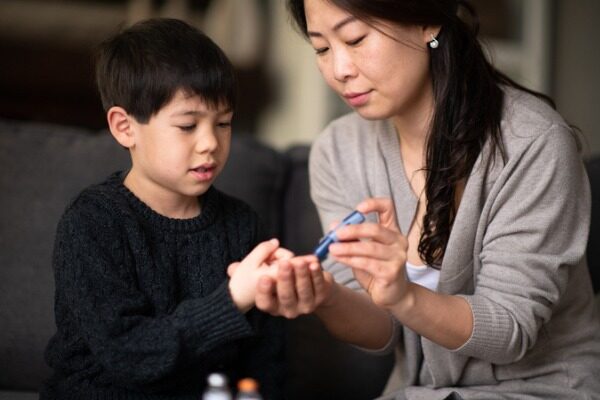
    Discovery paves the way for earlier detection of type 1 diabetes

    Scientists at Scripps Research have discovered what may be the earliest possible biological marker of type 1 diabetes, formerly known as juvenile diabetes.

  • Discovery of hidden outbreak hints that Zika virus can spread silently
    News

    Discovery of hidden outbreak hints that Zika virus can spread silently

    A genomics study of travel-associated Zika cases reveals an undiscovered outbreak in Cuba in 2017, underscoring the need for coordinated disease surveillance.

  • Retinal protein-transport discovery may help define new strategies for treating eye disease
    News

    Retinal protein-transport discovery may help define new strategies for treating eye disease

    A new study reveals how proteins from the eye’s nerve cells relay visual cues to different parts of the brain. 

  • FDA accepts IND application for novel immunotherapeutic for prostate cancer in development by Calibr at Scripps Research
    News

    FDA accepts IND application for novel immunotherapeutic for prostate cancer in development by Calibr at Scripps Research

    Calibr announced that the U.S. Food and Drug Administration (FDA) has cleared its investigational new drug application for the treatment of metastatic castration-resistant prostate cancer.

  • Discovery of anti-opioid pathway offers new route to designing safer pain medications
    News

    Discovery of anti-opioid pathway offers new route to designing safer pain medications

    The discovery of GPR139 presents a new target for making safer pain medications. Nematodes helped reveal the genetic network that controls opioid activation of a nervous system.

  • Society of Heterocyclic Chemistry honors Dale Boger with E.C. Taylor Senior Award
    News

    Society of Heterocyclic Chemistry honors Dale Boger with E.C. Taylor Senior Award

    Dale Boger, PhD, the Richard and Alice Cramer Professor of Chemistry at Scripps Research, has been awarded the E.C. Taylor Senior Award by the International Society of Heterocyclic Chemistry.

  • Scientists discover ‘forgetting’ enzyme that lops brain cell branches
    News

    Scientists discover ‘forgetting’ enzyme that lops brain cell branches

    The “synapse pruning” process that underlies everyday learning involves a pruning function mediated by an enzyme called caspase 2.

  • Peter Schultz wins Tetrahedron Prize for Creativity in Organic Chemistry
    News

    Peter Schultz wins Tetrahedron Prize for Creativity in Organic Chemistry

    Scripps Research President and Chief Executive Officer Peter Schultz is recognized for his significant original contributions to the field of organic chemistry.

  • A chemical clue to how life started on Earth
    News

    A chemical clue to how life started on Earth

    Every living thing on Earth stems from the same limited set of 20 amino acids, and a new study suggests this didn't happen by accident. 

  • Chemist Kim Janda honored with ACS Portoghese Lectureship Award
    News

    Chemist Kim Janda honored with ACS Portoghese Lectureship Award

    The Medicinal Chemistry Division of ACS, along with the Journal of Medicinal Chemistry, will present Janda with the 2019 Philip S. Portoghese Medicinal Chemistry Lectureship Award to honor his many contributions to medicinal chemistry research.

  • Viral HIV vaccine gives durable protection against tough strains
    News

    Viral HIV vaccine gives durable protection against tough strains

    A nontraditional HIV vaccine from Farzan lab gives durable protection against two hard-to-fight lab strains, including one dubbed “the death star” due to how many vaccine candidates it has killed.

  • Exosomes may hold the answer to treating, diagnosing developmental brain disorders
    News

    Exosomes may hold the answer to treating, diagnosing developmental brain disorders

    A new study shows that these tiny “cargo” transporters are not only integral to the development of neurons and neural circuits, but they can restore health to brain cells affected by developmental disease. 

  • Scripps Research ranked top U.S. nonprofit scientific institute for second consecutive year
    News

    Scripps Research ranked top U.S. nonprofit scientific institute for second consecutive year

    Scripps Research receives the No. 1 U.S. ranking and No. 5 global ranking in the category encompassing nonprofits and nongovernmental organizations (NGOs).

  • Broadly neutralizing antibody prevents lethality from fentanyl class of synthetic opioids
    News

    Broadly neutralizing antibody prevents lethality from fentanyl class of synthetic opioids

    Scripps Research scientists develop a first-ever monoclonal antibody that can mitigate the effects of fentanyl and carfentanil, and overcome shortfalls of existing overdose-treatment options.

  • PTSD study identifies potential target for memory disruption
    News

    PTSD study identifies potential target for memory disruption

    A new study from Scripps Research suggests it may be possible to disarm the emotional memories of trauma that drive PTSD symptoms.

  • Ambassadors from more than 35 countries visit Scripps Research on State Department tour
    News

    Ambassadors from more than 35 countries visit Scripps Research on State Department tour

    More than 35 ambassadors representing countries across four continents toured Scripps Research to learn more about San Diego’s biomedical research sector.

  • Chemist John Yates receives 2019 ASMS John B. Fenn Award for innovations that advanced mass spectrometry
    News

    Chemist John Yates receives 2019 ASMS John B. Fenn Award for innovations that advanced mass spectrometry

    Yates is the lead inventor of the SEQUEST software and algorithm that laid a critical foundation for the field of proteomics and dramatically enhanced mass spectrometry's ability to answer important biological and clinical questions.

Groundbreaking Science.
Life-changing Medicine.