Two Scripps Research faculty named inaugural recipients of the Schultz Innovative Investigator Award
November 16, 2026
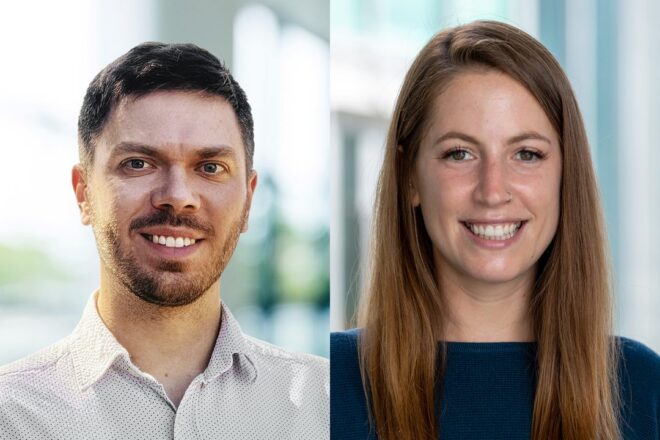
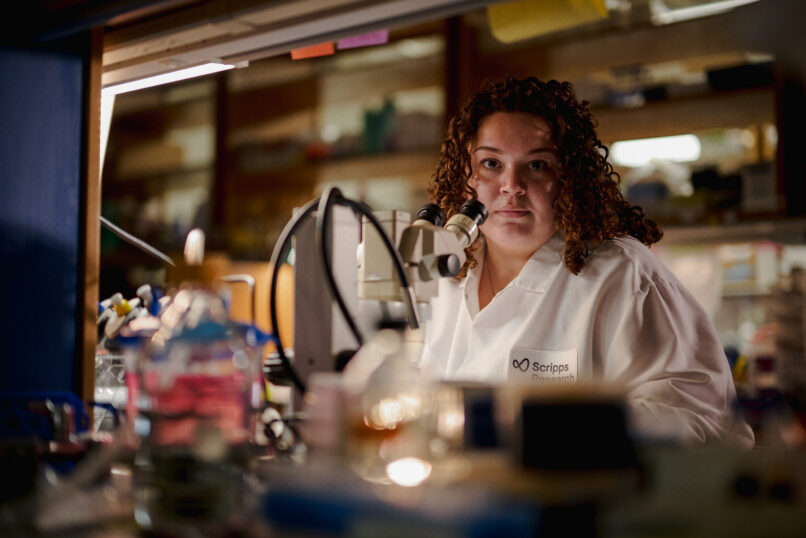
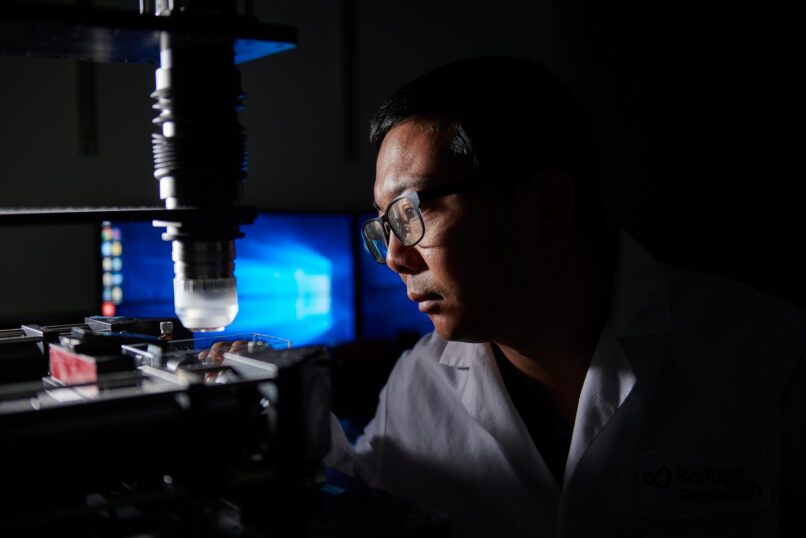
Christian Diercks and Danielle Grotjahn. Credit: Scripps Research
LA JOLLA, CA—Two Scripps Research faculty, Assistant Professor Christian Diercks and Associate Professor Danielle Grotjahn, are recipients of the inaugural Schultz Innovative Investigator Award, which supports scientists pursuing ambitious ideas for advancing scientific research and human health.
Established in 2026, the Pete Schultz Fund for Innovative Research honors the career scientific contributions and leadership of Pete Schultz, the president and CEO of Scripps Research, where he holds the L.S. “Sam” Skaggs Presidential Chair. The award will provide two years of flexible support to Diercks and Grotjahn with the possibility of a third year based on research progress.
“Christian and Danielle have highly innovative programs that are pushing the frontiers of synthetic and structural biology, and this support will give them the freedom to pursue ambitious ideas and take the risks that are necessary to generate transformative breakthroughs,” says Schultz.
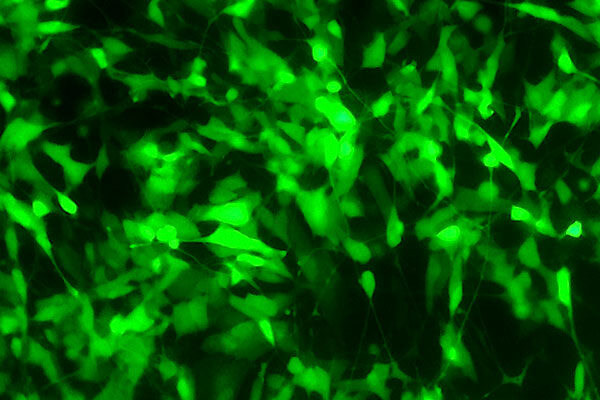
Diercks’ lab develops tools that accelerate evolution to address challenges in synthetic biology and human health. With support from the award, his team aims to develop a new “gene shuffling” system, where fragments of genetic material are recombined into a gene of interest to generate new gene variants, which scientists can then select for desired functions. With the proposed approach, Diercks aims to perform gene shuffling continuously in Escherichia coli (E. coli), which could increase efficiency and address functional constraints of current methods. In practice, the technology could be used to rapidly evolve proteins with new functions or specific characteristics—for example, therapeutic enzymes could be evolved to be less likely to trigger undesired immune responses, which has been a major barrier to their use.
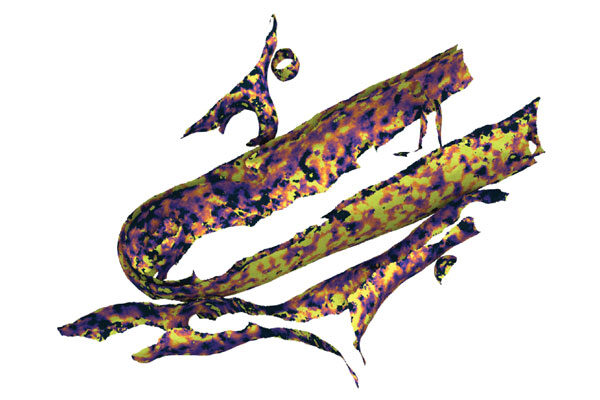
Grotjahn’s research is focused on how mitochondria change shape to adapt to stress and how insights into this process can inform new therapeutic approaches. Previously, her lab developed software to measure structural characteristics of cell membranes (including distance, curvature, orientation, thickness, and protein density) from complex cryo-electron tomography data. With support from the new award, Grotjahn’s team will create new artificial intelligence software called “Visual Membrane-omics” that will take these structural outputs and identify specific membrane microdomains and the proteins that reside within them. By comparing how these microdomains shift between health and disease, Grotjahn hopes the approach will reveal previously unknown structure-function relationships, and point to potential new drug targets.
Enzyme engineering opens door to novel therapies for Parkinson’s, cancers and other hard-to-target protein diseases
Researchers reprogrammed a botulinum toxin protease to selectively break down disease-causing proteins in human cells, providing proof of concept for developing new therapies for a wide range of illnesses.