
Decoding the genome’s dark matter
February 26, 2018
LA JOLLA, CA – Feb. 26, 2018 – A new study in the journal Nature Genetics sheds light on the “dark matter” of the genome. By combing through thousands of human genome sequences, scientists have identified regions of our DNA that rarely change, implying that these regions play important roles in keeping us healthy.
These new areas of interest belong to the so-called “non-coding” genome—the 98 percent of the genome that doesn’t directly code for proteins but instead regulates how key proteins are produced.
The work was led by San Diego-based Human Longevity, Inc., in collaboration with scientists at The Scripps Research Institute (TSRI), the Swiss Federal Institute of Technology, the Ludwig Institute for Cancer Research and the J. Craig Venter Institute.
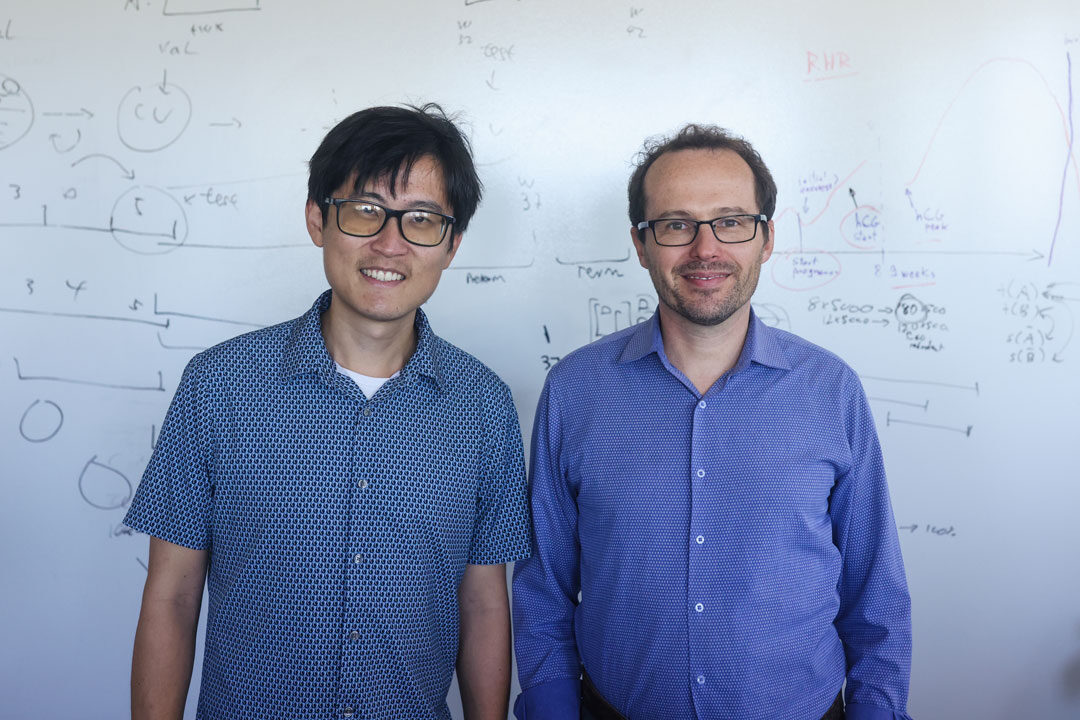
Senior author Amalio Telenti, MD, PhD, plans to build on this work by taking the key regions—which were identified through mathematical analysis—and analyzing their functions in lab experiments.
“We want to poke these areas,” says Telenti, who currently serves as a professor of genomics at TSRI and Chief Data Scientist at The Scripps Translational Science Institute (STSI).
Researchers look beyond BMI to predict obesity-related disease risk
Predictors of future diabetes and cardiovascular disease for a person with obesity can be found among their body's metabolites.
Molecular scissors caught in action: A structural blueprint for RNA therapeutics
A Scripps Research team has captured the first high-resolution structural images of human Argonaute 2 in its cutting-ready state, revealing why some small interfering RNA (siRNA) molecules work better than others and how to design more effective ones for this emerging therapy.