
Calibr-Skaggs awarded $5.1M by NIH to develop long-acting hepatitis B virus therapy

June 16, 2026

Press Release Department of Chemistry Infectious Diseases Calibr-Skaggs

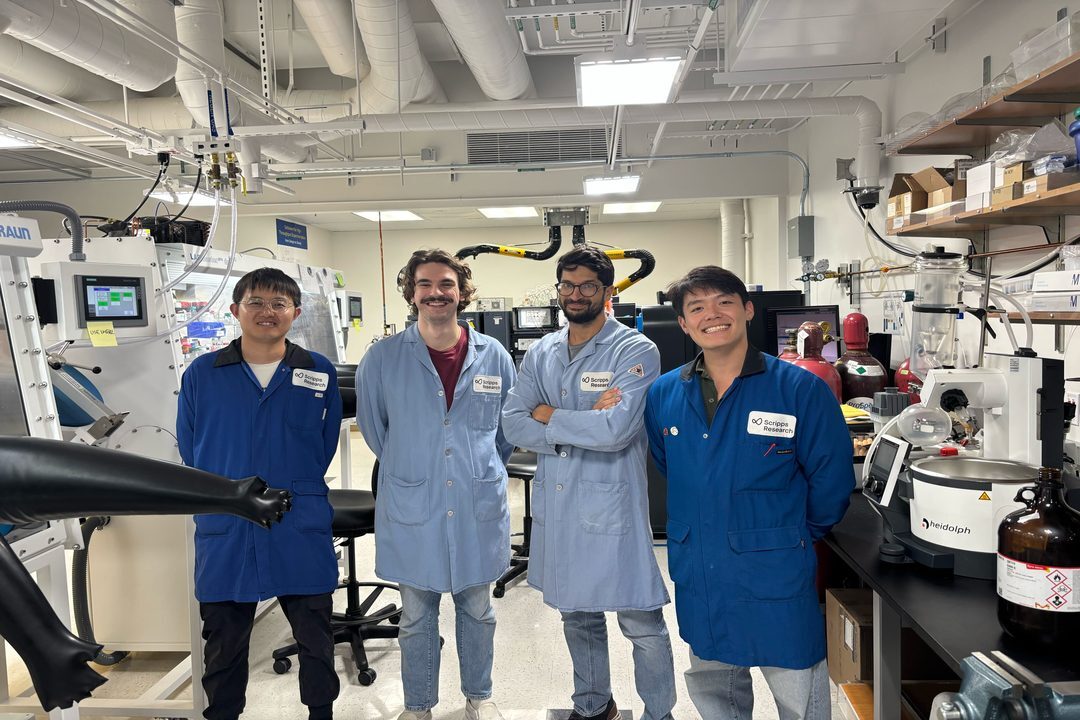
From left: Anil Gupta and Arnab Chatterjee. Credit: Scripps Research


LA JOLLA, CA—Of the 1.2 million people living with HIV in the United States, approximately 10% are also infected with hepatitis B virus (HBV), a chronic condition that can be effectively controlled with the daily antiviral therapy entecavir. However, its real-world effectiveness is limited by the need for lifelong daily dosing, which presents a significant adherence challenge, particularly for individuals already managing complex HIV treatment regimens. Missed doses can lead to viral rebound, antiviral resistance and progressive liver damage.

To address this critical gap, scientists at the Calibr-Skaggs Institute for Innovative Medicines—the drug discovery and development arm of Scripps Research—have been awarded a grant from the National Institute of Allergy and Infectious Diseases (NIAID), part of the National Institutes of Health (NIH), to develop a long-acting injectable (LAI) therapy for individuals co-infected with HIV and HBV. By reducing dosing frequency, the approach aims to improve adherence and deliver sustained HBV suppression for these patients. 

The new grant will provide up to $5.1 million over five years to support the development of a long-acting and pro-drug form of entecavir—a modified version that converts to the active drug inside the body. The goal of this new treatment is to replace daily oral pills with a once-monthly or once-quarterly injectable. Structured as a milestone-driven program, the funding will support optimization of the drug and carrier formulation, followed by safety, pharmacology and Investigational New Drug (IND)-enabling studies required to advance the candidate toward clinical evaluation.

“Long-acting therapies have already transformed HIV care by helping improve treatment adherence, but people living with both HIV and HBV continue to face the challenge of maintaining daily HBV treatment,” says Anil Gupta, director of medicinal chemistry at Calibr-Skaggs and principal investigator on the new grant. “Because HIV can accelerate the liver damage associated with HBV, there remains a significant need for complementary treatment approaches that address both diseases together. Through this work, we aim to develop a long-acting form of entecavir that could be administered as infrequently as once every three months, with the potential to improve adherence and help patients more effectively manage both conditions.”

To create the new long-acting drug, researchers are utilizing Calibr-Skaggs’ proprietary LAI platform: a technology designed to extend the duration and optimize the delivery of therapies ranging from small molecules such as entecavir to peptides and biologics. By reducing dosing frequency, the platform aims to improve treatment adherence, minimize side effects and lessen the burden of long-term therapy for patients. Beyond HBV, Calibr-Skaggs’ platform has supported programs in neurodegeneration, HIV, malaria, obesity and inflammatory diseases. One such therapy, MMV371—a long-acting prodrug version of atovaquone—is currently being evaluated in a Phase 1 clinical trial for malaria (NCT06558643).

“This patient population faces a significant and ongoing treatment burden, where missed doses can contribute to worse outcomes and accelerated liver damage,” says Arnab Chatterjee, executive vice president of Calibr-Skaggs. “Our long-acting injectable platform was designed specifically for settings where extended drug delivery can make a meaningful difference. Across multiple disease areas, we’ve seen its potential to reduce dosing frequency and overall treatment burden, creating opportunities not only for greater convenience but also for potentially improved safety through lower cumulative therapy exposure over time.”

Groundbreaking Science.
Life-changing Medicine.