Scripps Research scientists awarded nearly $5 million by NIH to investigate cancer growth
March 10, 2026

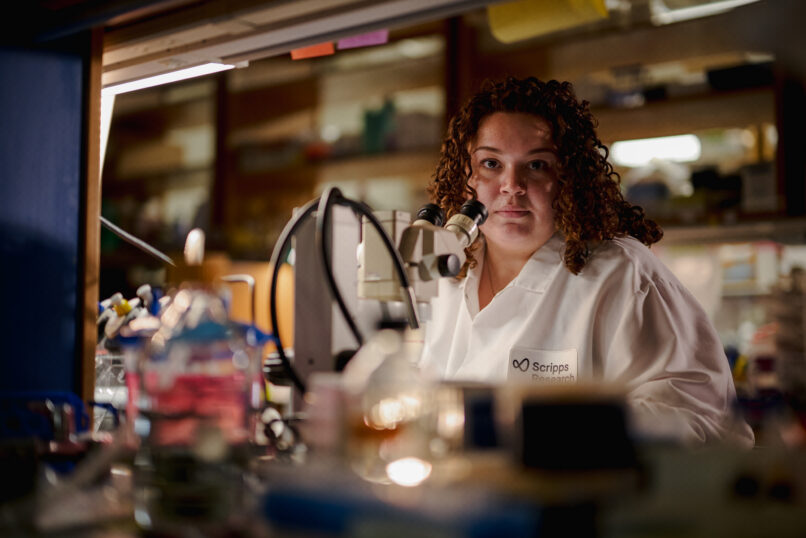
James Williamson.Credit: Scripps Research
LA JOLLA, CA—Cancer is often described as a disease of the genetic code, where a set of faulty instructions causes cells to grow uncontrollably. But scientists have found that there is a second layer of control written in tiny chemical tags attached to RNA molecules, the messengers that carry genetic instructions from DNA and help build proteins. When those tags are disrupted, the consequences can be just as profound for cancer development.
Now, scientists at Scripps Research have received a substantial grant from the National Cancer Institute’s RNA Modifications Driving Oncogenesis (RNAMoDO) program to map this hidden layer in cancer cells and understand how it fuels tumor growth. James Williamson, the Cecil H. and Ida M. Green Chair of Chemistry at Scripps Research, leads the project in collaboration with Scripps Research professor Gary Siuzdak and Rachel Green, the Bloomberg Distinguished Professor at the Johns Hopkins University School of Medicine. The project is expected to last five years, with an anticipated total funding of nearly $5 million, dependent on annual approval and the availability of funds.
“We think changes in RNA modifications are a big part of how cancer cells reprogram themselves to survive and grow, and this project gives us a concrete way to test that,” says Williamson. “Understanding the mechanism behind that reprogramming is the first step toward being able to disrupt it.”
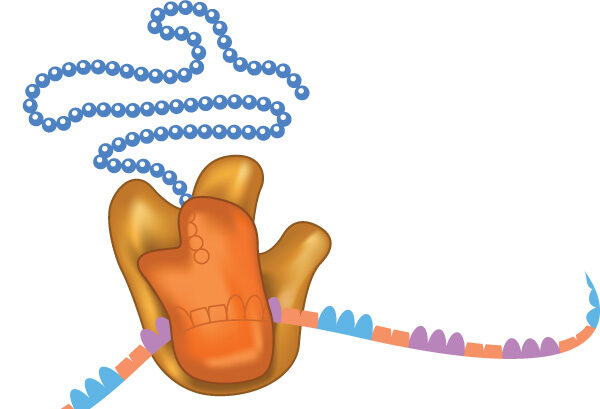
Every cell depends on ribosomes, the molecular machines responsible for building proteins, to carry out virtually all of life’s work. Both ribosomes and a related class of molecules called transfer RNAs (tRNAs), which deliver the amino acid building blocks that ribosomes string together into proteins, are studded with dozens of chemical modifications. Scientists once assumed these modifications were fixed features of cellular machinery, but mounting evidence has upended that view. Modification patterns can shift in response to changing conditions inside a cell, altering which proteins get made and at what rate. Abnormal modification patterns have now been observed across many cancer types, raising the possibility that these molecular tags don’t just reflect disease but actively help drive it.
At the center of the new study is methionine, a common amino acid found in protein-rich foods such as pork, salmon and eggs. Inside cells, methionine is the primary raw material for a process called methylation, in which methyl groups (a type of chemical tag) are added to RNA. Because both ribosomes and tRNAs rely heavily on these tags, the availability of methionine has an outsized influence on how the cell’s protein-making apparatus is tuned. There is growing interest in limiting dietary methionine as a potential strategy to slow cancer cell growth, but the underlying molecular mechanisms remain poorly understood.
To connect methionine availability to cancer cell behavior, the team will combine three complementary approaches. Williamson’s lab will use mass spectrometry (a technique that identifies and measures molecules by their weight) to document precisely how the chemical tags on ribosomes and tRNAs change in cancer cells when methionine is scarce. Siuzdak’s lab will use metabolomics, the large-scale measurement of small molecules circulating inside cells, to track how methionine and related compounds fluctuate. Together, these two datasets will allow the researchers to test how changes in diet-derived nutrients translate directly into changes in RNA chemistry.
Green’s lab at Johns Hopkins will then apply ribosome profiling, a technique that captures a genome-wide snapshot of protein production in real time. By measuring how efficiently the cell reads each gene, the team can identify which proteins cancer cells are making more or less of when methionine levels drop.
“The connection to methionine gives us a clear entry point into a question with real therapeutic implications,” says Williamson. “If we can show how changes in this nutrient reshape the RNA modification landscape in cancer cells, it opens up new possibilities for targeting this pathway.”
The researchers expect the findings to help explain why methionine restriction can impair cancer cell growth and to point toward new targets for treatment. The team also anticipates that this work will lay the groundwork for studying the many other types of RNA modifications that may play roles in cancer beyond methylation.
The research is supported by the National Cancer Institute of the National Institutes of Health under award number 1U01CA305256-01, as part of the RNA Modifications Driving Oncogenesis (RNAMoDO) program (RFA-CA-24-029). The study’s principal investigators include James Williamson and Gary E. Siuzdak of Scripps Research, and Rachel Green of Johns Hopkins University School of Medicine.

Understanding biological factories to fuel drug discovery
Every organism depends on its ability to make cellular proteins from the core set of genetic blueprints—a process carried out in the cell by ancient biological factories. However, when this building process goes awry, various types of disease can take hold. In this opening lecture of the sixth season, Scripps Research professor and regular Front Row host Jamie Williamson unveiled his lab’s unprecedented exploration of these protein-building machines and the secrets they hold in maintaining cellular health. His cutting-edge research is evolving our view of molecular engineering and uncovering new drug targets for bacterial infections and cancer.



Scripps Research neurobiologist Ardem Patapoutian elected to American Academy of Arts and Sciences
Patapoutian, a professor in Scripps Research’s Department of Neuroscience, has catapulted the scientific understanding of sensory transduction—the methods by which the body responds to sensory input from the eyes, tongue, nose and skin.

Chemist Jin-Quan Yu of Scripps Research elected to American Academy of Arts and Sciences
The American Academy of Arts and Sciences, one of the world’s most prestigious honor societies, has named Scripps Research chemist Jin-Quan Yu, PhD, as an elected member of its 2019 class. Yu is known globally for his groundbreaking work in the field of organic synthetic chemistry.
New technique allows study of large molecule assembly in real time
Researchers demonstrate new microscopy technique for studying complex biological processes at the molecular level. The technique allows scientists to observe critical steps in the production of ribosomes, protein-building cellular machines.