
Three Scripps Research faculty elected to National Academy of Sciences
May 4, 2022

LA JOLLA, CA—Three faculty at Scripps Research have been elected to the National Academy of Sciences, one of the highest honors awarded to scientists. The academy awards membership in recognition of “distinguished and continuing achievements in original research.”
The election of Hollis Cline, PhD, Jane Dyson, PhD, and James Williamson, PhD, brings the total number of memberships held by Scripps Research faculty in the National Academies of Sciences, Medicine and Engineering to 30.
“All three of our faculty recognized by the Academy have contributed to major advances in their respective fields of research,” say Scripps Research President and CEO Peter Schultz, PhD. “On behalf of the entire Scripps Research community, I congratulate them on this well-deserved honor.”
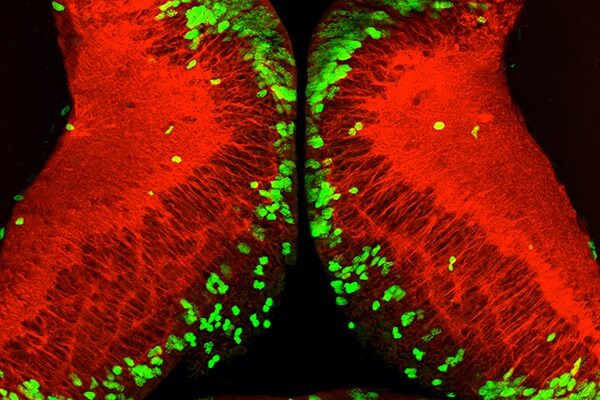
Hollis Cline, PhD, Hahn Professor of Neuroscience, is a leader in research that explores how sensory experience affects brain development and plasticity. Her research focuses on visual circuits and how circuit development and function become disrupted in neurodevelopment disorders. Her comprehensive body of work has advanced an understanding of the role of experience in shaping brain development with relevance to several developmental neurological disorders such as autism spectrum disorders and schizophrenia. Cline, who also serves as chair of the Department of Neuroscience and director of the Dorris Neuroscience Center, joined Scripps Research in 2008.
Jane Dyson, PhD, a professor in the Department of Integrative Structural and Computational Biology, studies the relationships between amino acid sequences of proteins and their structure and function. Her work in intrinsically disordered proteins and in understanding enzyme and protein function through the study of structure and dynamics has led to numerous discoveries on cancer tumor growth, drug design and the functions of important proteins in the human body. Dyson joined Scripps Research in 1984 as a research associate in the laboratory of the late Richard Lerner. She was appointed professor in 2001.
James Williamson, PhD, is the executive vice president of Research and Academic Affairs at Scripps Research and a professor in the departments of Chemistry and Integrative Structural and Computational Biology. His research interests focus on understanding RNA—molecules in cells heavily involved in the process of translating genes into proteins, as well as in fine-tuning gene activity. He uses cutting-edge biochemistry, biophysics and structural biology approaches to uncover insights into RNA structure, RNA-protein interactions and the assembly of ribosomes with the aims of better understanding a host of diseases, as well as improving drug discovery. Williamson joined Scripps Research as professor in 1998.
The National Academy of Sciences is a private, nonprofit institution that was established under a congressional charter signed by President Abraham Lincoln in 1863. It recognizes achievement in science by election to membership, and—with the National Academy of Engineering and the National Academy of Medicine—provides science, engineering, and health policy advice to the federal government and other organizations.
To view a full list of members elected in 2022, visit the National Academy of Sciences website.


How experiences shape the developing brain and impact neurological diseases
As we age, learn and grow over our lifetimes, the brain continually responds and adapts to what we experience. In this Front Row lecture, Scripps Research Chair of the Department of Neuroscience Hollis Cline revealed how sensory experiences shape the brain during development and aging—particularly visual experiences. Cline’s work has been critical in revealing how key visual brain circuits become disrupted in neurodevelopmental disorders, as well as in mapping the different communication pathways between neurons.
Cracking the neural code: A century of science changing life
The brain remains one of the most complex and mysterious parts of the human body, controlling everything from how we move to where we store and process memory. Scripps Research neuroscientists are helping us understand the mechanisms of why we age, what drives neurodegenerative diseases like Alzheimer’s and Parkinson’s, how the brain communicates with the rest of the body, and more. By evaluating the brain at multiple levels, these researchers are shedding light on the mysteries that have perplexed the field for decades.


Scripps Research neurobiologist Ardem Patapoutian elected to American Academy of Arts and Sciences
Patapoutian, a professor in Scripps Research’s Department of Neuroscience, has catapulted the scientific understanding of sensory transduction—the methods by which the body responds to sensory input from the eyes, tongue, nose and skin.