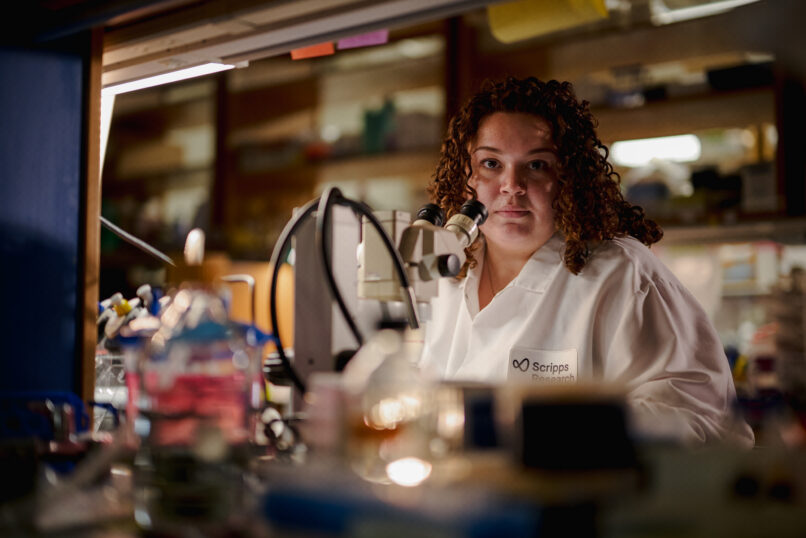

Scripps Research ranked second in the world among scientific institutes for biomedical research
May 16, 2019

LA JOLLA, CA – Nature Index has ranked Scripps Research second in the world and first in the United States among stand-alone scientific institutes for biomedical research, based on discoveries by the institute’s researchers published in leading scientific journals.
The ranking, released today, “highlights scientists and institutions prominent in the ongoing research effort that will further transform our ideals of a healthy human life in the coming decades,” according to Nature.
“This new biomedical research ranking by Nature Index, on top of the other recent rankings, reflects the life-changing science that is taking place at Scripps Research, and the curiosity and tenacity of our scientists,” says James Williamson, PhD, Scripps Research’s executive vice president of Research and Academic Affairs. “One of our outstanding features is how we erase the barriers between disciplines such as chemistry, biology, drug discovery and genomics, and that is evident in the breadth and depth of the research taking place here and with our collaborators around the world.”
In addition to ranking second globally and first in the United States among stand-alone institutes in the biomedical research rankings, Scripps Research ranked 29th globally among all scientific organizations, including universities.
The Nature Index is compiled by Nature Research, part of Springer Nature. The Nature Index 2019 Biomedical Sciences supplement released today is the latest in a series of focused rankings in areas such as collaboration, innovation and biomedical research. The new biomedical research rankings are based on papers in 27 fields of biomedical research published in 55 journals from 2012 to 2018. The tables rank institutes based on fractional count, which considers the share of authorship on each article.
Previously, Scripps Research was ranked the overall most influential research institution in the world by the Nature Index 2017 Innovation supplement, a separate focused ranking. That ranking was based on the Normalized Lens Influence Metric, which measures the influence an institution’s research has on innovation by calculating the citations of its research articles in patents owned by third parties, rather than those owned by institutions themselves.
In addition to the special supplements, Nature Index publishes a more general set of rankings each year, called the Annual Tables, which show calendar year output in 68 high-quality journals for the last three years, and reveal the countries, institutions and companies that are leading the way in publishing high-quality global science.
Last year, the Annual Tables ranked Scripps Research the top stand-alone scientific institute in the United States. In addition to receiving the top overall U.S. ranking, the institute was ranked first in its class in the United States in both life sciences and chemistry research. The Annual Tables also ranked Scripps Research third globally in life sciences research and fourth in chemistry.


Understanding biological factories to fuel drug discovery
Every organism depends on its ability to make cellular proteins from the core set of genetic blueprints—a process carried out in the cell by ancient biological factories. However, when this building process goes awry, various types of disease can take hold. In this opening lecture of the sixth season, Scripps Research professor and regular Front Row host Jamie Williamson unveiled his lab’s unprecedented exploration of these protein-building machines and the secrets they hold in maintaining cellular health. His cutting-edge research is evolving our view of molecular engineering and uncovering new drug targets for bacterial infections and cancer.



Scripps Research neurobiologist Ardem Patapoutian elected to American Academy of Arts and Sciences
Patapoutian, a professor in Scripps Research’s Department of Neuroscience, has catapulted the scientific understanding of sensory transduction—the methods by which the body responds to sensory input from the eyes, tongue, nose and skin.

Chemist Jin-Quan Yu of Scripps Research elected to American Academy of Arts and Sciences
The American Academy of Arts and Sciences, one of the world’s most prestigious honor societies, has named Scripps Research chemist Jin-Quan Yu, PhD, as an elected member of its 2019 class. Yu is known globally for his groundbreaking work in the field of organic synthetic chemistry.

New technique allows study of large molecule assembly in real time
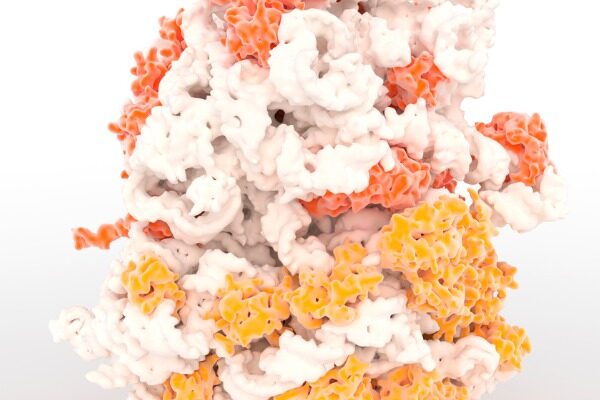
Researchers demonstrate new microscopy technique for studying complex biological processes at the molecular level. The technique allows scientists to observe critical steps in the production of ribosomes, protein-building cellular machines.