Scripps Research discoveries pave way to clinical trial of new type of HIV vaccine
March 27, 2019
La Jolla, CA – The International AIDS Vaccine Initiative (IAVI) announced today the start of a Phase I clinical trial to test a novel HIV vaccine candidate, an advance in vaccine design enabled by Scripps Research discoveries.
The aim of the IAVI-led trial is to assess the safety of the candidate and to determine if vaccination induces the human immune system to produce proteins known as neutralizing antibodies (NAbs), which have been shown to block HIV infection in animal studies.
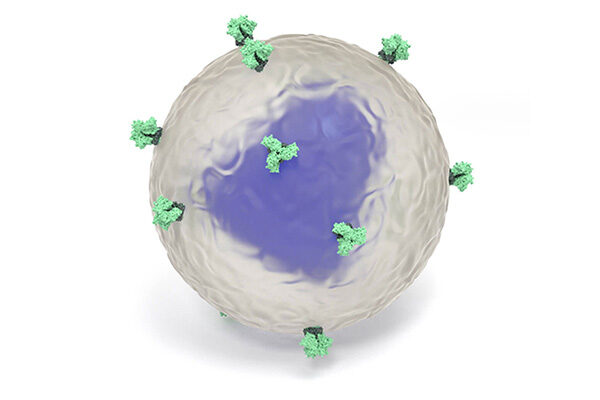
The vaccine (BG505 SOSIP.664 gp140) is based on the HIV envelope protein (Env), which is shaped like a three-pronged spike. This configuration, known as a trimer, is a target for antibodies produced by the human immune system after infection.
The trimer was engineered and characterized by a team directed by John Moore, PhD, at the Weill Cornell Medical College, Rogier Sanders, PhD, now at the University of Amsterdam Academic Medical Center, and Andrew Ward, PhD, and Ian Wilson, DPhil, at Scripps Research. The outcome of their work was an important advance in stabilizing and producing the highly fragile Env protein in a soluble, native-like configuration, which has spurred a sea change in HIV subunit vaccine approaches.
“The most promising HIV vaccine approach focuses on eliciting broadly neutralizing antibodies. Neutralizing antibodies against engineered and structure-based immunogens have been generated in animal models, and the findings of this human trial will provide critical information on how to further advance this research into developing an effective HIV vaccine,” says Wilson, chair of the Department of Integrative Structural and Computational Biology at Scripps Research.
Previous vaccine trials involving Env concepts have tested the immunogenicity of only a portion of the Env structure or proteins that do not resemble the native structure. In animal testing, vaccination with BG505 SOSIP.664 gp140 trimers caused immune system cells to produce antibodies that neutralized the virus type from which the engineered immunogen was derived. Encouragingly, a subset of good responding animals exhibited sterilizing immunity after viral challenge. Investigators hope to see a similar antibody response in humans.
“This trial is unique because it represents the fruition of decades of scientific research to engineer this promising vaccine candidate,” says Mark Feinberg, MD, PhD, president and CEO of IAVI. “Much important work was done in the late 1990s and early 2000s to attempt to stabilize the HIV envelope protein in its native configuration, but this difficult work took several more years to achieve.”
Many vaccine researchers agree that the goal of HIV vaccination will be to produce a particular type of NAb known as a broadly neutralizing antibody (bNAb). These antibodies can neutralize a wide range of genetically variable HIV strains in laboratory tests, and studies show that some bNAbs can protect monkeys against a virus that might protect people against HIV infection if present before virus exposure.
The neutralizing antibody concept builds on discoveries made over two decades ago by Scripps Research Professor Dennis Burton, co-chair of the Department of Immunology and Microbiology, who with collaborators identified the first bNAb to HIV. Found in a relatively small number of people, these immune system proteins possess the ability to attach to and disable a broad range of HIV strains that infect the body.
Though it is not likely that vaccination with BG505 SOSIP.664 gp140 on its own will directly lead to the production of bNAbs, the hope is that it could allow researchers to better understand what is required to induce bNAb responses. The trial represents a crucial component of the iterative, rational vaccine design process that is being conducted for several microbial pathogens at Scripps Research. The immunized patient samples will guide the next round of design and improvement. Much of the redesign will be guided by the structural insights pursued by the Ward and Wilson labs, whose work already resulted in improvements to the SOSIP trimer BG505.664, that is the main focus of this trial.
Collaborators in the trial include the Fred Hutchinson Cancer Research Center, Seattle HIV Vaccine Trials Unit; Kenya AIDS Vaccine Initiative, Institute of Clinical Research, University of Nairobi, Kenya (KAVI-ICR, Nairobi); Massachusetts General Hospital, Translational and Clinical Research Center (Boston); and the pharmaceutical company GSK.
The IAVI W001 trial will enroll approximately 60 healthy adult volunteers in Seattle, Boston and Nairobi. Results of the IAVI W001 trial are expected in 2020.



An immunity boost: A century of science changing life
In 1961, pioneering immunologist Frank Dixon established the Department of Experimental Pathology at the Scripps Clinic and Research Foundation, which would later become the basis of Scripps Research. Dixon served as director for 25 years, where his immunological focus would forever shape the institute’s scientific focus—as well as the world’s. Since Dixon’s leadership, scientists at Scripps Research have made countless discoveries revealing how the immune system functions and responds to different diseases. From designing universal vaccines for harmful viruses to uncovering the structures of deadly microbes, we're dedicated to translating our understanding of the immune system to eradicate disease worldwide.

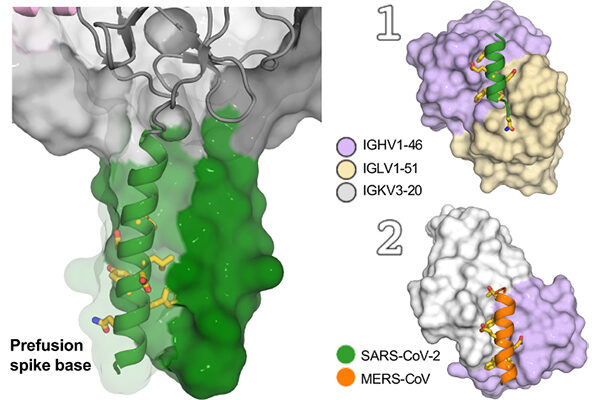
Scientists find human antibodies that can block multiple coronaviruses including SARS-CoV-2
Results from a Scripps Research and UNC team pave the way for a vaccine and therapeutic antibodies that could be stockpiled to fight future coronavirus pandemics.