Scripps Research assistant professor awarded NIH HEAL Initiative grant
December 11, 2024
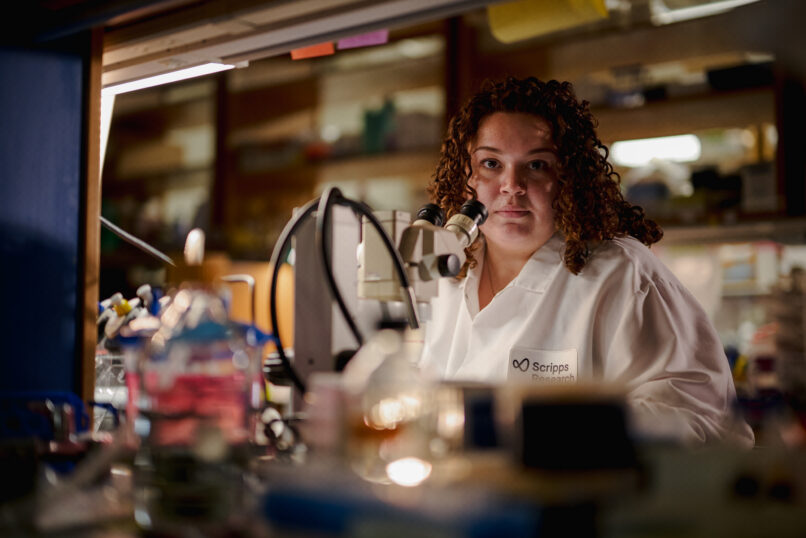
Alejandra Mendoza, PhD.Credit: Scripps Research.
LA JOLLA, CA—The National Institutes for Health’s (NIH) HEAL Initiative has awarded Alejandra Mendoza, PhD, assistant professor of Immunology and Microbiology, more than $1.6 million as part of a DP2 grant designed to support early-stage investigators with highly innovative and impactful research.
The NIH’s HEAL Initiative, Helping to End Addiction Long-term, is aimed at supporting preclinical development of safe, effective and non-addictive small molecule and biological therapeutics to treat pain—with the goal of accelerating promising early therapeutic molecules and preparing them for Early Phase Pain Investigation Clinical Network or other phase II clinical studies.
Mendoza was awarded the grant for research that has the potential to significantly advance our understanding and treatment of pain to help end addiction. Her research is focused on the molecular underpinnings that drive neuro-immune interactions that promote immune homeostasis in tissues—balancing responsiveness against pathogenic agents versus tolerance to benign stimuli—as when imbalances exist, maladaptive responses like pain and inflammation can occur.
A particular focus on Mendoza’s research centers around bidirectional crosstalk between sensory neurons and immune cells, and how these interactions shape tissue function, immunity, and sensory perception. Her work seeks to bridge the fields of immunology and peripheral neuroscience to advance our understanding of the underlying causes of chronic pain and inflammation.
The grant, which includes a total funding of $1,656,000, runs through August 2027 and is funded through the National Institute of Neurological Disorders and Stroke.
How the nervous and immune systems coordinate inflammation
Just as we can distinguish between the sting of heat and the chill of cold, our immune system is finely tuned to recognize and respond to a wide range of threats, from viruses and bacteria to allergens and injury. This complex sensing relies on communication between diverse cell types, including sensory neurons and immune cells, to ensure responses are tailored to the specific challenge. In this Front Row lecture, Assistant Professor Alejandra Mendoza explored how neuro-immune cellular circuits regulate inflammation, pain, and immunity. By bridging neuroscience and immunology, her research is revealing how our bodies interpret signals from the environment to guide immune decisions, from fighting infections to controlling tumor growth and chronic inflammatory diseases.
An immunity boost: A century of science changing life
In 1961, pioneering immunologist Frank Dixon established the Department of Experimental Pathology at the Scripps Clinic and Research Foundation, which would later become the basis of Scripps Research. Dixon served as director for 25 years, where his immunological focus would forever shape the institute’s scientific focus—as well as the world’s. Since Dixon’s leadership, scientists at Scripps Research have made countless discoveries revealing how the immune system functions and responds to different diseases. From designing universal vaccines for harmful viruses to uncovering the structures of deadly microbes, we're dedicated to translating our understanding of the immune system to eradicate disease worldwide.