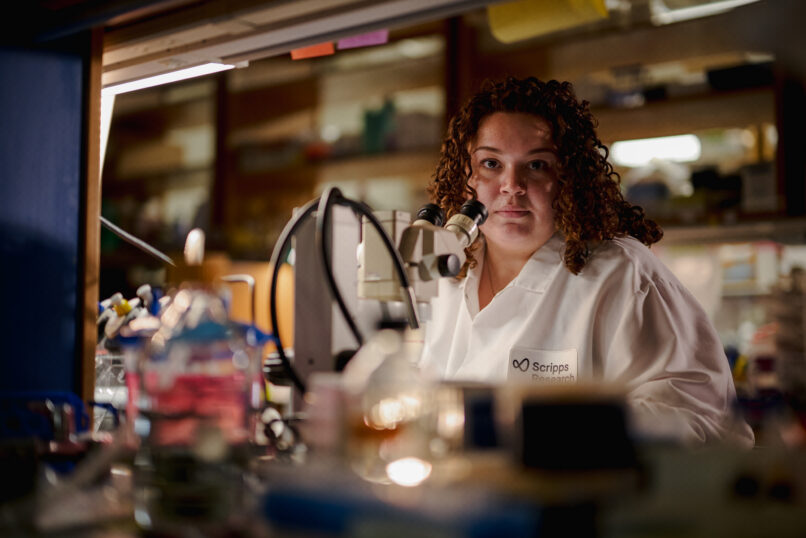
Alejandra Mendoza joins Scripps Research faculty to unravel the neuro-immune connection
July 12, 2022

Alejandra Mendoza, assistant professor of immunology and microbiology at Scripps Research. Credit: Memorial Sloan Kettering Cancer Center
LA JOLLA, CA— Alejandra Mendoza, PhD, will join Scripps Research as an assistant professor in the Department of Immunology and Microbiology to uncover the ways the immune and nervous systems interact to maintain homeostasis in the body.
“Innovation is a cornerstone of Scripps Research, and Mendoza’s multifaceted work is an illustration of the transformative science that our institute is built on,” says Jamie Williamson, PhD, executive vice president of Research and Academic Affairs at Scripps Research. “I look forward to seeing the ways her research leads to new breakthroughs across immunology, neuroscience and beyond.”
At Scripps Research, Mendoza’s lab will illuminate the diverse cellular circuits that form in tissues to ultimately reveal the interconnected mechanisms that drive inflammation. Specifically, her work focuses on barrier tissues, which are the areas of the body (like the skin or gastrointestinal tract) that interface with the outside world. These barrier tissues are constantly exposed to a myriad of stimuli across temperature, mechanical forces, tissue damage, pathogens, commensal microbes and countless others. Extensive communication between the nervous and immune systems is thus essential for the body to effectively—and correctly—respond to these many different inputs.
Using imaging, genetic targeting and gene expression analysis, Mendoza is bringing to light these molecular mechanisms within barrier tissues. Mendoza notes that her research could reveal novel therapeutic targets directed not only at immune cells and pathways, but also at mechanisms that involve the nervous system and the epithelial barrier. These discoveries could be applied to treating a spectrum of immunologically chronic conditions such as inflammatory bowel diseases, asthma or psoriasis, as well as improving our understanding of complicated sensations like pain.
“In addition to being known as one of the most respected institutions in the world, Scripps Research is also uniquely collaborative across its many departments,” Mendoza says. “This exciting scientific environment is ideal for my interdisciplinary research that spans immunology, neuroscience and microbiology, and even larger than that, for providing new scientific avenues in the future.”
Mendoza’s previous research focused on how different cell types interact to shape immunity, including her postdoctoral fellowship studies conducted in the laboratory of Alexander Rudensky at Memorial Sloan Kettering Cancer Center. While there, she used genetic tools and imaging analysis techniques to understand how circuits form across different cell types to promote and restrain immune responses. Before that, Mendoza completed her PhD in basic medical science from New York University in the laboratory of Susan Schwab, where she studied how lymphatic endothelial cells promote the trafficking and survival of naïve T cells. She received a Bachelor of Science in biology from the University of Miami.
Throughout her studies, Mendoza has received numerous awards, including the Irvington Postdoctoral Fellowship from the Cancer Research Institute, the Basic and Translational Immunology Postdoctoral Award from Memorial Sloan Kettering Cancer Center; multiple National Research Service Awards from both Memorial Sloan Kettering Cancer Center and New York University School of Medicine; and the Henry King Scholarship from the University of Miami.


How the nervous and immune systems coordinate inflammation
Just as we can distinguish between the sting of heat and the chill of cold, our immune system is finely tuned to recognize and respond to a wide range of threats, from viruses and bacteria to allergens and injury. This complex sensing relies on communication between diverse cell types, including sensory neurons and immune cells, to ensure responses are tailored to the specific challenge. In this Front Row lecture, Assistant Professor Alejandra Mendoza explored how neuro-immune cellular circuits regulate inflammation, pain, and immunity. By bridging neuroscience and immunology, her research is revealing how our bodies interpret signals from the environment to guide immune decisions, from fighting infections to controlling tumor growth and chronic inflammatory diseases.

Scripps Research assistant professor awarded NIH HEAL Initiative grant
The National Institutes for Health’s (NIH) HEAL Initiative has awarded Alejandra Mendoza, PhD, assistant professor of Immunology and Microbiology, more than $1.6 million as part of a DP2 grant designed to support early-stage investigators with highly innovative and impactful research.
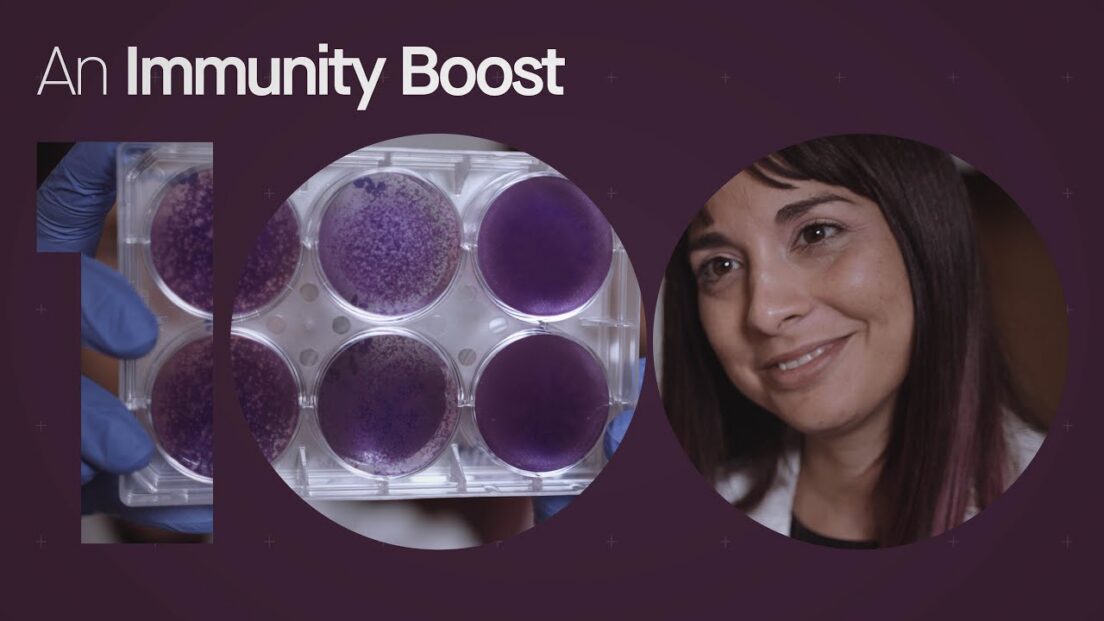
An immunity boost: A century of science changing life
In 1961, pioneering immunologist Frank Dixon established the Department of Experimental Pathology at the Scripps Clinic and Research Foundation, which would later become the basis of Scripps Research. Dixon served as director for 25 years, where his immunological focus would forever shape the institute’s scientific focus—as well as the world’s. Since Dixon’s leadership, scientists at Scripps Research have made countless discoveries revealing how the immune system functions and responds to different diseases. From designing universal vaccines for harmful viruses to uncovering the structures of deadly microbes, we're dedicated to translating our understanding of the immune system to eradicate disease worldwide.