Major depressive disorder therapy to enter Phase 3 pivotal clinical trials
July 21, 2023
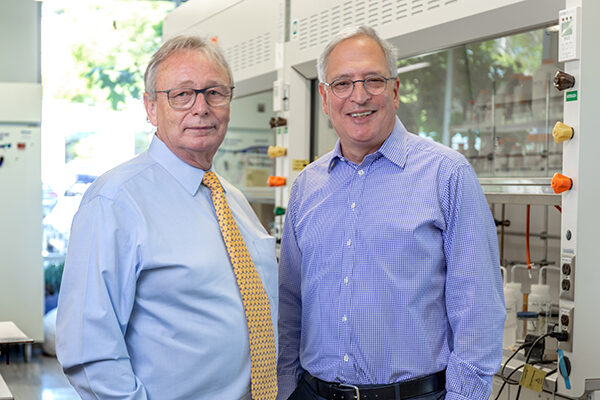
Navacaprant was invented at Scripps Research in the laboratories of faculty members Edward Roberts, PhD (left), and Hugh Rosen, MD, PhD (right).
LA JOLLA, CA — The drug navacaprant, also known as NMRA-140, will be entering a Phase 3 pivotal clinical program to evaluate its safety and efficacy for the treatment of major depressive disorder (MDD). Navacaprant was initially discovered at Scripps Research and is currently being developed by spin-off company Neumora Therapeutics (formerly BlackThorn Therapeutics).
Navacaprant was invented at Scripps Research in the laboratories of faculty members Edward Roberts, PhD, and Hugh Rosen, MD, PhD. Navacaprant has a novel mechanism of action that works by blocking the brain’s kappa opioid receptors, which play a key role in many different central nervous processes—including stress, mood, pain, inflammation and more. NRMA-140 was designed to reduce the body’s stress response and mediate negative emotions, which holds the potential to improve cognitive impairment and ease symptoms of a depressed mood.
“Depression has emerged as a leading global health concern, taking an immense toll on individuals and their loved ones,” says Rosen, professor in the Department of Molecular Medicine at Scripps Research and co-founder of BlackThorn Therapeutics. “As evidenced in the recently completed Phase 2 studies, navacaprant has a novel mechanism of action, meaning it is differentiated from other antidepressants currently available today. As navacaprant is set to enter pivotal clinical trials in the near future, this monotherapy is that much closer to reaching those who are in severe need of new therapeutics.”
Roughly 21 million adults in the United States have reported experiencing a major depressive episode, which represents 8.4% of all U.S. adults. Females are more likely to experience major depression, and people ages 18-25 are the most affected. The National Survey on Drug Use and Health (NSDUH) defines a major depressive episode as “a period of at least two weeks when a person experienced a depressed mood or loss of interest in pleasure in daily activities, and had a majority of specified symptoms, such as problems with sleep, eating, energy, concentration or self-worth.”
Neumora is initiating its Phase 3 clinical program after a recently completed Phase 2 study showed clinically meaningful improvements in depression symptoms for people with moderate-to-severe MDD who took navacaprant, as well as a positive End-of-Phase 2 meeting with the U.S. Food and Drug Administration (FDA). The pivotal program will include three Phase 3 randomized, placebo-controlled, double-blind studies. It will also incorporate an open-label extension study designed to evaluate the long-term safety of navacaprant. These studies are expected to support a New Drug Application (NDA) for navacaprant’s use as a monotherapy in 2025.




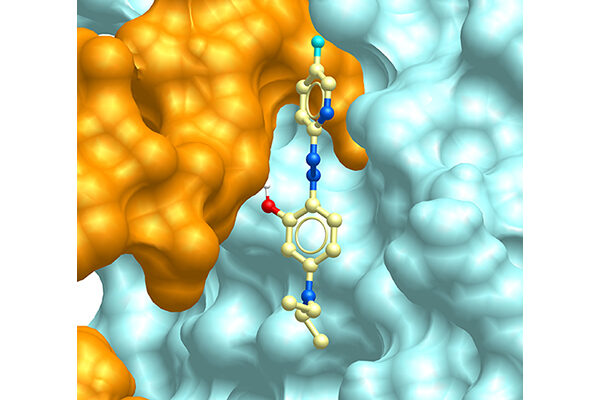

Hugh Rosen: A physician-scientist’s guide to developing medicines
More than 90% of drugs fail to make it from the lab bench to approval. How, then, has a physician-scientist like Hugh Rosen found so much success in developing medicines? Rosen, who’s the chair of the Molecular and Cellular Biology Department and the Pearson Family Chair at Scripps Research, co-invented the drugs ozanimod (approved for multiple sclerosis and ulcerative colitis) and navacaprant (in Phase 3 trials for major depressive disorder). In this episode of Science Changing Life, listen in as Rosen unveils the success stories behind these groundbreaking treatments—shedding light on the challenges and triumphs shaping modern medicine.

Bringing precision therapy to mental disorders
Mental disorders like depression and schizophrenia affect the lives of millions of people around the world, and yet, available treatment options have remained the same for decades. In this Front Row lecture, Scripps Research professor Hugh Rosen shared how his pioneering research has led to the development of the drug navacaprant, which precisely targets one of the brain’s behavioral circuits and is currently in clinical testing for major depressive disorder. Harnessing his expertise as a physician-scientist, Rosen has discovered and developed multiple other medicines, including ozanimod—a breakthrough treatment approved for multiple sclerosis and ulcerative colitis.
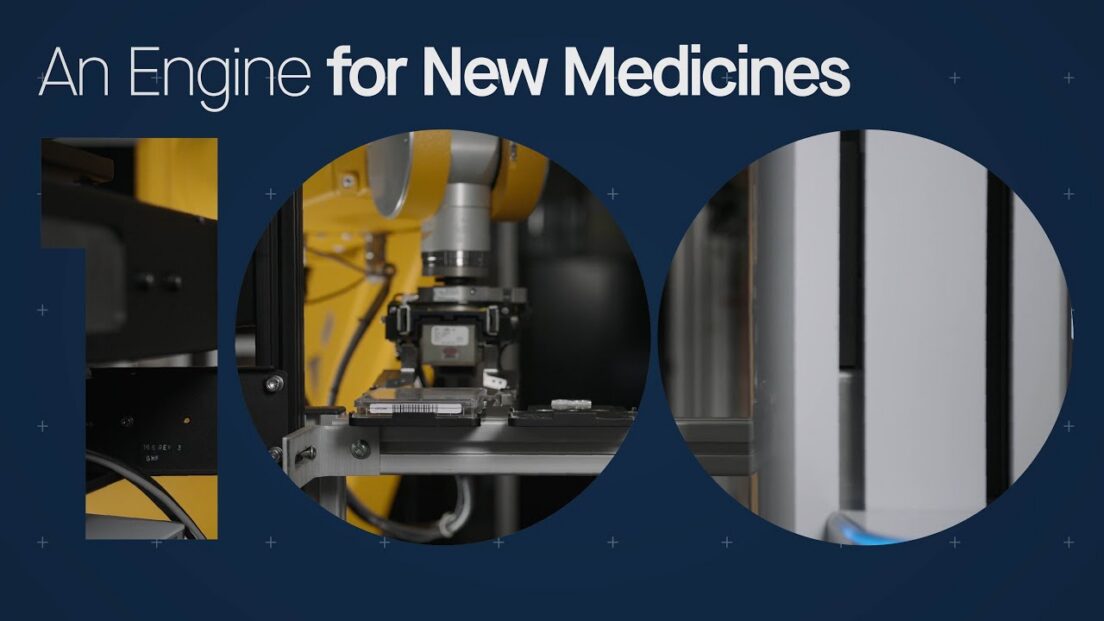
An engine for new medicines: A century of science changing life
Calibr, a nonprofit research institute founded by Scripps Research President and CEO Pete Schultz, joined Scripps Research in 2018 as its drug discovery division. As a world-class nonprofit “bench to bedside” drug discovery engine, Calibr delivers groundbreaking solutions to unmet medical needs by uniting the creativity of fundamental discovery with highly focused R&D capabilities and expertise.