
Scripps Research discovery could enable broad coronavirus vaccine
February 10, 2022
LA JOLLA, CA—The COVID-causing virus SARS-CoV-2 harbors a vulnerable site at the base of its spike protein that is found also on closely related coronaviruses, according to a new study from Scripps Research. The discovery, published Feb 8 in Science Translational Medicine, could inform the design of broad-acting vaccines and antibody therapies capable of stopping future coronavirus pandemics.
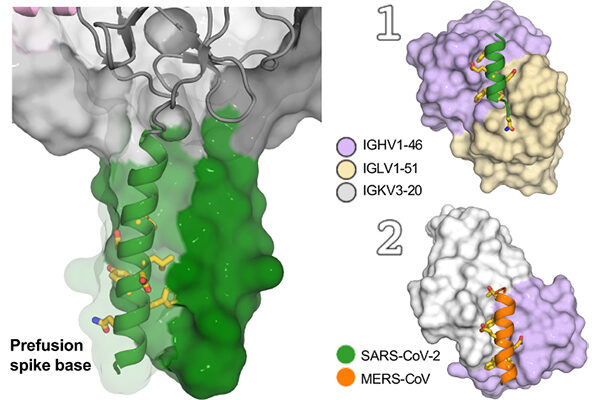
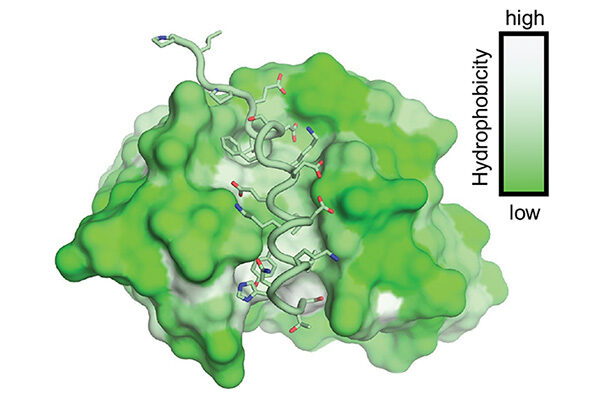
The scientists had previously isolated an antibody from a COVID-19 survivor that can neutralize not only SARS-CoV-2 but also several other members of the family of coronaviruses known as beta-coronaviruses. In the new work, they mapped at atomic scale the site, or “epitope,” to which the antibody binds on the SARS-Cov-2 spike protein. They showed that the same epitope exists on other beta coronaviruses, and demonstrated with animal models that the antibody is protective against the effects of SARS-CoV-2 infection.
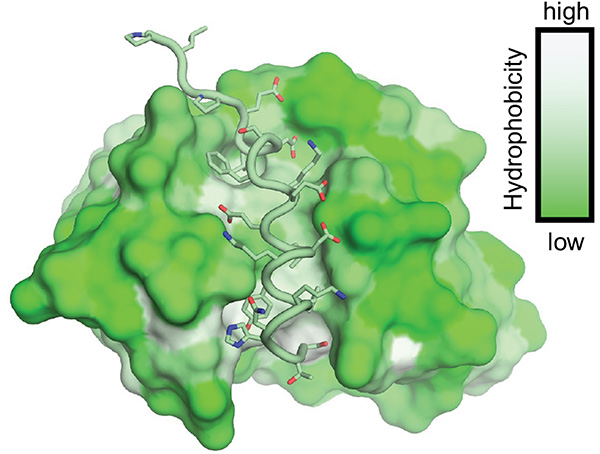
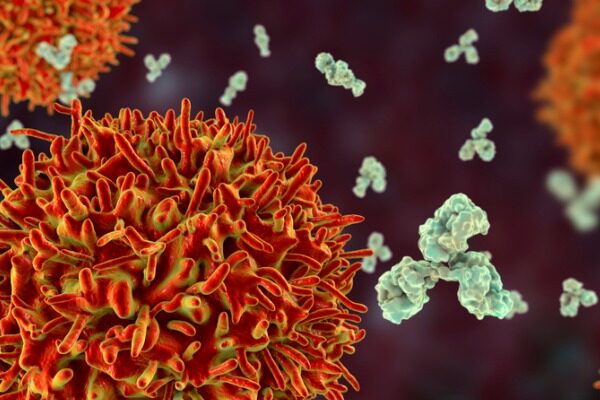
Scripps Research scientists identified a site on SARS-CoV-2, the virus that causes COVID-19, that could be useful in developing a vaccine against a broad set of coronaviruses. Credit: Scripps Research
“We’re hopeful that the identification of this epitope will help us develop vaccines and antibody therapies that work against all beta-coronaviruses, including coronaviruses that may jump from animals to humans in the future,” says study co-senior author Raiees Andrabi, PhD, an institute investigator in the Department of Immunology and Microbiology at Scripps Research.
Beta-coronaviruses have emerged recently as major, ongoing threats to public health. These coronaviruses include SARS-CoV-1, which killed about 800 people, mostly in Asia, in a series of outbreaks in 2002-04; MERS-CoV, which has killed about 900 people, mostly in the Middle East, since 2012; and, of course, SARS-CoV-2, which by now has killed over 5 million people worldwide in the COVID-19 pandemic. Two other beta coronaviruses, HCoV-HKU1 and HCoV-OC43, cause only common colds, but are suspected of having caused deadly pandemics centuries ago, when they first jumped from animals to humans. Researchers widely believe that future coronavirus pandemics initiated by animal-to-human spread are inevitable.
That prospect has spurred efforts towards the development of a pan-beta-coronaviral vaccine or antibody therapy. Scripps researchers took an initial step in that direction in 2020 when they identified an antibody, in a blood sample from a COVID-19 survivor, that could neutralize both SARS-CoV-2 and SARS-CoV-1. Although neutralizing tests weren’t available for all other beta-coronaviruses, they found that the antibody at least bound to most of these viruses.
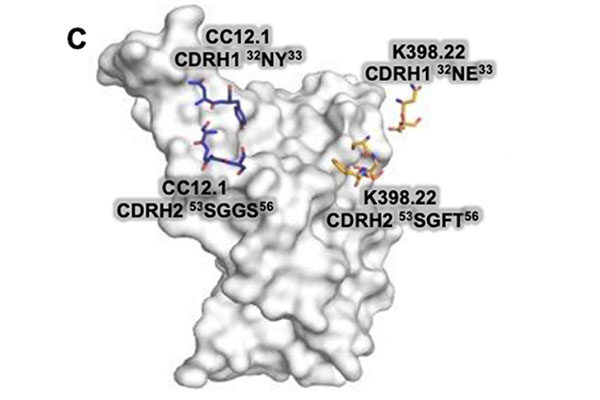
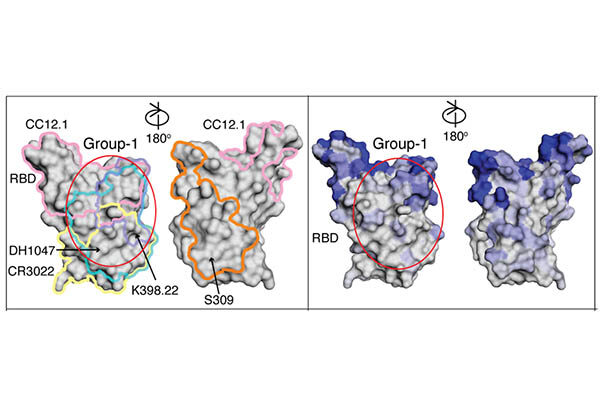
In the new study, the team used X-ray crystallography and other techniques to precisely map the antibody’s binding site on the SARS-CoV-2 spike protein. They showed that the same site is found on most other beta coronaviruses—which helps explain the antibody’s broad effect on these viruses.
“The site is on the stem of the viral spike protein and is part of the ‘machinery’ the virus uses to fuse with cell membranes in its human or animal hosts after the virus has initially bound to a cell-surface receptor,” says study co-senior author Dennis Burton, PhD, Chair of the Department of Immunology and Microbiology at Scripps Research. “Fusion allows the viral genetic material to enter and take over host cells, and the crucial role of this machinery explains why the site is consistently present across beta-coronaviruses.”
By contrast, the receptor binding site at the top of the viral spike protein mutates relatively rapidly and thus tends to vary greatly from one beta-coronavirus to the next—making it a poor target for broad beta-coronavirus vaccines or antibody therapies.
The researchers now are following up with efforts to find other, perhaps even more broadly effective antibodies, in their search for optimal antibodies and vaccines against coronaviruses.
The other co-senior authors of the study were Ian Wilson, PhD, Hansen Professor of Structural Biology and Chair of the Department of Integrative Structural and Computational Biology at Scripps Research; and Thomas Rogers, MD, PhD, adjunct assistant professor in the Department of Immunology and Microbiology at Scripps Research, and assistant professor of Medicine at the University of California, San Diego.
“A human antibody reveals a conserved site on beta-coronavirus spike proteins and confers protection against SARS-CoV-2 infection” was co-authored by Panpan Zhou, Meng Yuan, Ge Song, Nathan Beutler, Namir Shaabani, Deli Huang, Wan-ting He, Xueyong Zhu, Sean Callaghan, Peter Yong, Fabio Anzanello, Linghang Peng, James Ricketts, Mara Parren, Elijah Garcia, Stephen Rawlings, Davey Smith, David Nemazee, John Teijaro, Thomas Rogers, Ian Wilson, Dennis Burton and Raiees Andrabi, all of Scripps Research.
The research was supported by the National Institutes of Health (UM1 AI44462, 5T32AI007384), IAVI, the Bill and Melinda Gates Foundation (OPP 1170236 and INV-004923), the San Diego Center for AIDS Research, the John and Mary Tu Foundation, and the James B. Pendleton Charitable Trust.