FDA to consider Scripps Research drug ozanimod for treatment of multiple sclerosis
June 13, 2019

LA JOLLA, CA – The U.S. Food and Drug Administration (FDA) has accepted a New Drug Application for ozanimod, a potential treatment for multiple sclerosis that was created at Scripps Research. The pharmaceutical company Celgene, which controls the rights to the drug and filed the application, said the FDA is expected to issue its final decision on whether to approve ozanimod for relapsing forms of multiple sclerosis, the most common forms of the disease, by March 25, 2020.
“This is a major step in bringing ozanimod to patients with relapsing multiple sclerosis, providing a new treatment option that has shown great promise in clinical testing,” says Hugh Rosen, MD, PhD, who invented ozanimod along with fellow Scripps Research professor Edward Roberts, PhD.
The fundamental discoveries that led to ozanimod were reported by Rosen and colleagues in a series of papers from 2002-2008. They showed that altering the activity of certain cellular receptors could dampen the effects of the immune system, which attacks the central nervous system in patients with MS. Working with Roberts and other researchers, Rosen developed ozanimod, which binds to these receptors and inactivates immune system cells involved in MS and inflammatory bowel disease. Celgene acquired the rights to ozanimod in 2015.
The FDA application seeks approval to market the drug for relapsing and relapsing-remitting MS (RRMS). Celgene said the European Medicines Agency (EMA) has also accepted for review an application to market ozanimod for the treatment of adults with RRMS in the European Union.
The applications are based on the results of two pivotal phase 3 trials (SUNBEAM and RADIANCE Part B). Treating inflammation in RRMS patients is key to reducing their disease relapses, or “flare ups.” In the clinical trials, ozanimod significantly reduced brain lesions and brain volume loss compared with the first-line treatment, Avonex® (interferon beta-1a), in patients with RRMS.
Ozanimod is also being studied for treating forms of inflammatory bowel disease. Celgene’s phase 3 studies for ulcerative colitis, a form of the disease, are on track to be completed by mid-2020, with a subsequent filing for FDA approval expected in 2021.




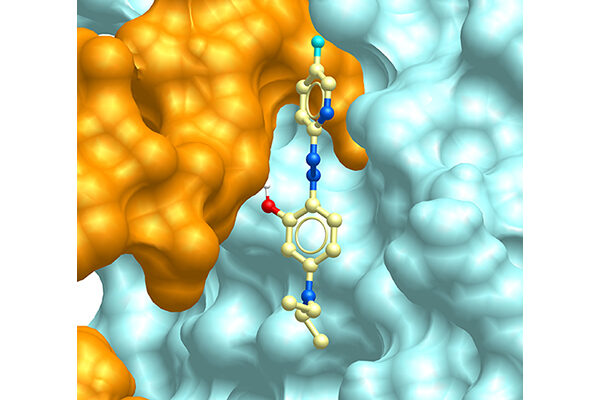

Hugh Rosen: A physician-scientist’s guide to developing medicines
More than 90% of drugs fail to make it from the lab bench to approval. How, then, has a physician-scientist like Hugh Rosen found so much success in developing medicines? Rosen, who’s the chair of the Molecular and Cellular Biology Department and the Pearson Family Chair at Scripps Research, co-invented the drugs ozanimod (approved for multiple sclerosis and ulcerative colitis) and navacaprant (in Phase 3 trials for major depressive disorder). In this episode of Science Changing Life, listen in as Rosen unveils the success stories behind these groundbreaking treatments—shedding light on the challenges and triumphs shaping modern medicine.

Bringing precision therapy to mental disorders
Mental disorders like depression and schizophrenia affect the lives of millions of people around the world, and yet, available treatment options have remained the same for decades. In this Front Row lecture, Scripps Research professor Hugh Rosen shared how his pioneering research has led to the development of the drug navacaprant, which precisely targets one of the brain’s behavioral circuits and is currently in clinical testing for major depressive disorder. Harnessing his expertise as a physician-scientist, Rosen has discovered and developed multiple other medicines, including ozanimod—a breakthrough treatment approved for multiple sclerosis and ulcerative colitis.
An engine for new medicines: A century of science changing life
Calibr, a nonprofit research institute founded by Scripps Research President and CEO Pete Schultz, joined Scripps Research in 2018 as its drug discovery division. As a world-class nonprofit “bench to bedside” drug discovery engine, Calibr delivers groundbreaking solutions to unmet medical needs by uniting the creativity of fundamental discovery with highly focused R&D capabilities and expertise.