Phil Baran, PhD
Professor
Department of Chemistry
Dr. Richard A. Lerner Endowed Chair
Research Focus
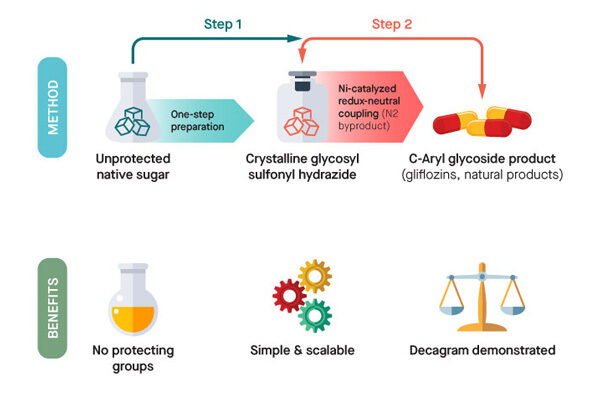
The Baran Laboratory at Scripps Research pursues a clear mission of education at the intersection of fundamental organic chemistry and translational science, with the overarching goal of achieving the ideal synthesis: the most concise, scalable, and practical routes to molecules of high structural complexity and biological importance. Building on foundational principles of atom, step, and redox economy, the lab has helped usher in a new era in synthetic organic chemistry centered on radical disconnections that complement and extend classical polar-bond retrosynthesis. This paradigm shift, seeded in seminal work from the mid-2000s onward and articulated in key publications such as those in Nature (2007), emphasizes minimal step counts, the elimination of protecting groups, avoidance of unnecessary redox manipulations, and maximal convergency. Total synthesis of structurally intricate natural products remains the ultimate proving ground; the laboratory has completed numerous landmark total syntheses, frequently on gram scales suitable for biological evaluation, achieving dramatic step reductions relative to historical routes (for example, phorbol from 40–55 to 19 steps and thapsigargin from 40–45 to 11 steps, alongside concise campaigns toward Taxol®, ingenol, maoecrystal V, and others). A core strength lies in the invention of practical, widely adopted tools, including the radical retrosynthesis framework, sulfinate salts for innate C–H functionalization (now a staple in pharma and agrochemical discovery with thousands of citations), redox-active esters enabling decarboxylative cross-coupling (Science, 2016), iron-mediated HAT C–C couplings, and a P(V)-based platform for oligonucleotide synthesis (Science, 2018/2021) that simplifies access to complex therapeutic oligonucleotides. The lab has also played a leading role in revitalizing organic electrochemistry through the co-development of the ElectraSyn 2.0 device with IKA—which standardized setups and enabled thousands of publications—and the demonstration of powerful new transformations such as electrochemical Birch reductions (Science, 2019), direct C–H oxidations (Nature, 2016), hindered ether synthesis (Nature, 2019), and doubly decarboxylative couplings and HAT catalysis (Nature, 2022/2023). Today, radical cross-coupling tactics and ideality-driven design principles are routinely applied across natural products, pharmaceuticals, agrochemicals, fragrances, and energetics, delivering substantial step savings, enhanced sustainability, and accelerated progress in drug discovery and materials science. The Baran Lab’s agnostic, execution-focused approach continues to inspire the next generation of chemists while delivering scalable, real-world solutions at the interface of fundamental discovery and translational impact.
Select Publications
-
Bruckl, T.; Baxter, R. D.; Ishihara, Yoshihiro; Baran, Phil S. Innate and guided C-H functionalization logic. Accounts of Chemical Research 2012, 45, 826-839.
View -
Mendoza, A.; Ishihara, Yoshihiro; Baran, Phil S. Scalable enantioselective total synthesis of taxanes. Nature Chemistry 2012, 4, 21-25.
View -
Su, S.; Rodriguez, Rodrigo A.; Baran, Phil S. Scalable, stereocontrolled total syntheses of (±)-axinellamines A and B. Journal of the American Chemical Society 2011, 133, 13922-13925.
View -
Gaich, T.; Baran, Phil S. Aiming for the ideal synthesis. Journal of Organic Chemistry 2010, 75, 4657-4673.
View -
Newhouse, Timothy R.; Lewis, C. A.; Eastman, K. J.; Baran, Phil S. Scalable total syntheses of N-linked tryptamine dimers by direct indole-aniline coupling: Psychotrimine and kapakahines B and F. Journal of the American Chemical Society 2010, 132, 7119-7137.
View -
Burns, Noah Z.; Krylova, I. N.; Hannoush, R. N.; Baran, Phil S. Scalable total synthesis and biological evaluation of haouamine a and its atropisomer. Journal of the American Chemical Society 2009, 131, 9172-9173.
View