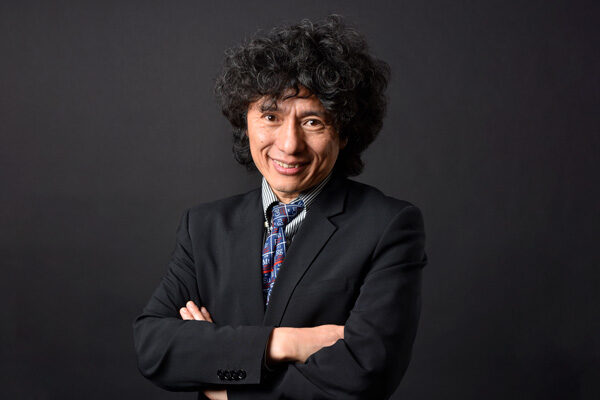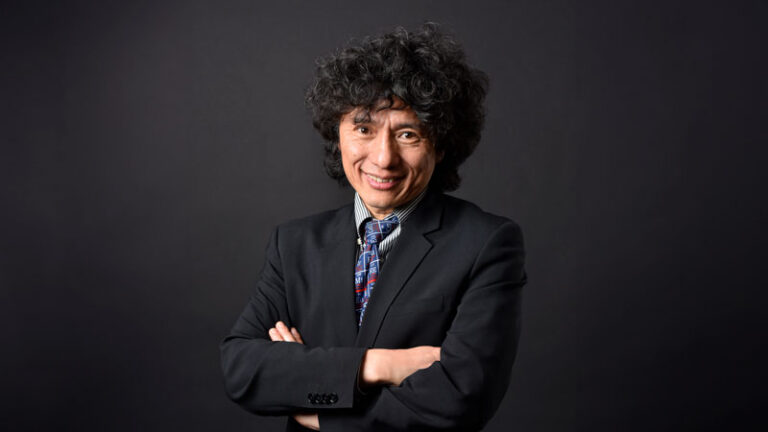
Jin-Quan Yu, PhD
Professor
Department of Chemistry
Bristol Myers Squibb Endowed Chair in Chemistry, Frank and Bertha Hupp Professor of Chemistry
Research Focus
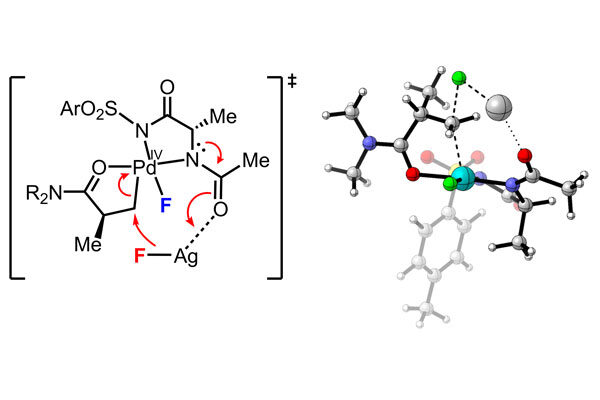
Rational-design and unexpected discovery of new reactions through C-H activation.
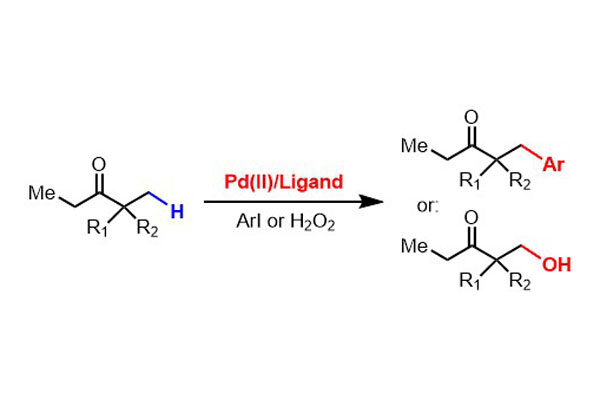
Our program centers around the discovery of catalytic carbon-carbon and carbon-heteroatom bond forming reactions based on C-H activation. Target transformations are selected to enable 1) the use of simple and abundant starting materials such as aliphatic acids, amines and alcohols, and 2) disconnections that drastically shorten the synthesis of drug molecules or a major class of biologically active compounds. Ultimately, we hope to develop catalytic reactions to parallel enzymatic transformations in terms of reactivity and selectivity. To achieve this goal, our research activities are directed towards the following main aspects: C-H activation, sustainable catalysis, asymmetric catalysis and synthetic applications.
Major components of training for students are organometallic chemistry, asymmetric catalysis (synthesis and characterization of organometallic complexes as catalysts or intermediates; ligand design for chiral control or acceleration) and organic synthesis (in the context of drug discovery and natural product synthesis). We collaborate extensively with computational groups via NSF center (Professor Jamal Musaev, Emory University, Professor Ken Houk, UCLA), as well as pharmaceutical and agrochemical industry (BMS and Syngenta) and Aldrich. We have research projects on the following topics: C-H activation (how to cleave C-H bonds without using forceful conditions?); Catalysis (how to close catalytic cycles under practical conditions?); and Synthetic applications (how to shorten synthetic routes for natural products and drug molecules?).

Select Publications
-
Chan, Hau Sun Sam; Yang, Ji-Min; Yu, Jin-Quan Catalyst-controlled site-selective methylene C–H lactonization of dicarboxylic acids. Science 2022, 376, 1481-1487.
View -
Chen, Xiao; Hao, Xue- S.; Goodhue, Charl E.; Yu, Jin- Q. Cu(II)-catalyzed functionalizations of aryl C-H bonds using O2 as an oxidant. 2006, 128, 6790-1.
-
Kang, Guowei; Strassfeld, Daniel A.; Sheng, Tao; Chen, Chia-Y Y.; Yu, Jin-Qua Q. Transannular C-H functionalization of cycloalkane carboxylic acids. 2023, 618, 519-525.
-
Wang, Donghui; Yu, Jin-Quan Highly convergent total synthesis of (+)-lithospermic acid via a late-stage intermolecular C-H olefination. Journal of the American Chemical Society 2011, 133, 5767-5769.
View -
Strassfeld, Daniel A.; Chen, Chia-Y Y.; Park, Han Seu S.; Phan, D Quan Q.; Yu, Jin-Qua Q. Hydrogen-bond-acceptor ligands enable distal C(sp)-H arylation of free alcohols. 2023, 622, 80-86.
-
Engle, Keary M.; Mei, Tiansheng; Wasa, Masayuki; Yu, Jin-Quan Weak coordination as a powerful means for developing broadly useful C-H functionalization reactions. Accounts of Chemical Research 2012, 45, 788-802.
View -
Zhang, Tao; Zhang, Zi-Y Y.; Kang, Guowei; Sheng, Tao; Yan, Jie-Lu L.; Yang, Yuan-Bi B.; Ouyang, Yuxin; Yu, Jin-Qua Q. Enantioselective remote methylene C-H (hetero)arylation of cycloalkane carboxylic acids. 2024, 384, 793-798.
-
Leow, D.; Li, G.; Mei, Tiansheng; Yu, Jin-Quan Activation of remote meta-C-H bonds assisted by an end-on template. Nature 2012, 486, 518-522.
View -
Li, Yi-Ha H.; Chekshin, Nikita; Lu, Yilin; Yu, Jin-Qua Q. ß-C-H bond functionalization of ketones and esters by cationic Pd complexes. 2025, 637, 608-614.
-
Tang, R. Y.; Li, G.; Yu, Jin-Quan Conformation-induced remote meta-C-H activation of amines. Nature 2014, 507, 215-220.
View