Scripps Research associate professor Keren Lasker receives DARPA Young Faculty Award to develop “toxin traps”
The up to $1.14 million award will support engineering of a new method to capture and destroy toxins, which could eventually be used to prevent or limit harm from exposure.
October 9, 2026
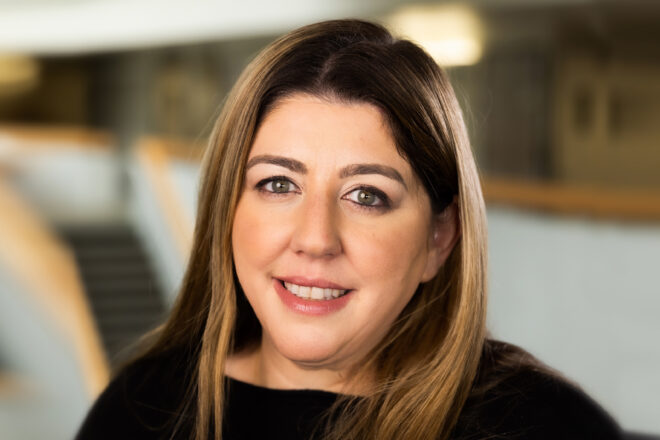
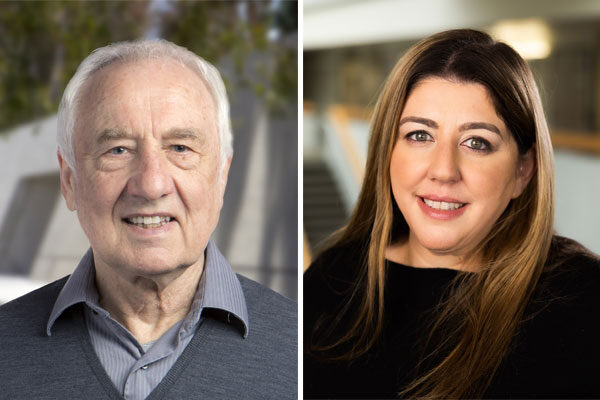
Keren Lasker. Credit: Scripps Research
LA JOLLA, CA—Associate Professor Keren Lasker, the Ian Wilson Endowed Chair at Scripps Research, has been selected to receive a 2026 Defense Advanced Research Projects Agency (DARPA) Young Faculty Award to develop a new approach to capture and destroy toxins before they cause widespread damage. The award provides $642,000 over the first two years of the project, with potential for an additional $500,000 in year three, for over $1 million in total support.
The DARPA Young Faculty Award program identifies emerging leaders in science and engineering whose ideas could lead to major advances in national security. By combining research funding with mentorship and connections to industry and national security experts, the program aims to develop the next generation of scientific leaders working in these areas. Lasker is one of 21 scientists nationwide selected to receive the award this year.
Toxins produced by bacteria, molds and algae can cause severe illness, including organ damage and paralysis. Although food safety measures and public health monitoring help limit these risks in everyday life, military personnel and emergency responders may encounter these hazards in settings where exposure is difficult to anticipate or prevent. Once exposure occurs, toxins can begin causing damage before symptoms appear, and some toxins have no specific antidote. These challenges create a need for protection that’s already in place and can intercept and neutralize toxins before they cause extensive harm.
“Once a toxin enters the body, there can be a race between the damage it causes and our ability to intervene,” says Lasker. “Imagine taking a probiotic that could intercept a harmful substance in your gut, before it damages the gut lining or crosses into your bloodstream. That’s the kind of protection we hope to develop.”
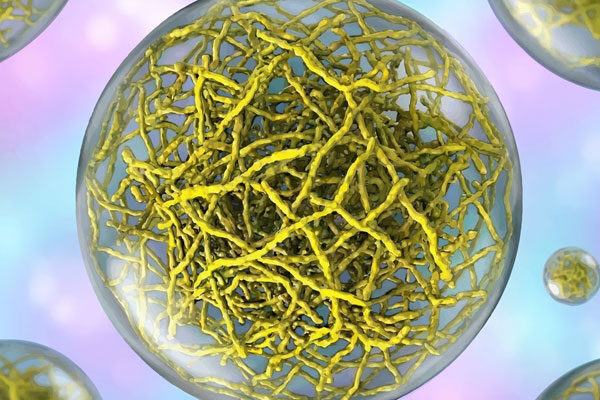
At the center of this approach are biomolecular condensates—tiny compartments that bring specific molecules together without a surrounding membrane. Lasker’s lab has spent several years engineering a bacterial protein into a scaffold that forms these membraneless compartments and can be adapted for different functions. The team now aims to program them to capture toxins and bring together the molecules needed to neutralize them.
“The probiotic would provide a way to deliver the system to the gut, while the condensates would bring together the molecules needed to carry out a therapeutic task,” says Lasker.
Once the toxin traps are developed, Michael Constantinides, an associate professor at Scripps Research, will lead studies evaluating their effectiveness in preclinical models. If successful, this work could lay the groundwork for a broader class of oral treatments that use condensates to carry out therapeutic tasks directly in the gut.
“By changing what the condensates capture or which enzymes they contain, we could adapt the approach to other medical problems,” says Lasker.
A jolt to the system: Scripps Research biophysicists uncover new electrical transmission in cells
“Tiny biological batteries” can change the cell membrane’s electrical properties—a discovery that has big implications for health, as many essential cellular processes hinge upon precise electrical activity.