Molecule that dilates blood vessels hints at new way to treat heart disease
April 19, 2018
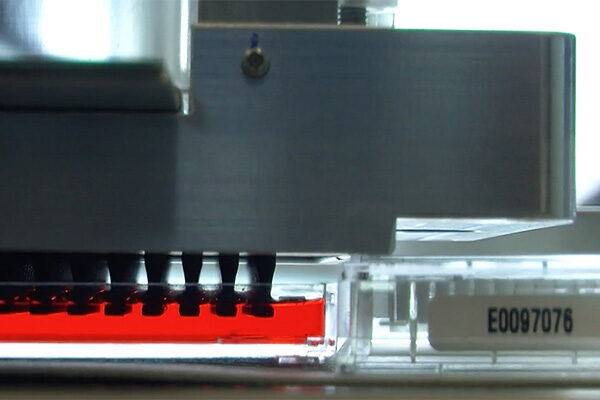
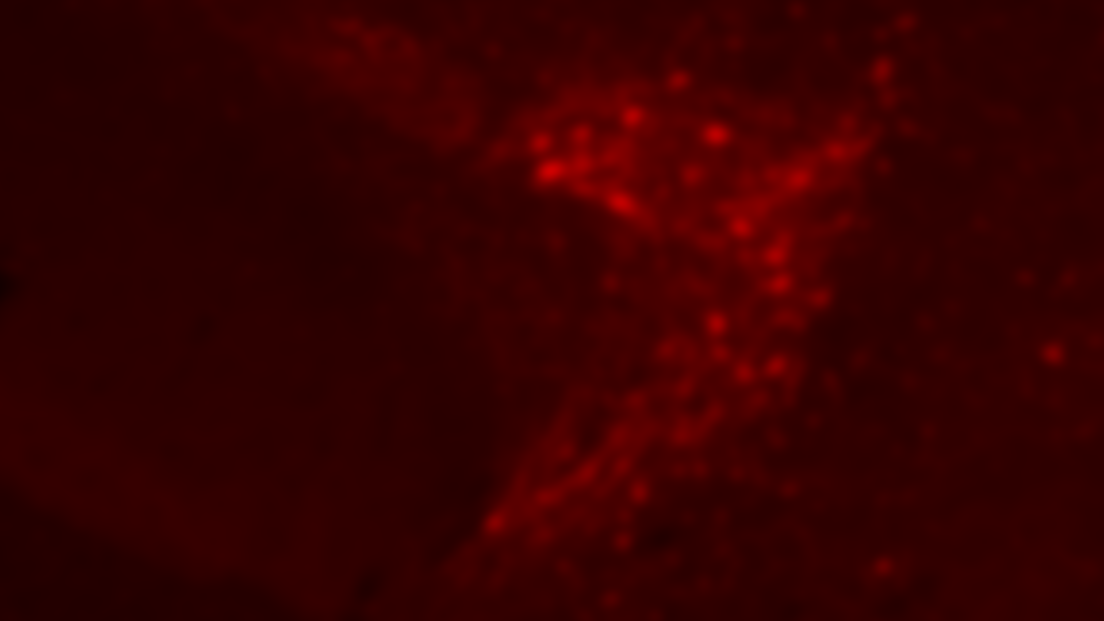
To test how cells respond to sheer stress, the researchers designed a machine that uses turbulent movement of liquid to stand in for blood flow in blood vessels. (Photo from Ardem Patapoutian and Jie Xu)
Now, scientists at The Scripps Research Institute have identified a protein, called GPR68, that senses blood flow and tells small blood vessels called arterioles when to dilate. The researchers believe medications that activate GPR68 could one day be useful to treat medical conditions, including ischemic stroke.
“It has been known for decades that blood vessels sense changes in blood flow rate, and this information is crucial in regulating blood vessel dilation and controlling vascular tone,” says Ardem Patapoutian, PhD, Scripps Research professor, Howard Hughes Medical Institute investigator and senior author of the study published today in the journal Cell.
Indeed, flow-mediated dilation (FMD) is a non-invasive clinical test that informs doctors about the health of the vascular system. A compromised FMD is a precursor to a wide array of vascular diseases such as hypertension and atherosclerosis.
“Despite the importance of this process, the molecules involved within arteries to sense blood flow have remained unknown,” Patapoutian says.
Patapoutian and first author Jie Xu, PhD, a postdoctoral fellow in the lab, and now an independent scientist at the Genomics Institute of the Novartis Research Foundation (GNF), led the project to find GPR68 and determine how it works. The team started by designing a machine that uses turbulent movement of liquid to stand in for blood flow in blood vessels. This machine uses 384 pistons that move the fluid up and down over a bed of cells, placed in 384 wells on a plate. This motion simulates how blood would put pressure on those cells.
The researchers put this machine to work testing a series of cell lines, some of which had mutations that led to an overexpression of proteins potentially linked to pressure sensing. The researchers then performed a screen, knocking down the expression of different candidate genes in each of the 384 wells, and tested if that gene is required for responding to the machine’s turbulent pressure.
The tests pointed the researchers to GPR68, which the authors showed works as a sensor of mechanical stimulation. Further experiments suggested that GPR68 is essential for FMD. “In a model organism, this protein is essential for sensing blood flow, and the proper functioning of the vascular system,” says Patapoutian.
When arterioles can’t dilate properly, the body has fewer options for lowering blood pressure in people with hypertension or getting blood through clogged vessels in cases of atherosclerosis.
“Future work will explore the role of GPR68 in clinically relevant cardiovascular diseases,” Patapoutian says. “We are also exploring the possibility of using small molecules to modulate the function of GPR68, as such molecules could be beneficial in the clinic.”
The study, “GPR68 Senses Flow and is Essential for Vascular Physiology,” also included authors from GNF, the MITOVASC Institute; the Indiana University School of Medicine; and the University of California, San Diego.
The research was supported in part by the National Institutes of Health (grant R01 DE022358).
Humans’ hidden “sixth sense” to be mapped following $14.2 million prize – What is interoception?
IFL Science
How do you feel? Molecules that sense touch and other pressures
The inner workings of the brain have eluded neuroscientists for ages—including how we perceive sensations such as touch, pain, sound and even blood flow. In this Front Row lecture, Scripps Research professor and Nobel laureate Ardem Patapoutian discussed the molecular sensors that enable the mind to interpret different physical and chemical stimuli. These discoveries—for which Patapoutian was awarded the 2021 Nobel Prize in Physiology or Medicine—are helping answer long-standing questions in neuroscience, such as how cells communicate with each other, how we sense our body in time and space, how these sensors impact different diseases and more.