HIVE Center Receives $27 Million in NIGMS Funding to Advance HIV Research
October 4, 2017
TSRI Associate Professor Bruce Torbett, Ph.D. and HIVE Center Co-Director
The HIV Interactions in Viral Evolution (HIVE) Center at The Scripps Research Institute (TSRI) has been awarded nearly $27 million from the National Institute of General Medical Sciences (NIGMS) of the National Institutes of Health (NIH). This continues the HIVE Center’s crucial work for another five years studying at the atomic level the human immunodeficiency virus (HIV), which causes AIDS.
Viruses have complex interactions with the human host cells they infect, especially HIV given its capacity for utilizing human cell proteins, its ability to rapidly mutate to both immune and viral inhibitor-mediated pressures, and remain dormant in infected cells, noted HIVE Center Co-Director, Associate Professor Bruce Torbett. For the past five years, the NIGMS has funded five National Centers, of which the HIVE Center is one, dedicated to understanding how HIV functions in the body’s immune cells and utilizes human cellular components to evolve, adapt and evade treatment.
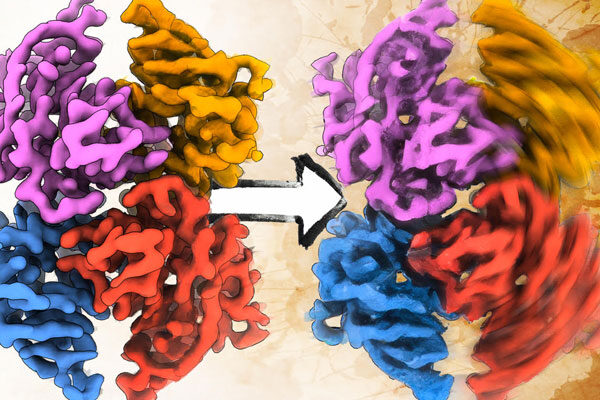
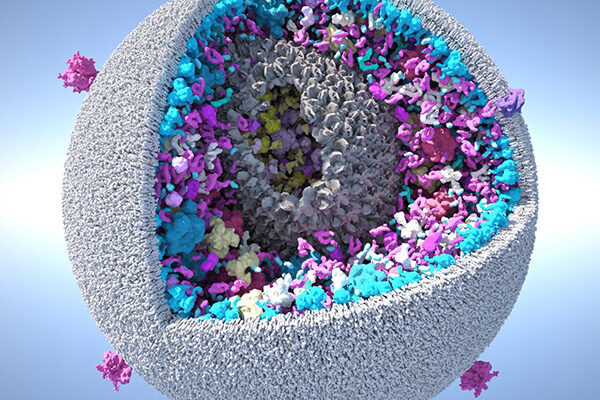
The Center’s highly collaborative researchers will continue to build on their past success of the initial HIVE funding period under Professor Arthur Olson. In the next five years, the goal of the Center’s researchers is to obtain at the atomic level an understanding of the structural and dynamic relationships between interacting human host cell and HIV macromolecules in the HIV life cycle. These insights will shed light as to how HIV usurps human host cell proteins to move through the cell undetected and how the virus utilizes host cell proteins to insert its DNA into cellular chromatin. Genomic and structural studies on the development of HIV inhibitor resistance should provide insights for HIV inhibitor resistance prediction and novel therapies. The information obtained from all studies will help to develop computational models to visualize HIV, which should allow an unprecedented view as to how HIV is formed and functions within host cells according to Torbett.
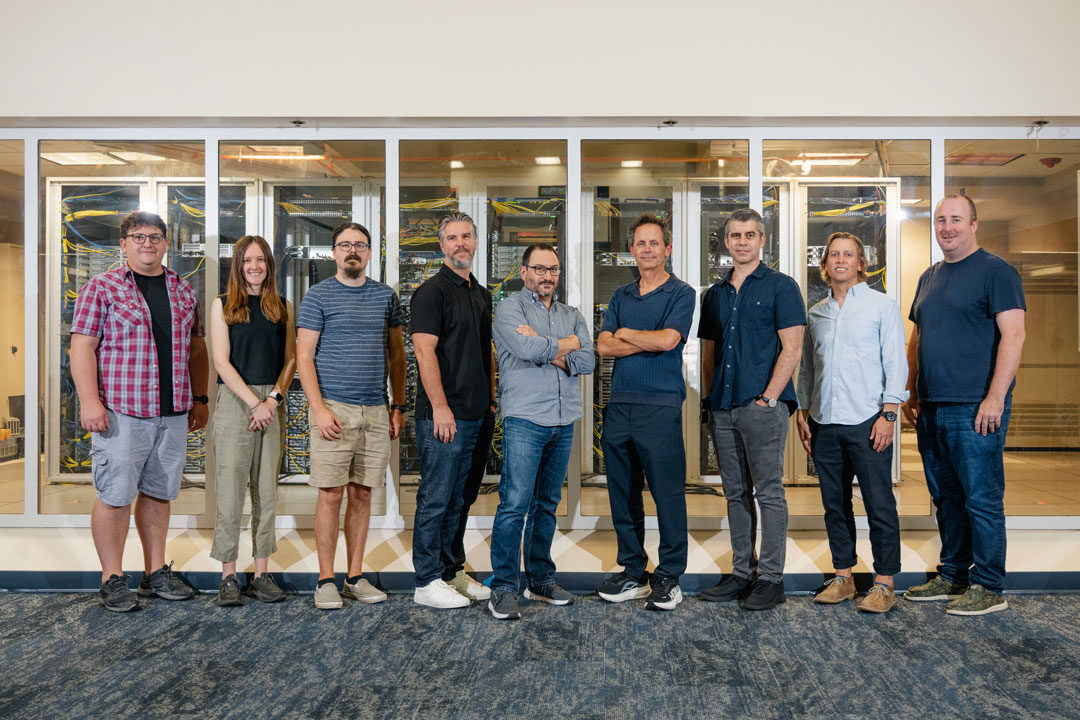
The Center includes scientists from both the California and Florida campuses of TSRI. On the California campus, Arthur Olson, K. Barry Sharpless, James Williamson, David Millar, Stefano Forli and David Goodsell, and on the Florida campus, Patrick Griffin and Douglas Kojetin.
Other scientists from across the country and abroad also will participate as part of the Center research effort which includes Stefan Sarafianos (Co-Director with Torbett) of Emory University, Karin Musier-Forsyth of Ohio State University, Dmitry Lyumkis of The Salk Insitute, Edward Arnold of Rutgers University, Ronald Levy of Temple University, Jason Okulicz of the Uniformed Services University of the Health Sciences, Joseph Marcotrigiano of National Institutes of Health, Alan Engelman of the Dana Farber Cancer Institute, Mamuka Kvaratskhelia of University of Colorado Denver, Michael Malim of King’s College, London and Stephen Hughes of the National Cancer Institute-Frederick.
More details on the activities and resources of the HIVE Center can be found at: http://hivecenter.org.
2025 Year in Review: Five insights we’re still thinking about
In a special year-end episode of Science Changing Life, we’re revisiting five moments from 2025 that continue to shape how we think about science. Featuring insights from Scripps Research experts across genetics, infectious disease, public health surveillance and chronic illness, this episode features some of this year’s most memorable soundbites.