International Scholars
Explore various visa options available to Scripps Research international scholars.
Non-immigrant visa options range the alphabet from A to W. Though only a handful of visa types are available to Scripps Research scholars and students, we have a broad selection of visas in our toolkit. For this reason, it is important that our office carefully consider a scholar’s and lab’s situation and needs to determine the most appropriate visa status for entry to the U.S. The following is general information regarding the visa options available to Scripps Research international scholars.
Immigration Terminology & Documents
An immigration document enables a foreign national to apply for a particular visa stamp at a U.S. embassy or consulate abroad for entry into the U.S. The following is a list of visa eligibility documents associated with the most common visa statuses used at Scripps Research:
| Visa | Description | Immigration Document |
| F-1 | Full-time student in academic program | I-20 |
| J-1 | Full-time student, professor, researcher or short-term scholar |
DS-2019 |
| H-1B | Worker in Specialty Occupation | I-797 Approval Notice |
| TN | For Canadians and Mexicans (Trade NAFTA) |
Letter of Employment |
| O-1 | Alien of Extraordinary Ability | I-797 Approval Notice |
| B-1 | Visitor for Business | Invitation letter describing activities |
| WB | VWP Visitor for Business | Invitation letter describing activities |
Any document which is not in English must be translated to English for the purpose of applying for a visa to enter the US or applying for any immigration benefit, once inside the US. An English translation does not need to be a professional translation. Anyone who is fluent in English and the language of the document can do the translation, as long as the translator certifies that he or she is competent to make the translation and that the translation is accurate. Documents that should be translated include diplomas, birth certificates, financial statements, marriage certificates and fellowship awards.
The English translation should include a certification statement that includes the certifier’s name, signature, address, and date of certification. A suggested format is below:
I, __________________ [typed name], hereby certify that I am fluent in the English and ________ languages. I attest that the above/attached document is an accurate translation of the original document attached entitled ______________________________ [i.e. Birth Certificate, Marriage Certificate, PHD degree, etc.]
Signature: _______________________
Name of translator: ________________
Occupation: _____________________
Address: ________________________
A foreign national who seeks temporary entry to the U.S. for a specific purpose and plans to return to their country of residence applies for a non-immigrant visa, such as those listed under Types of Immigration Documents. The foreign national must have a permanent residence abroad (for most classes of admission) and qualify for the non-immigrant classification sought.
All foreign national students, scholars and employees must have a valid passport at all times while residing in the U.S. At the time of entry into the U.S., the foreign national’s passport must be valid at least 6 months into the future. Passports can be renewed at the scholar’s home country embassy or consulate. Click here to view a list of foreign consulates.
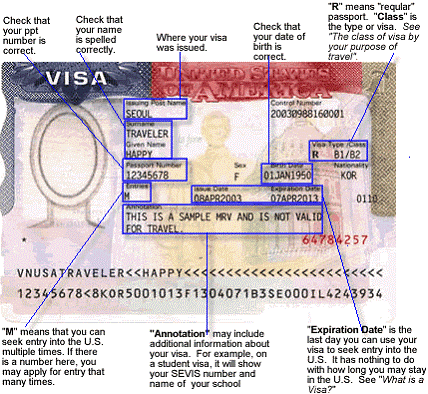
Visa stamps are issued at U.S. embassies and consulates abroad. The visa stamp is affixed to a page in the passport and is a travel document only. It allows foreign nationals to apply for entry at a U.S. Port of Entry, (i.e., an airport, seaport or land border crossing). Once entry is permitted, the scholar enters the U.S. in the non-immigrant status that matches the visa classification.
It is important to note that a visa stamp does not permit entry into the U.S. A visa stamp simply indicates that your application has been reviewed by a U.S. consular officer at a U.S. embassy or consulate, and that the officer has determined that you are eligible to enter the country for a specific purpose.
A visa stamp allows you to travel to the U.S. as far as the Port of Entry (airport or land border crossing) and ask the U.S. Customs and Border Protection (USCBP) Officer to allow you to enter the country. Only the USCBP Officer has the authority to permit you to enter the U.S. He/she decides how long you can stay for any particular visit. For more information about visa stamps, please see the Department of State website.
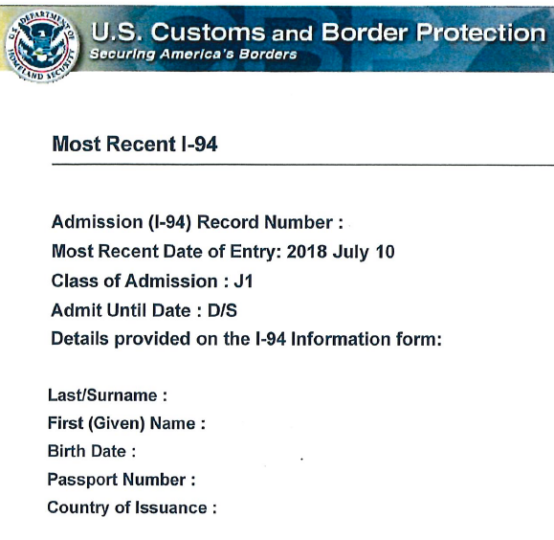
When the Customs and Border Protection (CBP) officer permits admission into the U.S., a non-immigrant visa status is granted and indicated on the I-94 record. To maintain legal visa status in the U.S., the following documents must be valid at all times: the passport, I-94 record and the visa eligibility document (examples: DS-2019, I-20, I-797A/B). The visa stamp in your passport, as explained above, is only a travel document, and can expire while you are in the U.S.
There are two types of visa status: immigrant and non-immigrant. The International Services Office provides services to foreign nationals at Scripps Research in non-immigrant visa statuses that reflect the specific purpose for coming to the U.S. temporarily.
The I-94 record is also referred to as the Admission Record. The I-94 is a document retrieved from the U.S. Customs and Border Protection (USCBP) website. This is evidence that the visitor was inspected and legally admitted to the U.S. Please be sure to download and check your I-94 record after each entry into the U.S. Incorrect information indicated on the I-94 record needs to be corrected immediately. If you find that your I-94 record is incorrect, please see your advisor in the International Services Office for information on how to get the I-94 record corrected. For more information on the I-94 record, click here.
D/S stands for Duration of Status. This means the foreign national can remain in the U.S. until the expiration date of their visa eligibility document. The visa eligibility document for individuals in F visa status is the Form I-20. The visa eligibility document for individuals in J visa status is the Form DS-2019. Foreign nationals in F visa status have a 60-day grace period to depart the U.S. after the completion of their program; those in J visa status have a 30-day grace period.
The admission stamp is an oval red and blue ink stamp placed in the passport upon entry into the U.S. The USCBP Officer will hand write the immigration status (e.g., J-1, F-1, H-1B) and an “admit until date.” Often, “D/S” will be written rather than a specific admit until date.
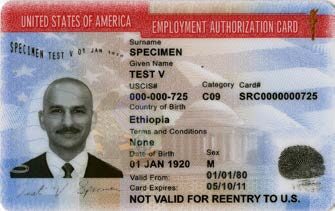
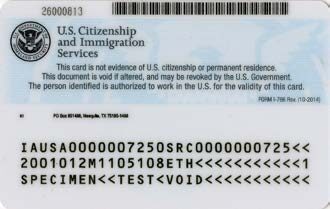
An EAD is issued by the U.S. Department of Citizenship and Immigration Services (USCIS) to various classes of non-immigrants and pending immigrants to allow for work in the U.S. Statuses which allow for employment authorization include F-1 graduated students, J-2 dependents, pending immigrants, refugees, asylees and those in temporary protected status (TPS). The following are visa types that never qualify for employment authorization: visitors using B-1, B-2, WB or WT status; or dependents using F-2 or TD status. A J-2 dependent may apply for an EAD and work if one is granted.
SEVIS is a federal government database that allows schools, research institutes, USCIS, U.S. embassies and consulates, and U.S. Ports of Entry (POE) to exchange information regarding individuals in F-1, F-2, J-1 and J-2 visa status. The ISO at Scripps Research must input data into SEVIS to track and monitor the arrival, activity in the U.S., and departure of individuals in F and J visa status.
Canadian and Mexican citizens seeking temporary entry to the U.S. to engage in activities at a professional level that appear on the list of occupations under Appendix 1603.D.1 of the NAFTA free trade agreement can enter the U.S. using a TN status. A letter of invitation from Scripps Research, detailing the offer of employment and how it meets the NAFTA requirements, is needed for entry to the U.S. in TN status. In addition, citizens of Mexico must apply for a TN visa stamp in their passport at a U.S. embassy or consulate abroad (generally in Mexico). In general, the TN status for qualified applicants can be simpler to obtain than other work visas. TN status may be granted in increments of up to three years, with extensions also granted for up to three years. Unlike other statuses, TN status can be renewed indefinitely. Please contact the ISO for more information.
B1 / WB Visa Status
In general, international researchers or students should not use a visitor status (B-1 or visa waiver for business: “VWB”) to come to Scripps Research. This is because the visitor status (B-1 or VWB) cannot be used to conduct research in the U.S. that is of benefit to the host institution. It is only allowed for those who are conducting independent research, which would be a rare circumstance at Scripps Research.
- Customs and Border Protection (CBP) officials (those who view your passport) often make a mistake and grant a B-2 or VWT (visa statuses for tourism), instead of the less common B-1/VWB (visa statuses for business). If this happens, international scholars cannot come to Scripps Research until they have corrected the error by interacting with Deferred Inspections. This can sometimes be a cumbersome process.
- Visitors with a B-1 visa or VWB cannot request a Social Security number, request a driver’s license, enroll in classes or accept payment, other than a per diem or one-time honorarium. In addition, the VWB is limited to 90 days and cannot be changed or extended, so there is no flexibility if plans change.
- Dependents must request and qualify for their own tourist visitor status with the same restrictions as above. In general, children and spouses with tourist status will not be allowed to enroll in most schools or certain other programs.
- Renting an apartment can be even more difficult without a Social Security number.
- A visitor status is considered a “self-sponsored status” and any immigration issues that arise during the stay would require the use of an immigration attorney.
There are only a few circumstances where a visitor for business status may be appropriate. Use of a visitor for business status for a visit to Scripps Research (instead of the usual J-1 visa status for visiting researchers) must first be approved by the International Services Office (ISO). In rare cases, the ISO may approve the use of a visitor for business status in certain circumstances. Bear in mind that each situation is unique and approval of the use of the status is never guaranteed. Examples of situations that might be appropriate include:
-
- A visit of one month or less that is primarily for the purpose of
- a. consulting with colleagues;
- A visit of one month or less that is primarily for the purpose of
-
-
- b. attending a scientific, educational or professional conference;
-
-
-
- c. visit that is completely paid for by personal funds;
-
-
-
- d. visit in which Scripps Research is just one of several places where consulting will take place.
-
Please note: International scholars who use a B-1/VWB must be certain that there will be no offer of any salary or stipend, no possibility that a change of visa status will be requested and no possibility that an extension of stay will be needed.
Rules governing the B-1 and VWB statuses are essentially the same, except for the requirement to make a visa application at a U.S. embassy or consulate (this is waived in the case of the VWB) and the allowed length of stay (a maximum of 90 days for the VWB and six months for the B-1). For more information on the use of the visitor status, visit the B-1 visa page.
For further information or permission to use this status at Scripps Research, please contact the International Services Office.
H-1B Visa Status
Eligibility
In general, Scripps Research will use the H-1B status only when no other type of visa is possible; the position is considered a “specialty occupation”; wage requirements are met; the lab is able to pay USCIS fees; and the position requires a PhD. In general, Scripps Research does not use the H-1B status for postdoctoral positions or positions that require less than a PhD due to the complex regulations, wage requirements and expense associated with this status. The H-1B will always be used for employees in long-term positions, which include titles such as staff scientist and assistant professor.
Authorized Stay
You can live in the U.S. and work at Scripps Research during the validity dates of the Form I-797. Once Form I-797 expires, your right to work expires. In some cases, you will be given 10 extra days to depart the U.S. on your I-94 record. In that case, you must stop work when the I-797 expires but you have 10 days to exit the U.S. Otherwise, you must leave when the I-797 expires or on your last day of employment at Scripps Research.
If you plan to continue to work either at Scripps Research or another employer, a new H-1B petition must be filed prior to the expiration date of the current I-797 approval. It is recommended that extensions are filed 6 months prior to the expiration date of the I-797. Remaining in the U.S. beyond the expiration date of the I-797 approval if you do not have proof of filing a new petition will make you “unlawfully present” which may bar you from future entries into the U.S. for up to 10 years.
Employment Limits
H-1B status is employer and position specific. This means you are authorized to be employed at Scripps Research in your current job title only. If there is a substantial change in your employment at Scripps Research, the International Services Office must be notified to determine if an amendment to your H-1B status is required. This would include a change in title, job duties, work location or reduction in work hours.
Your Scripps Research approval only allows you to work at Scripps Research. If any other institute or organization wishes to pay you, they will have to file a concurrent H-1B petition for employment authorization at their organization and you will need a new approval notice prior to beginning employment there. Otherwise, receiving payment for work anywhere other than Scripps Research would be unauthorized employment and could lead to serious consequences.
Length of Stay
The maximum length of stay for any one H-1B petition is three years. The H-1B status can be extended for a total of six years. Once you have reached the six-year limit, you would have to be physically outside of the U.S. for a minimum of one year in order to become eligible for another six-year stay in H-1B visa status.
Family/Dependents
Children under the age of 21 and spouses of H-1B scholars may request H-4 status. H-4 dependents cannot work in the U.S. in general. There is one small exception, which is that H-4 spouses can apply for work permission if the H-1B has applied for permanent residence and is not able to adjust status because of per country limits. Those cases are rare, but please feel free to consult with the International Services Office if you have questions. H-4 dependents can study and attend classes part-time or full-time but cannot receive funding or work permission as a student.
Travel Outside the U.S.
Your Form I-797A is not a visa stamp. If you leave the U.S., you must apply at a U.S. embassy or consulate for an H-1B visa stamp for permission to re-enter the U.S. in H-1B visa status. In general, the documents required to apply for an H-1B visa stamp are listed below. Please note that you should check the website of the specific U.S. embassy or consulate where you will apply for any other documents they may require. Canadian citizens are not required to apply for a visa stamp.
Documents that are generally needed for an H-1B visa stamp application are:
- Valid passport (should be valid for the length of your intended H-1B stay plus six months)
- Original Form I-797 approval notice indicating approved Scripps Research H-1B petition
- Copy of the H-1B petition submitted to USCIS. This includes a copy of the I-129 and ETA 9035 (LCA) which state your title, salary and dates of employment. Please review this information prior to the visa stamp interview.
- Letter confirming employment at Scripps Research and copies of pay stubs for the past three months
- I-612 notice of approval for 212 (e) waiver (if applicable)
- Visa stamp application fee
It is a good idea to visit the Department of State website before making your travel plans. You can review a list to find out how long it will take to get an appointment in a particular city and country. Contact the specific U.S. embassy or consulate directly to ask if additional documents are needed. Note that depending on your nationality, field of research and/or place of visa stamp application, you may receive a “technology export check” or a “security check.” This can take several weeks or longer and cannot be expedited if it occurs. Please be sure to discuss your travel plans with your PI and the International Services Office before leaving the U.S.
Travel Outside the U.S.
Delays in obtaining a visa stamp are not uncommon for H-1B applicants. H-1B employees in the science and technology areas in particular can be delayed for a security check or a technology export check (or both). These delays take anywhere from two weeks to four months (in the worst case). It may be useful to carry a letter from your supervisor, detailing the work you do and any implications to technology export or security issues (or the lack thereof), as this may allow the consular official to move forward more quickly with visa stamp processing. Unfortunately, many delays are unavoidable and there is no way to expedite the process.
Family/Dependent Travel
Dependents of H-1B employees must have H-4 visa stamps to enter the U.S. in H-4 dependent visa status. To apply for an H-4 visa stamp, family members will need the following items, along with any other documents that are requested by the U.S. embassy or consulate. Please check the specific U.S. embassy or consulate website for more information.
- Valid passport
- Copy of the H-1B spouse’s I-797 approval notice
- Copy of H-4 I-797 approval notice (if originally approved in the U.S.)
- Proof of marriage (marriage license) or proof of parent-child relationship (birth certificate), translated to English
- Letter confirming employment at Scripps Research and copies of pay stubs for the past three months
- I-612 notice of approval for 212 (e) waiver (if applicable)
- Visa application fee
Passport Validity
Whether requesting H-1B or H-4 status at the port-of-entry, the H-1B employment period will be shortened if the passport validity is shorter than the H-1B approval dates, particularly if the passport is expiring within the upcoming year. Therefore, it is very important to have the passport extended prior to re-entering the U.S. if the passport will expire within the coming year.
I-94 Admission and Departure Record
It is important to check the I-94 expiration date on the online record each time you re-enter the U.S. to make sure you got the full length of stay on the I-797 and to see if you received the 10-day grace period for departure. You can check the record here at any time. After international travel, always send a copy of any new visa stamp and the I-94 record to the International Services Office to update your file.
Automatic Revalidation
Individuals in H-1B status can enter the U.S. from a contiguous territory (Canada and Mexico), without a valid H-1B visa stamp in their passport as long as all three of the following are true:
- You did not exit the U.S. for more than 30 days.
- You did not apply for a visa stamp while in Canada or Mexico.
- Your H-1B I-94 record is valid beyond your re-entry date.
Address Change
You are required to notify the USCIS of your change of address within 10 days from the date you move and secure a new address. To change your address with the USCIS, you must file a Form AR-11. Please also update your address with the International Services Office and Scripps Research’s People Department (Human Resources).
Taxes
If you changed to H-1B status from F or J status, please be advised that your tax status may change as well. Employees in H-1B status are subject to FICA (Medicare and Social Security) and federal income tax withholdings.
Recapture Time
Please keep evidence of all time spent outside the U.S., whether stamps in the passport, I-94 online record, plane tickets, hotel receipts, etc. Any time spent outside the U.S. while in H-1B status can be “recaptured” at the end of the six-year period if there is evidence to prove to USCIS time spent outside the U.S. For example, if an H-1B spends one month every summer in the home country during the six years on H-1B status, he or she can extend the H-1B for six months, for a total of 6.5 years, to “recapture” the time lost while outside of the U.S.
Termination or Final Departure from the U.S.
The H-1B visa regulations require that if the employee is terminated for any reason prior to the expiration of the H-1B approval dates, the employer must pay return transportation home or to the last place of residence. If the employee chooses to leave employment, the employee must pay for transportation and depart the U.S. immediately, unless another immigration petition has been filed and is pending or has been approved.
H-1B Status Extension
The International Services Office at Scripps Research recommends that your lab begin the extension process for your H-1B status six months before your expiration date. If your PI/lab supports this, requests for extension of H-1B status must be submitted to USCIS before your current status expires. Although extension applications take several months to be approved, you may continue to live in the U.S. and work at Scripps Research for an additional 240 days beyond the expiration date of your I-797A approval if you have a receipt for a timely-filed H-1B extension petition. You may not travel outside of the U.S. if your current approval is expired and your extension is still pending.
J-1 Scholar Visa Status
Scripps Research is an authorized sponsor of J-1 visas as part of the Department of State’s Exchange Visitor Program. If you are an incoming international scholar or currently at Scripps Research conducting research, the staff of the International Services Office are here to answer any immigration-related questions you may have. This website is designed to provide general information about immigration sponsorship at Scripps Research, applying for a visa prior to arrival and maintaining your non-immigrant status during your stay in the U.S.
U.S. embassies strongly encourage intending travelers to apply for visa stamps well in advance of their proposed journey, and to always refrain from making irrevocable travel plans until the visa stamp has been issued and they are in receipt of their passport and visa stamp. Visa issuance to certain individuals may be very slow due to security clearances.
Request Your Visa Documents
To apply for a J-1 visa, you will need a document called a DS-2019, which is issued by the International Services Office (ISO) at Scripps Research. To request this document, you will work with your host lab’s administrative assistant to complete some forms online (e-forms). You will receive a link to these e-forms by email. Please be sure to set your email to “allow” emails from [email protected].
You will need to have the following documents with you when you complete the e-forms:
- Your passport ID page
- Your diploma from your highest degree with English translation
- Your most recent curriculum vitae (CV)
- Your funding support letter (with English translation, if needed), if you are not fully paid by Scripps Research
- Copies of all previous or current immigration documents, if you were previously (or are currently) in the U.S.
- The passport ID pages for any dependents who plan to accompany you to the U.S. and apply for a J-2 dependent visa
- A copy of your marriage certificate with English translation (if you have a spouse who will apply for a J-2)
The ISO is required by law to verify that each person on a J-1 visa has sufficient funds to support themselves and any family members during their period of stay in the U.S. If a J-1 scholar is not funded by Scripps Research, he or she must have a letter from each financial sponsor, stating that the J-1 scholar will be financially supported to do research at Scripps Research, and giving the scholar’s name, the amount of funds offered and the time period in which the funds will be offered. The letter should be printed on paper with the official letterhead of the financial sponsor (which could be a university, fellowship organization, etc.).
Additionally, the ISO is required to ensure that all J-1 exchange visitors are proficient enough in English to participate successfully in their exchange program and to function on a day-to-day basis in the United States. If you have taken an objective, recognized English language test, such as IELTS or TOEFL, please share a copy of the results with your host lab. Alternatively, you may complete an interview with your host principal investigator (PI) to fulfill this requirement. (Exchange visitors from English-speaking countries or who have received a degree from a university of recognized standing in a country in which all instruction is provided in English have automatically met this requirement.)
Once you have completed your e-forms, your host PI will finalize the request and we will issue the DS-2019 and send it to you by courier with more detailed instructions on how to apply for the visa. You cannot make an appointment to request the visa at the U.S. embassy or consulate until you have the DS-2019.
Review Your DS-2019
You will use your DS‑2019 to apply for a J Exchange Visitor visa. It is important that all of the information on the DS-2019 is correct when you apply for your visa stamp and remains correct and updated during the program. Please review your DS-2019 and report any errors or changes immediately to the ISO.
The ISO also encourages you to review the back page of your DS-2019. It explains some of the important regulations governing the J-1 status. Additionally, be sure to note the following:
- The DS-2019 is not a contract or promise of employment. You or your host lab may choose to end your J-1 program at any time.
- You are responsible for maintaining copies of all DS-2019s you receive during your program. It is important that you save the copies in a secure location as you may be asked to present them when applying for future immigration benefits, or other applications.
- After completing your program, you are allowed a 30-day grace period. This time is designed to give you an opportunity to visit tourist locations and prepare to leave the U.S. You may not continue to work or leave and re-enter the U.S. from abroad in J status.
Understand Your J-1 Visa Category
There are many different categories of the J-1 exchange visitor program. Each category has different rules and requirements and it is important that you are aware of the restrictions of your J-1 exchange visitor category. Please read the following information before using a DS-2019 Form to apply for a J-1 visa stamp at the U.S. embassy or consulate. Each J-1 category has its own bar. A bar is a precise time period during which you are prevented from returning to the U.S. using specific J-1 categories. If the category of your DS-2019 seems inappropriate, please contact the ISO.
- Research Scholar/Professor: The maximum program duration is five years. After completion of a J-1 program, a research scholar/professor cannot enter the U.S. using the same Research Scholar/Professor category for 24 months. Please see 24-Month Bar section below for additional details. If you ended a J-1 exchange visitor program in the Research Scholar/Professor category within the past 24 months and Scripps Research issued you another “Research Scholar” DS-2019 Form (as listed in Section 4 of the DS-2019), please contact the ISO immediately.
- Short-Term Scholar: The maximum program duration is six months. The Short-Term Scholar category is a good option for scholars with stays of less than six months. Using this category will not prevent you from returning to the U.S. as a J-1 Research Scholar/Professor. However, if there is the slightest possibility that your J program will not be completed in six months, the Research Scholar/Professor category is the better choice. Please consult with the ISO immediately if you think this might be the case.
24-Month Bar
All J-1 Exchange Visitors in the Professor or Research Scholar category (Box 4 of your Form DS-2019) are subject to a 24-month bar on repeat participation in those categories. Scholars subject to the bar may not return to the U.S. as a J-1 scholar in the Professor or Research Scholar categories for a 24-month period following the J-1 program. This 24-month bar will be in effect regardless of the duration of the program. Whenever an exchange program ends and the SEVIS record becomes “inactive,” the SEVIS record is “closed” and the scholar must wait 24 months before beginning a new program as a J Professor or Research Scholar. Unused time from the five-year window may not be saved for use later.
Two Year Home Residency Requirement (212e)
Some J-1 Research Scholar/Professors may be subject to the two-year home residency requirement (also called 212(e)). The two-year home residency requirement is different and separate from the 24-month bar. The U.S. consular officer will determine if you are subject to 212(e) based on government funding and/or your home country’s skills list. Your J-1 visa stamp and your DS-2019 Form will indicate whether you are subject to 212(e). If you are “subject,” it means you cannot change to an H-1B, L-1 or U.S. Permanent Resident status (green card) until you have been in your home country for two years following your J-1 program.
J-1 Research Scholar/Professors may be subject to both the 24-month bar and the two-year home residence requirement, though the two requirements can be completed simultaneously.
Important: Your documents may have been marked by government agency officials indicating whether or not you are subject. The J-1 visa page in your passport may contain a note: “Bearer is/is not subject to Section 212(e).” Your DS-2019 form may also be noted in the bottom left hand corner. These documents are sometimes marked incorrectly. If any of the criteria listed above apply to you, you are subject to the requirement, regardless of what appears on your documents. Likewise, you may not be subject even if your documents are marked to indicate that you are. In this case, you may request an Advisory Opinion in order to avoid future confusion. For more information regarding 212(e), please check the Exchange Visitor Visas section on the U.S. Department of State Bureau of Consular Affairs website.
Pay the SEVIS Fee
All non-immigrants seeking J-1 exchange visitor status must pay the Student and Exchange Visitor Information System (SEVIS) fee. J-2 dependents do not have to pay the SEVIS fee. You will need your SEVIS ID number (beginning with N) from the upper right corner of the DS-2019 Form to pay the SEVIS fee. You must pay the fee before scheduling an interview at the U.S. embassy or consulate. Print a copy of the receipt to submit directly to the U.S. embassy or consulate and keep a copy for your records. Please refer to the SEVIS fee processing website for more information and to pay the fee.
Applying for a Visa
Once you have paid your SEVIS fee, you will need to apply for a J-1 visa stamp in your passport. We have general information on our website. In addition, we recommend you visit the State Department webpage with specific information on the documentation you need to provide when applying for your J-1 visa. Finally, please review the information on the webpage for the US Embassy or Consulate nearest you, which may also have updates on closures or specific information for your area.
Transferring J-1 Visa Sponsorship
If you are already in the U.S. and plan to transfer your J-1 visa sponsorship to or from another institution, please discuss your situation with the ISO as early as possible. Contact us at [email protected].
Transfer In
If you would like to transfer your J-1 sponsorship to Scripps Research, your lab administrator will submit a J-1 Scholar Request in VIVA. Our office will need the name and contact information of your current International Office Advisor to coordinate your J-1 transfer to Scripps Research.
As a part of this process, you will receive an email from [email protected], asking you to complete an e-form by clicking on a link. Please be sure to set your email to “allow” this email into your inbox. You must click on the link in the email to get things started.
Please notify us if you plan to travel near the time that you also plan to transfer. Travel during the transfer process is not always possible. Please contact us and we will be happy to discuss your options.
Transfer Out
Please notify your PI and your lab administrator if you would like to leave Scripps Research and transfer to another institution in the U.S. This is possible within the total time allowed in your J-1 category. The immigration advisor at your new institution should contact your ISO advisor to request the transfer of your J-1 SEVIS record.
Please notify us if you plan to travel near the time that you also plan to transfer. Travel during the transfer process is not always possible. Please contact us and we will be happy to discuss your options.
Overview
As a J-1 exchange visitor, you must meet certain obligations to maintain legal immigration status. Failure to maintain your non-immigrant status can result in serious problems with immigration and could lead to deportation from the U.S.
To maintain legal J-1 status, a J-1 exchange visitor must:
- Update the ISO of any change of address within 10 days by completing the form in VIVA. Use your Scripps Research email and password to access VIVA. You should also update Scripps Research Human Resources.
- Maintain research/teaching objectives at Scripps Research listed on DS-2019.
- Keep DS-2019 and passport valid (unexpired) at all times.
- Notify ISO of any updates or changes needed on your DS-2019 (e.g., name change, funding change, etc.).
- Notify the ISO if you receive a new passport or visa stamp.
- Do not work off campus without prior work authorization. J-1 exchange visitors are only authorized to work at Scripps Research as specifically noted on their J-1 DS-2019. Work authorization at Scripps Research is limited to the dates indicated on the current DS-2019 as long as the scholar maintains their position at Scripps Research.
- Maintain health insurance coverage that meets U.S. Department of State requirements throughout the program duration.
- Notify the ISO of any upcoming international travel plans.
For information on travel, visit our page on Travel Procedures.
For information on updating biographical information, click here.
Extensions
You must keep track of the expiration date of your DS-2019. At least 30 days before the document expires, speak to your host/supervisor if you would like to remain at Scripps Research. If an extension is approved, contact the lab administrative assistant so that they can submit a request to the ISO to issue an extended DS-2019 document. Extensions must be done before the DS-2019 expires; it cannot be done after the DS-2019 has already expired.
Transfers
You may request a transfer to another J-1 program/institute to continue the same research activity. Requests for a transfer must be made to the ISO at least four weeks prior to the requested transfer out date. To be eligible to transfer, a scholar must maintain their J-1 program at Scripps Research until the transfer is completed.
U.S. Taxes
International scholars must file tax forms each year for the previous calendar year. For information on U.S. tax filing procedures, visit our General Tax Resources webpage.
Grace Period for Departure
J-1 exchange visitors and their J-2 dependents may stay in the U.S. for up to 30 days once their DS-2019 has expired. This is called a “grace period.” Travel outside the U.S. with return to the U.S. in J-1 status during the grace period is not allowed. During this 30-day grace period, the scholar is not authorized to work or engage in activity at Scripps Research. If a scholar ends their J-1 program at Scripps Research before the end date listed on their DS-2019, they must inform the ISO, their DS-2019 will be updated with the new end date, and they will have 30 days to depart the U.S. from their last day at Scripps Research.
Document Retention
It is important that you retain all documentation pertaining to your immigration status related to your stay in the United States. This may include current and expired passports, DS-2019s and I-797s. These records are important in establishing your compliance with U.S. immigration laws.
Dependent Visa Information
A spouse or child under age 21 may apply for a J-2 visa to accompany you to the U.S. If a spouse or child under the age of 21 will accompany you, you will be given the opportunity when completing an e-form request to list your dependents, who will then receive immigration documents, along with you, in order to apply for a visa to accompany you to the U.S.
If you decide to have dependents join you in the U.S. after you have already arrived in the U.S., or you marry a non-immigrant after arriving in the U.S., you may submit a separate request for an immigration document for your spouse or child(ren). Please visit the Dependent Visa Information webpage for more information.
Exchange visitors in J-1 and J-2 statuses are required to maintain health insurance coverage that meets U.S. Department of State requirements for their program duration as a condition of their participation in the J-1 Exchange Visitor Program. The J-1 regulations state, “J-1 Sponsors must terminate an exchange visitor’s participation in their program if the sponsor determines that the exchange visitor or any accompanying spouse or dependent willfully fails to remain in compliance with this [health insurance] section.”
Exchange visitor requirements
J-1 scholars are required to maintain health insurance for themselves and any J-2 dependents throughout their J-1 exchange visitor program in the United States. The requirements for health insurance that are outlined below summarize the requirements defined by U.S. law. These are the minimum requirements for each J-1 scholar and J-2 dependent. Below are the J-1 legal requirements:
- Medical benefits per accident or illness of at least $100,000 minimum
- Deductible per accident or illness not to exceed $500
- Repatriation of remains: $25,000
- Expenses related to medical evacuation: $50,000
- The insurance must cover “pre-existing conditions” (current health issues) after a reasonable waiting period
- The insurance may include provisions for co-insurance of no more than 25 percent of the covered benefits per accident or illness
- The insurance must not exclude coverage for risks inherent in the activities required during your visit
Please be aware that these are the minimum requirements for each J-1 exchange visitor and J-2 dependent. Based on current medical costs, the ISO recommends a minimum coverage of $250,000 per incident or more. A typical procedure in the U.S., such as minor surgery, can cost well over $100,000.
J-1 visitors must have health coverage as of arrival in the U.S. Therefore, J-1 visitors should purchase short-term traveler’s insurance to cover at least the first month in the U.S. for themselves and any family members. Even if health insurance is offered to you by Scripps Research, the coverage will not begin until employment begins. For this reason, travel insurance is always a good idea. In general, many airlines and credit card companies offer travel insurance.
If possible, take care of health concerns before leaving your home country. Update immunizations, get new/duplicate eyeglasses, obtain written prescriptions for your medications in English, and get any necessary dental work done. Obtain a 2- to 3-month supply of necessary medications.
Different situations for Scripps Research exchange visitor health insurance
If you receive health insurance benefits from Scripps Research, you will still need to purchase Medical Evacuation and Repatriation Insurance Coverage separately, as this is not covered by Scripps Research. One option for purchasing this coverage is to use Betins Insurance; see the Medical Evacuation and Repratiation Requirement dropdown below or call (866) 552-8834.
If you do not receive health insurance through Scripps Research, you may purchase health insurance while you are still in your home country. This insurance must meet or surpass the J visa status requirements and provide you with a health insurance identification (ID) card that you can carry with you. A health insurance ID card should include information about your full name, the limits of your health insurance coverage, the dates of coverage, and a contact number for the health insurance company that can be used by any hospital or doctor’s office in the U.S. See below for some options.
J-1 exchange visitors who do not have health insurance
For those who do not have health insurance (or who have insurance that does not meet the minimum J-1 requirements), you must purchase a health insurance plan from a company that serves J-1 exchange visitors. You should purchase insurance prior to arrival with a start date of the planned arrival date. Insurance must be purchased for any J-2 dependents as well. The cost of health insurance may be high, so it is important for J-1 exchange visitors to review insurance costs for themselves and any J-2 dependents prior to arrival.
Sample list of insurance companies
There are many insurance companies and insurance brokers who provide J-1 exchange visitors with health insurance. You are free to make any choice, as long as it meets the J-1 requirements. A sample list of companies is found below. It is important to know if the insurance you purchase will cover specific situations, such as pregnancy and any pre-existing conditions (health issues you have prior to arrival in the U.S.). Please be sure to confirm this prior to purchasing health insurance.
- ITG Worldwide
- Compass Student Insurance
- The Harbour Group
- HTH Worldwide
- ISO Insurance
- Visit Travel & Medical Insurance Program
- Visitors Health
Medical evacuation & repatriation requirement
It is required under J-1 regulations that each J-1 Exchange Visitor and all J-2 dependents are covered for medical evacuation (minimum $50,000) and repatriation of remains (minimum $25,000). J-1 Exchange Visitors must review their insurance benefits and if medical evacuation and repatriation of remains coverage is not included in their insurance plan, separate insurance must be purchased. Please note, this required coverage is not included in any of the Scripps Research provided health insurance plans. There are several companies that offer this affordable insurance supplement. One example is listed below.
Betins Insurance: (866) 552-8834
- Go to the website.
- Review the available plans and click on “Quote this Plan.”
- Answer questions.
- Select a payment option.
- Provide the required information and give start date as the day you will arrive in the U.S.
- Review information, enter credit card information and purchase.
- Repeat for all J-2 dependents.
- You will need to renew this every year you are in the U.S. in J-1 visa status.
Applying for a Visa
Please refer to the U.S. embassy or consulate website for detailed instructions on how to obtain a visa stamp in your country as each location may have slightly different procedures. Individual U.S. embassy and consulate websites can be found here.
In most cases, you will need to apply for a visa stamp in your country of nationality. The exception is if you have long-term residence in a different country. Please note, however, that it is often more difficult and can take longer to obtain a visa stamp if you are applying in a country that is not your country of citizenship. Please complete the following steps:
- If you are applying for an F-1 or J-1 visa, first pay the SEVIS Fee (J-1 visitors/F-1 students). If required, please refer to the SEVIS fee processing website for more information and to pay the fee.
- All non-immigrant visa applicants must complete the Online DS-160 Form to Apply for a Non-immigrant Visa Stamp. To apply for a visa stamp, complete the Online Nonimmigrant Visa Application form (DS-160). Visit the website of the U.S. embassy or consulate where you will apply for a visa to review the information on completing this form. Be sure to print the DS-160 Form confirmation page to bring to your visa interview.
- All visa applicants must schedule and attend an interview with the U.S. embassy or consulate. A list of the U.S. embassies and consulates can be found at https://www.usembassy.gov/. The average time it takes to get an appointment to apply for a visa at American embassies and consulates around the world can be found on the State Department website. Unfortunately, it is difficult to predict how long it will take to get a visa. However, it is typical for visas in China or India to take 1-2 months for issuance.
There is general information in many languages on how to apply for a visa in each country of the world, related to each type of visa on this website. This information can be very useful but keep in mind that if there is a discrepancy between the website and instructions on the U.S. embassy or consulate website itself, follow the instructions on the website for the U.S. embassy or consulate where you will attend your visa interview. Items you will almost always need to provide include:
- Valid passport
- Original signed DS-2019 Form (J visitors/dependents), I-20 (F students/dependents), or your I-797 approval notice (H and O workers)
- Copy of offer letter or invitation letter from Scripps Research
- Financial documentation (i.e., scholarship letters, employment verification in your home country, etc.)
- SEVIS fee payment receipt (J visitors/F students)
- Copy of I-129 petition with certified Labor Condition Application (H-1B)
- Photos meeting the requirements
- DS-160 Form confirmation page
- Evidence of ties to your home country to show non-immigrant intent (property, bank account, letter from current employer, etc.)
- CV or resume
- Other documents as required (such as original education documents, etc.)
After you receive your visa stamp, please review it immediately to make sure that it is the correct visa category, the dates in which you can use the visa are appropriate for your program, and that your name and date of birth match the information in your passport. If there is an error, please notify the U.S. embassy or consulate right away.
Please do not book any travel arrangements until you have received your stamp. Once you receive your visa stamp, you can book your travel and inform your Scripps Research Department of your arrival date.
For some applicants, further screening is needed before a visa stamp can be issued. This screening is often referred to as “administrative processing.” Administrative processing simply means that the consular officer feels they need more information to make a decision on your visa stamp application. It is important to understand that additional processing is not a visa denial; it is only a delay. Most administrative processing will be completed within 60 days.
Visa stamp denials are rare. However, if you are denied a visa stamp, you should be provided a written statement outlining the reasons for the denial. If you do not receive one, ask for one. You should also ask the consular officer for a list of documents that could assist you in re-applying for a visa stamp. The ISO can assist with visa denials, but it is important to obtain documented information with the reason for the denial. If you experience visa delays, please inform your Scripps Research host department and the ISO.
Canadian citizens do not have to obtain a visa stamp to enter the U.S. Canadian citizens apply for admission directly at the port-of-entry (border or airport). Please be sure to specifically request entry into the U.S. in the status you are seeking (F-1, H-1B, J-1, etc.), otherwise you may be entered in tourist status. Please present the following documents to the U.S. Customs and Border Protection Officer (USCBP):
- Original visa documents (DS-2019, I-20, I-797 approval notice)
- Valid passport
- Scripps Research offer letter
- If requesting F-1 or J-1 status, SEVIS fee payment receipt here
- Financial documentation (if not paid by Scripps Research)
- Diploma or proof of highest educational degree (TN)
- CV or resume
Permanent Residence (Green Card)
A permanent resident (green card holder) in the U.S. has the right to live and work in the U.S. without the restrictions that affect non-immigrant visa holders (i.e. F-1, H-1B, J-1, TN, etc.). Permanent resident status may last a lifetime if the individual maintains resident status and avoids an uninterrupted absence from the U.S. of more than 6 months without USCIS authorization. Permanent residents may also apply for U.S. citizenship when a specified time has passed. The amount of time before qualifying for naturalization (U.S. citizenship) depends on the category through which an individual qualified for a “green card.”
The three most common ways that Scripps Research employees gain permanent residence are:
- Through a self-petition, based on abilities in the National Interest (NIW or EB2) or Extraordinary Ability (EB1);
- Through the petition of a close relative, such as a U.S. citizen spouse; or
- Through a permanent offer of employment at Scripps Research in a position requiring a PhD.
The ISO invites immigration attorneys to visit each year, to present lectures on how to gain permanent residence in the U.S. Please contact the ISO if you would like to find out if there is an upcoming presentation. In addition, ISO can offer general guidance on applying for permanent residence in the U.S.
If you have filed or plan to file an application for permanent residence, please notify the International Services Office. It may affect your current non-immigrant status and ability to travel.
For additional information, please visit the USCIS webpage.
Frequently-Asked Questions: Arriving in the U.S.
You may enter the U.S. up to 30 days prior to your program start date in the case of the F-1 and J-1 visa holder. In the case of the H-1B, O-1 or TN visa holder, you may enter no earlier than 10 days prior to your start date. Although you may enter the U.S. early, you may not begin work at Scripps Research until your official start date and after you have checked in with the ISO. Please note the start date on your documents and plan your travel accordingly.
You must carry the original visa documents and your passport with valid visa stamp on your person. Do not pack these items in your checked luggage. Be prepared to present the following documents to the U.S. Customs and Border Protection (CBP) officer:
- Original immigration document (DS-2019, I-20, I-797 approval notice)
- Valid passport with visa stamp
- Scripps Research offer letter
- SEVIS fee payment receipt (F-1 and J-1 visa holders only)
- Financial documentation (if not paid by Scripps Research)
It is important that you specifically ask to be admitted into the U.S. in the appropriate visa status when you speak to a CBP officer. Be sure to present to them your original visa documents (DS-2019, I-20, I-797 approval notice) and open your passport to the page that has the new visa stamp. Prior to leaving the CBP inspection area, check your passport and make sure it has been stamped properly.
This is what to expect when you enter the U.S.:
- You will wait in line to show your passport to a CBP officer. You will not have a chance to get your luggage before this, so you will need to have your original documents in your carry-on luggage.
- Enter the line for non-U.S. citizens to be seen by a CBP officer. This is where you will show your visa and passport.
- The CBP Officer will ask you some questions, such as, “Where are you going? What will you be doing there? What do you plan to do when you are done with your research?”
- It is also possible in some cases that the officer will ask you to unlock your electronic devices (cell phone, iPad, etc.) and show him or her your Facebook page or other social media.
- At some airports, the line can take an hour or more. Consider a stop at the restroom before getting in line. Once you have cleared CBP, you will go to another room to collect your luggage.
- With your luggage, get in another line to pass through another checkpoint. The second checkpoint relates to the items that you are bringing with you into the U.S. For a list of items that are prohibited, please see the U.S. Customs and Border Protection website.
- Once you pass through the second inspection point with your luggage in hand, you can proceed to your connecting flight. When you exit from the second checkpoint, there is a place for you to re-check your baggage with the airlines if you are boarding a connecting flight.
After you have entered the U.S., you should review your I-94 “arrival record.” Click on the link “Get Your I-94 Admission Number” and enter your personal information. You can only access this record after you have entered the U.S.
It is important to inform the ISO once you have a visa, a plane ticket and you know your arrival date. When the date is confirmed, please email us. Once you confirm your arrival with the ISO, a check-in appointment will be scheduled for you and you will be sent an email with all the details. This appointment is necessary to review your immigration documents and to complete certain forms that are necessary if you will be paid by Scripps Research. You will also be given information about your first steps in the U.S., such as applying for a Social Security number and using our health care system.
For international scholars arriving in California, check-in appointments are available only on Mondays and Wednesdays each week.
International students who will be enrolled at Scripps Research will get specific instructions about their check-in date once they confirm their arrival date.
International Services Office

International Students
Resources for Dependents