Department of Chemistry
Chemistry is life. Atoms and molecules—their nature and how they interact—are the foundation for everything we are and everything we know. We explore the atomic world to understand the structure and behavior of these molecules.
Our Research
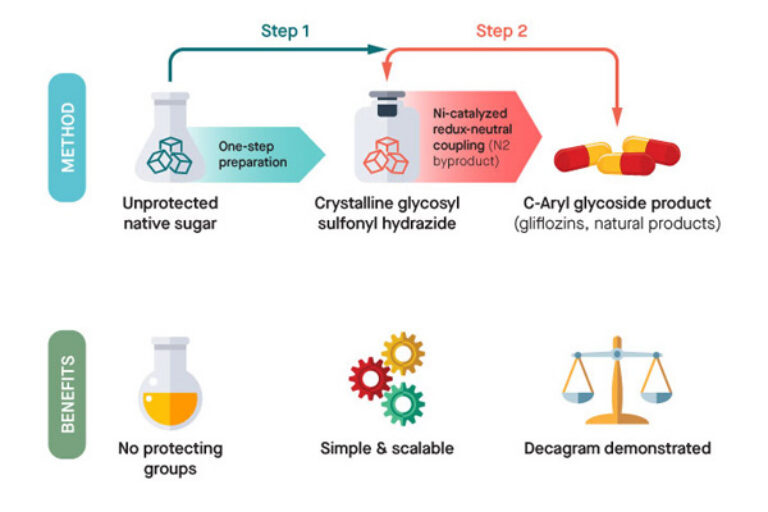
The Department of Chemistry seeks to understand matter, create new forms of matter and translate new discoveries into useful products. Scripps Research chemists have pioneered many advances in chemical synthesis, chemical biology and medicinal chemistry, three critical areas central to biomedical research. These advances include the creation of powerful new tools for drug discovery, such as the development of click chemistry and new methods in organic synthesis that speed the discovery and manufacturing of new drugs.
Working at the intersection of chemistry, physics and biology, we educate the next generation of leaders in interdisciplinary science and bridge basic and applied research to translate foundational discoveries into new medicines and other solutions to pressing human needs.
The department focuses on several research areas, including:
- Searching for new therapies for diseases, including cancer, Alzheimer’s and other neurodegenerative disorders, HIV-AIDS and other viral diseases, and tuberculosis and other bacterial infections
- Developing new technologies for RNA evolution, DNA sequencing, nanomedicine and stem cell research
- Creating state-of-the-art tools to design, synthesize and evaluate new functional molecules for specific applications
- Synthesizing natural products and their designed analogs, as well as natural product discovery and biosynthesis
Our Team







Major Achievements
Multiple Nobel Prizes in Chemistry
Scripps Research chemists have earned some of the highest honors in science, including Nobel Prizes in Chemistry. Most notably, K. Barry Sharpless received the Nobel Prize twice (2001 and 2022), recognizing his pioneering work in asymmetric catalysis and the development of click chemistry, a transformative method for building molecules.
Home to a concentration of elite scientific honors
Chemistry faculty have earned prestigious distinctions such as six Wolf Prizes and two MacArthur Fellowships, underscoring sustained excellence and global leadership in chemical sciences.
Foundational contributions to modern chemical biology and drug discovery
Breakthroughs like click chemistry have revolutionized how scientists design and assemble molecules, enabling faster development of therapeutics, diagnostics and materials with real-world clinical impact. One example is the development of tafamidis, targeting heart disease (cardiomyopathy) caused by mutant or wild-type transthyretin aggregation in adults.