Video Tag: Neurological Disorders
-
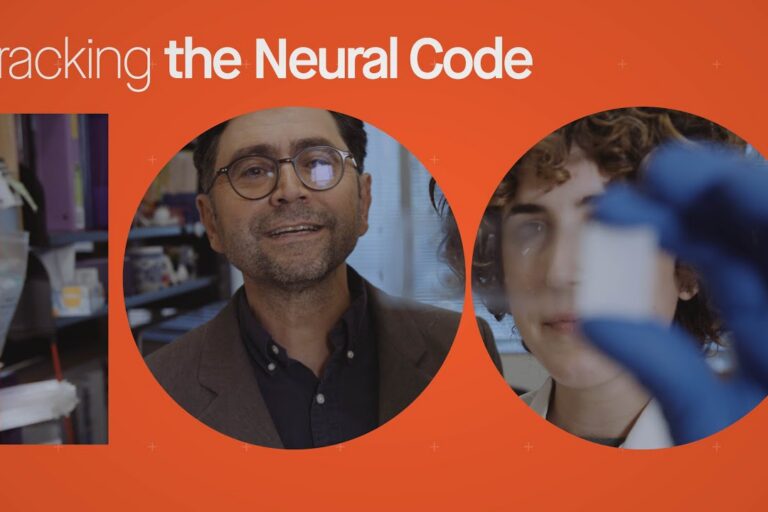
Cracking the neural code: A century of science changing life
The brain remains one of the most complex and mysterious parts of the human body, controlling everything from how we move to where we store and process memory. Scripps Research neuroscientists are helping us understand the mechanisms of why we age, what drives neurodegenerative diseases like Alzheimer’s and Parkinson’s, how the brain communicates with the rest of the body, and more. By evaluating the brain at multiple levels, these researchers are shedding light on the mysteries that have perplexed the field for decades.
-

Editing genes to tackle neurological conditions
Networks of genes coordinate the formation of brain cells during early life development. However, diverse genetic variants can impact this process and ultimately manifest in different brain disorders and developmental disabilities. In this Front Row lecture, Scripps Research assistant professor Xin Jin shared how her lab is using cutting-edge technology to discover which brain regions and cell types are involved in disease pathology. Jin’s insights are revealing neurodevelopmental and other disorders, as well as defining a path for new diagnostic tools and therapeutic interventions.
-
Discovery reveals how nerves control the gut: Scripps Research study on PIEZO receptors
Gastrointestinal and digestive issues impact roughly 3 million people across the United States alone, and that number is growing. A new study from Scripps Research scientists shows how sensory neurons control our gastrointestinal tracts—critical information that could shape our understanding of related diseases and disorders. The study, published in the journal Cell on August 3rd, 2023, used a combination of human clinical data and animal models to reveal that the receptor PIEZO2 controls gastrointestinal transit through the stomach, small intestine and colon by sensing the presence of food and slowing the rate of gut motility accordingly. These findings could lead to therapeutic applications for a range of gastrointestinal conditions, such as inflammatory bowel disease and irritable bowel syndrome.
-

Q&A with a sleep scientist
Assistant Professor Stuti Jaiswal is a physician and sleep scientist. She's using new technology to study sleep patterns of thousands of people remotely. Here, she answers some common questions about sleep, like how many hours do you need? Do naps count? And what can shift workers do to avoid the health risks of poor sleep?
-

Visualizing the invisible machinery of life and death
Within each of our cells, countless microscopic molecular machines work to keep the body healthy. But when these machines break down, chronic diseases arise. In this Front Row lecture, Scripps Research professor Gabriel Lander shared how his lab is using the most powerful microscopes on the planet to visualize the ways these biological motors operate and how they can be controlled to fight chronic diseases. His discoveries are helping us understand how cellular machines communicate within the body, providing avenues for therapeutic intervention in cancer, heart disease and neurodegeneration.
-
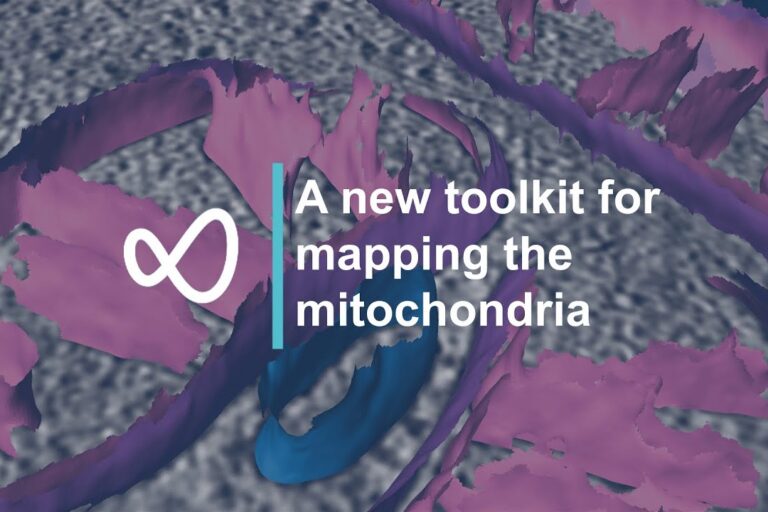
A new toolkit for mapping the mitochondria
An advanced imaging-based method from scientists at Scripps Research offers a new way of studying mitochondria, which are best known as the “powerhouses” of cells. In their report on February 14, 2023, in the Journal of Cell Biology, the scientists described a set of techniques that enables the imaging and quantification of even subtle structural changes inside mitochondria, and the correlation of those changes with other processes ongoing in cells.
-

Paving the way to new therapies for neurodegenerative disease
Learning, memory and behavior depend on the continuous movement of valuable cellular components along axons, narrow nerve fibers through which neurons send signals to other neurons. But when this transport system fails, molecular traffic jams can cause neuronal damage associated with diseases like Alzheimer's, Parkinson's and prion disorders. In this Front Row lecture, Scripps Research associate professor Sandra Encalada shared how her lab is unraveling the cellular pathways that lead to the formation of toxic protein clumps seen at traffic jams inside brain cells undergoing neurodegeneration. Her breakthroughs are transforming the way scientists view brain health and identifying new molecules that could treat, and even reverse, complex neurological conditions.