Video Tag: Neurological Disorders
-
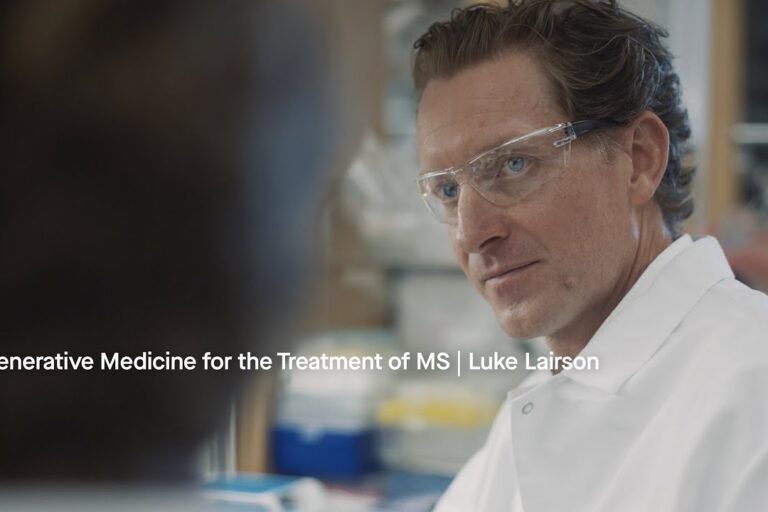
Regenerative medicine for the treatment of MS | Behind the Bench with Luke Lairson
Multiple sclerosis (MS) is a debilitating autoimmune disease that disrupts the central nervous system, causing symptoms like muscle weakness, cognitive challenges and a gradual loss of function that current treatments cannot fully repair. MS arises when the immune system attacks the myelin sheath, the protective layer insulating neurons. Scripps Research chemistry professor Luke Lairson discusses his research on the body’s natural repair pathways—specifically those that activate endogenous stem cells to restore myelin. His work aims to develop therapies that complement existing therapeutic approaches and halt MS progression.
-

Regenerative medicine for the treatment of MS: Enhancing repair to prevent progression
Multiple sclerosis (MS) is a debilitating autoimmune disease that disrupts the central nervous system, causing symptoms like muscle weakness, cognitive challenges and a gradual loss of function that current treatments cannot fully repair. MS arises when the immune system attacks the myelin sheath, the protective layer insulating neurons. In this Front Row lecture, Scripps Research chemistry professor Luke Lairson discussed his research on the body’s natural repair pathways—specifically those that activate endogenous stem cells to restore myelin. His work aims to develop therapies that complement existing therapeutic approaches and halt MS progression.
-
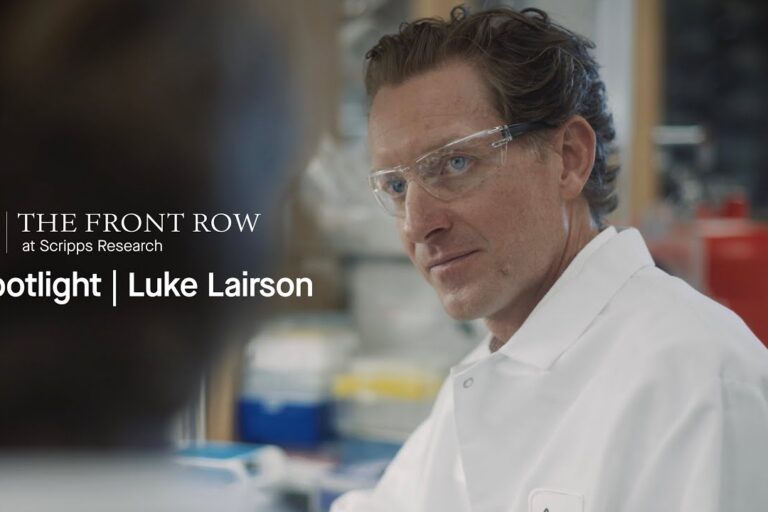
Front Row spotlight with Luke Lairson
Multiple sclerosis (MS) is a debilitating autoimmune disease that disrupts the central nervous system, causing symptoms like muscle weakness, cognitive challenges and a gradual loss of function that current treatments cannot fully repair. MS arises when the immune system attacks the myelin sheath, the protective layer insulating neurons. Scripps Research chemistry professor Luke Lairson will discuss his research on the body’s natural repair pathways—specifically those that activate endogenous stem cells to restore myelin. His work aims to develop therapies that complement existing therapeutic approaches and halt MS progression.
-

Peering into the mitochondria to reveal cellular stress and disease
The mitochondria are well known for being cellular “powerhouses,” given their important role in energy generation. Yet emerging research is now suggesting these organelles also play a key role as the stress-sensors for the cell. In this Front Row lecture, Scripps Research assistant professor Danielle Grotjahn explored how mitochondria change shape in response to different genetic and environmental stressors. By harnessing cutting-edge imaging technologies to examine mitochondria in these never-before-seen-ways, Grotjahn is revealing how these organelles can predict overall cellular health and even disease, including neurodegenerative disorders and cancer.
-

Understanding the relationship between sleep and brain health
Some neurocognitive diseases, such as Alzheimer’s disease and other dementias, affect more women than men. There are also gaps in our understanding of the impact of sleep on women’s cognitive health. Scientists at the Scripps Research Digital Trials Center have launched the REFRESH- Neurocognitive Outcomes in Women study (REFRESH-NOW), a new research project aimed at better understanding sleep and brain health in women with the help of fitness trackers. REFRESH-NOW, led by Stuti Jaiswal, a physician-scientist specializing in sleep research, will use wrist-worn activity trackers and smartwatches to gather longitudinal data from women who are 55 and older over a three-year period. The goal of the study is to identify sleep-related risk factors, enabling for the development of better interventions.
-

Fixing the misfolded proteins that cause dementia and heart failure
All proteins have a correct way of “folding” themselves into their 3D structures. When this folding process goes awry, including processes leading to protein misassembly, a number of devastating diseases can result. In this Front Row lecture, Scripps Research professor Jeffery Kelly shared how he's developing novel therapeutic strategies to target these protein misfolding diseases, which lead to deterioration of the heart and brain. His multi-disciplinary research has already led to the development of an FDA-approved drug available in the pharmacy called tafamidis (Vyndaqel® and Vyndamax®): a medicine that slows the progression of the neurodegenerative disease familial amyloid polyneuropathy and the degenerative heart disease called TTR cardiomyopathy.
-
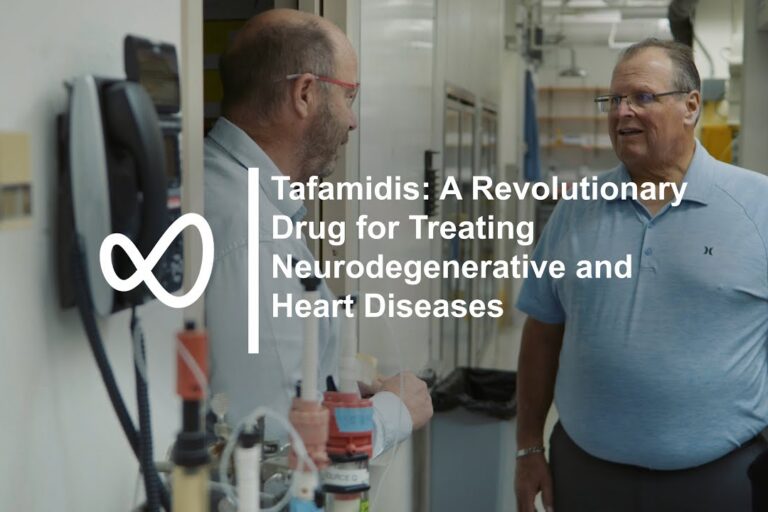
Tafamidis: A revolutionary drug for treating neurodegenerative and heart diseases
Scripps Research professor Jeffery Kelly received an unexpected visit from a patient whose life was dramatically improved by tafamidis—a revolutionary drug for treating neurodegenerative and heart diseases, developed by Kelly himself. Kelly is a leading figure at Scripps Research, spearheading efforts to address some of the most pressing medical challenges, including Alzheimer’s and various amyloid diseases. His cutting-edge research on protein misfolding has not only led to the development of tafamidis but has also broadened our understanding of protein aggregation disorders.
-

Front Row spotlight with Jeffery Kelly
Scripps Research professor Jeffery Kelly received an unexpected visit from a patient whose life was dramatically improved by tafamidis—a revolutionary drug for treating neurodegenerative and heart diseases, developed by Kelly himself. Kelly is a leading figure at Scripps Research, spearheading efforts to address some of the most pressing medical challenges, including Alzheimer’s and various amyloid diseases. His cutting-edge research on protein misfolding has not only led to the development of tafamidis but has also broadened our understanding of protein aggregation disorders.
-

How experiences shape the developing brain and impact neurological diseases
As we age, learn and grow over our lifetimes, the brain continually responds and adapts to what we experience. In this Front Row lecture, Scripps Research Chair of the Department of Neuroscience Hollis Cline revealed how sensory experiences shape the brain during development and aging—particularly visual experiences. Cline’s work has been critical in revealing how key visual brain circuits become disrupted in neurodevelopmental disorders, as well as in mapping the different communication pathways between neurons.
-
An engine for new medicines: A century of science changing life
Calibr, a nonprofit research institute founded by Scripps Research President and CEO Pete Schultz, joined Scripps Research in 2018 as its drug discovery division. As a world-class nonprofit “bench to bedside” drug discovery engine, Calibr delivers groundbreaking solutions to unmet medical needs by uniting the creativity of fundamental discovery with highly focused R&D capabilities and expertise.