Infectious disease sleuth Sumit Chanda, PhD, joins Scripps Research and its Calibr drug discovery division
September 15, 2021

LA JOLLA, CA—Leading infectious disease researcher Sumit Chanda, PhD, will join the Scripps Research Department of Immunology and Microbiology and its nonprofit drug discovery and development division, Calibr, focusing on preparedness for future pandemics, the institute announced Wednesday, Sept. 15.
Chanda not only studies how pathogens infect cells, but how the immune system responds, with an eye toward prevention and treatment. A longtime collaborator with Scripps Research scientists, including those at Calibr, he has contributed to the fight against SARS-CoV-2, the cause of COVID illness, as well as influenza, Dengue virus and HIV.
Chanda’s collaborations with the team at Calibr have helped reveal existing drugs that may help boost the effectiveness of current treatments for COVID infection. In addition, Chanda discovered an immune factor in the lungs that, upon infection with SARS-CoV-2, ignites a wider immune attack.
“One of the driving forces for me coming to Scripps Research is really to be able to put a medicine into humans,” Chanda says. “Scripps Research is unique in that it has the infrastructure and expertise to channel discoveries into moving the needle on human health.”
Peter Schultz, PhD, President and CEO of Scripps Research, says Chanda’s expertise augments Scripps Research’s existing community of leading global health researchers, which includes genomic epidemiologists tracking outbreaks, structural biologists who contributed to the COVID-19 Pfizer and Moderna vaccines, and experts in infectious disease drug discovery.
“Scripps Research has a track record of conducting breakthrough basic and translational research in infectious disease and global health, including moving candidate drugs into clinical trials for cryptosporidiosis and tuberculosis,” Schultz says. “Sumit Chanda will augment our focus in this area and play a key role in our strategy to tackle and prepare for future pandemic threats. His work will also contribute to our existing drug discovery partnerships with the Bill & Melinda Gates Foundation and Wellcome Trust.”
Chanda notes that while the current pandemic is caused by a coronavirus, other viruses, including influenza, pose risks that must be addressed. He recently discovered that a mechanism in the H5N1 “bird flu” strain makes it more effective at infecting cells that shrug off other seasonal flu strains. Given influenza’s tendency to swap genes to produce new varieties, that’s important to understand, he notes.
Chanda has produced major advances in other areas, as well. He helped discover how HIV suppresses the innate immune response. Innate immunity is a non-specific response to infection, such as inflammation, which can both protect and harm if it becomes overly aggressive or chronic.
Chanda earned his doctorate in molecular pharmacology from Stanford University in 2001, and he says that experience in Silicon Valley inspired his motivation to improve scientific methodology with technological innovations. To that end, he is the founder of a widely used open-source tool for annotating genes, called metascape.org.
From Stanford, Chanda joined the Genomics Institute of the Novartis Research Foundation in La Jolla, where he went on to lead his first research group in its Division of Cellular Genomics, working with Schultz. He subsequently joined Sanford-Burnham Medical Research Institute in 2007. Since 2015, he directed its Immunity and Pathogenesis program.
Chanda says the storied history of Nobel-worthy discovery from Scripps Research immunology and microbiology faculty influenced his decision to join the institute, along with the unique drug-discovery resources and expertise it has added in recent years.
“It’s not an if but a when that the next pandemic will occur. Hopefully we as a planet will be better prepared,” Chanda says. “Working with the people at Scripps Research, there is an opportunity for me to help achieve that goal.”


Virologist gives update on H5N1, mpox, and preparing for an uncertain future
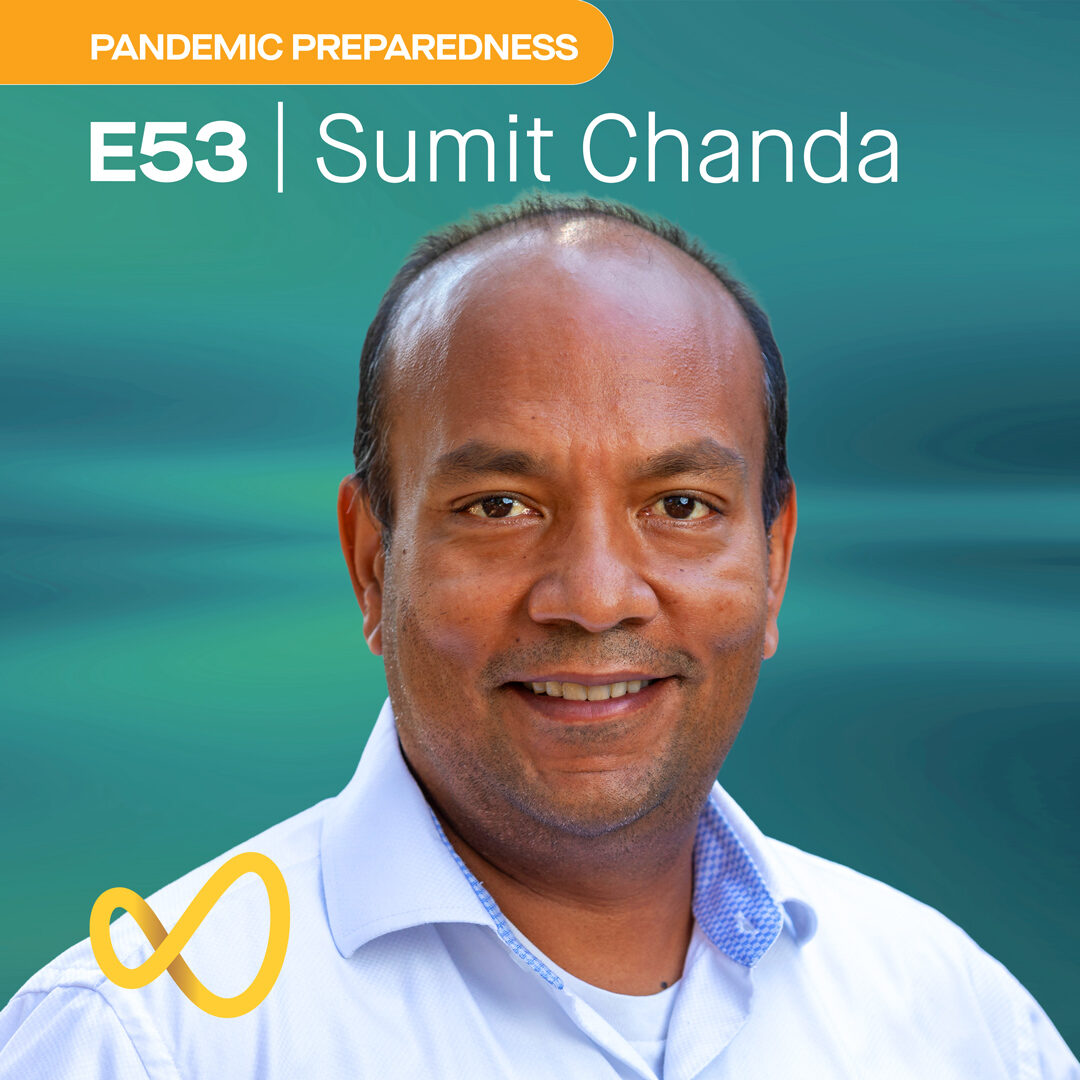
Roughly two years ago, virology expert and Scripps Research professor Sumit Chanda sat down with Science Changing Life to discuss all things pandemic preparedness and COVID-19. But the world is in a very different place now, with infectious disease threats like H5N1, mpox and Dengue virus on the rise. Chanda joins us once again to share the latest in the virology space, how scientists can be better communicators, and his advice for making sure we’re as prepared for an uncertain future as we can be.


Combating microbial threats: A century of science changing life
Every day, scientists at Scripps Research are discovering and developing new treatments to combat today’s infectious disease threats—and tomorrow’s. Many of these researchers played a significant role in the COVID-19 pandemic, including identifying new antibody treatments and uncovering the virus’s structure. Meanwhile, they're also applying these key learnings to better prepare the global population for whichever microbial threat emerges next.

Sumit Chanda: How can we prepare for the next pandemic?
Professor Sumit Chanda is an infectious disease expert and immunologist, where he works both in the Department of Immunology and Microbiology and at Calibr, Scripps Research’s nonprofit drug discovery and development division. He has devoted his career to understanding how the immune system responds to numerous viruses, such as influenza, Dengue virus and SARS-CoV-2. Listen as we discuss everything from pandemic preparedness to drug discovery, as well as his unrelenting drive to uncover new treatment options—including for COVID-19.