‘Target map’ points to potential new drugs for autoimmune disorders
July 29, 2020
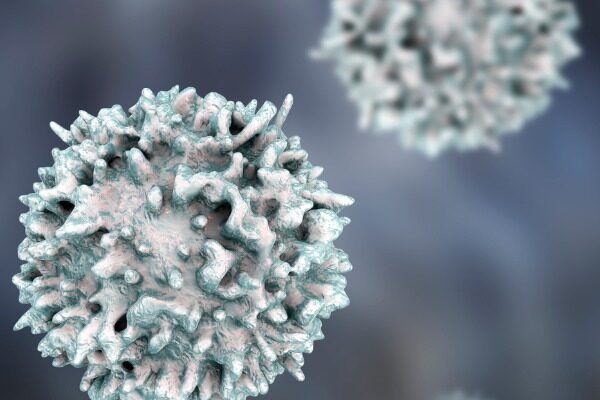
3-D illustration of a T cell. Autoimmune and chronic inflammatory disorders—including lupus, rheumatoid arthritis and IBD—are caused by the inappropriate activation of T cells or other elements of the immune system. (Stock image)
LA JOLLA, CA—Scientists at Scripps Research have used advanced chemistry techniques to reveal thousands of sites on immune proteins where drug molecules may be able to bind to control immune system activity.
The team, whose findings appear July 29 in Cell, also used their mapping method to discover and study new compounds that suppress the activation of T cells—a type of white blood cell that plays a central role in the immune response. Such compounds could be translated into powerful new treatments for autoimmune diseases.
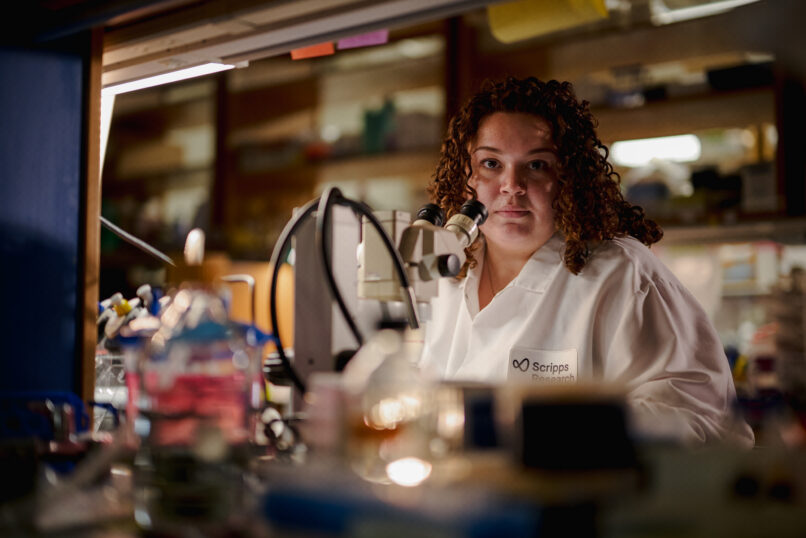
“Our approach allows us to explore new ways of modulating the activity of T cells, which are implicated in many immune disorders, including autoimmune diseases,” says the study’s first author Ekaterina Vinogradova, PhD, a postdoctoral research associate in the laboratory of co-senior author Benjamin Cravatt, PhD, Gilula Chair of Chemical Biology at Scripps Research.
Cravatt lab’s collaborated with several other labs, including that of co-senior author John Teijaro, PhD, associate professor in the Department of Immunology and Microbiology at Scripps Research, and Stuart Schreiber, PhD, a principal investigator at the Broad Institute.
“These results are a compelling example of the provocative scientific findings that can emerge from a collaboration that integrates the fields of synthetic chemistry, chemical biology and immunology,” Cravatt says.
Scouting new targets
Autoimmune and chronic inflammatory disorders—including lupus, multiple sclerosis, rheumatoid arthritis, type 1 diabetes and inflammatory bowel disorder—are caused by the inappropriate activation of T cells or other elements of the immune system. These conditions affect at least tens of millions of people around the world, and existing treatments often are not very effective.
In recent years, Cravatt and his team have developed methods for mapping special sites on proteins where protein building blocks called cysteine amino acids can make tight, irreversible bonds with certain types of molecules called electrophiles. These “reactive cysteine” sites can potentially be targeted by electrophile-type drug molecules, even on proteins that can’t be targeted by ordinary drug molecules. In essence, the team has enabled the discovery and development of drug treatments that would otherwise not be possible.
For the new study, Vinogradova and colleagues applied these mapping methods to proteins within T cells. Using broadly reactive electrophile molecules called scout fragments, the researchers mapped more than 3,400 reactive sites on more than 2,200 T cell proteins. They did this both for resting T cells and activated T cells to find sites that are reactive only when T cells are active; this points to the possibility of safer drugs that affect only active T cells that drive disease.
An efficient discovery processes
The researchers showed that they could add their mapping technique to a versatile drug-discovery method called functional screening, which is used to find chemical compounds that affect a given function or process in cells. They screened a set of more than 100 electrophile compounds to find several that suppress T cell activation, then used their mapping technique to quickly identify T cell proteins hit by these compounds.
Through this layered process, they not only identified several compounds with potential as immune-modulating drugs, but found these compounds’ protein targets and the likely mechanisms by which the compounds quell T cell activation.
“Essentially, we used our mapping technique to streamline much of the process of drug discovery,” Vinogradova says.
The researchers are now using the methods to discover and study new immune-modulating compounds and may then work to develop some of these molecules into potential treatments for autoimmune disorders.
Support for the study, “An Activity-Guided Map of Electrophile-Cysteine Interactions in Primary Human T Cells,” was provided by the National Institutes of Health (CA231991, K99CA248715, CA212467, CA211526, GM069832, UL1 TR001114, P30 014195, R01 GM102491-07), the Damon Runyon Cancer Research Foundation, Vividion Therapeutics and the Life Sciences Research Foundation.


Expanding the drug target universe
There are countless proteins that play critical roles in disease, yet they remain challenging to target with therapeutics. In this Front Row lecture, Professor Benjamin Cravatt explained how his large-scale protein profiling research and innovative chemical technologies are helping identify novel drugs for therapeutic targets previously deemed ‘undruggable.’ Cravatt’s translational work, which is at the intersection of chemistry and biology, has also led to the formation of multiple local biotechnology companies that collectively employ hundreds of scientists who are developing first-in-class candidate medicines for diverse diseases ranging from cancer to neurological disorders.




Professor Benjamin Cravatt and physician-scientist Lou Lange join Scripps Research Board of Directors
Scripps Research has added Benjamin Cravatt, PhD, professor of Chemistry and the Norton B. Gilula Chair in Biology and Chemistry at Scripps Research, and Lou Lange, MD, PhD, physician-scientist and general partner with Asset Management Ventures, to its Board of Directors.