2019 Priestley Medal goes to K. Barry Sharpless
June 28, 2018
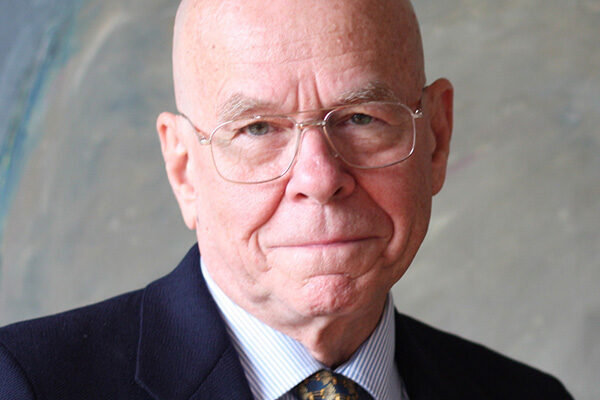
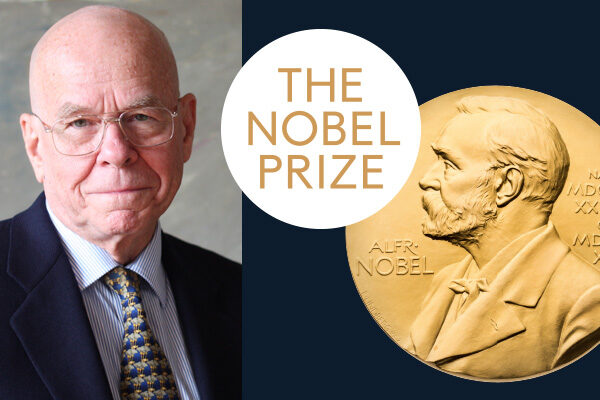
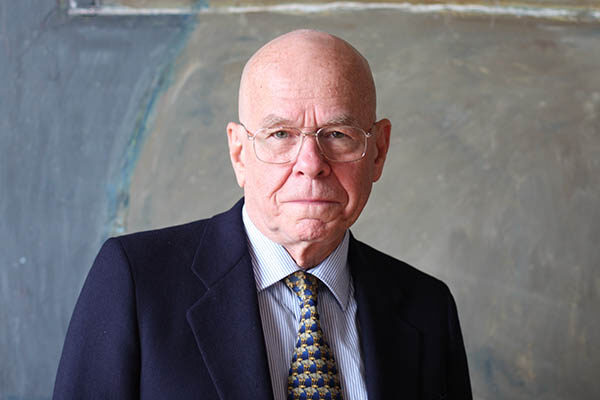
Nobel laureate K. Barry Sharpless (Photo by Ike Sharpless)
“I am honored beyond imagining just seeing my name on the same list with two of my chemical gods—George Hammond and Henry Taube,” says Sharpless. “All I’ve ever wanted to do, what I still do, is invent better ways for chemists to do chemistry.”
The concept of click chemistry has opened the door for the development of new chemical reactions, new drug therapies and new materials. “Among the many fundamental contributions to new chemical reactions from the Sharpless lab, click chemistry, for example, truly exemplifies how the creation of basic knowledge in chemistry can profoundly impact biology, medicine and materials,” says Ben Shen, PhD, co-chair of the Department of Chemistry at Scripps Research.
Sharpless is known for taking risks in uncharted territory to develop new chemical tools and methods. For example, in 1992, his lab became the world’s first in academia to use robotics for running chemical reactions. He received the Nobel Prize in Chemistry in 2001 for his work on chirally catalysed oxidation reactions. But at the same time, he was also lecturing on a new method he’d invented for the rapid discovery of useful chemical function—click chemistry used reliable, spring-loaded, easy-to-perform reactions to ‘click’ together molecular building blocks with desirable properties.
Pioneered by Sharpless and colleagues M.G. Finn, PhD, and Hartmuth Kolb, PhD, click chemistry was initially met with skepticism from much of the chemical community. It took a while for the Scripps Research click chemists to produce the reactions and applications that got click chemistry rolling, but within a decade its success garnered Sharpless fourth place in Thomson Reuters’ ranking of the world’s highest-impact chemists during the first decade of the 21st century.
“Dr. Sharpless has made numerous contributions to chemistry that have each significantly moved the field forward,” says Thomas Connelly, PhD, ACS executive director and CEO, in a statement. “Whether his work in asymmetric synthesis, which earned him the Nobel Prize in Chemistry in 2001, or the development of the concept of click chemistry, his service to advancing chemistry is beyond measure. He is truly deserving of the Priestley Medal and I offer my heartfelt congratulations.”
“His distinguished service to the field of chemistry extends beyond the development of click reactions, to include his pioneering work in the discovery of asymmetric epoxidations, and to his recent innovative sulfur VI exchange chemistry,” says Jeffery Kelly, PhD, Lita Annenberg Hazen Professor of Chemistry and co-chair of the Department of Chemistry at Scripps Research.
“Barry is inspirational to all of us who use chemistry to better society,” adds Shen.
Sharpless will receive the medal in 2019, in conjunction with the 257th ACS National Meeting.



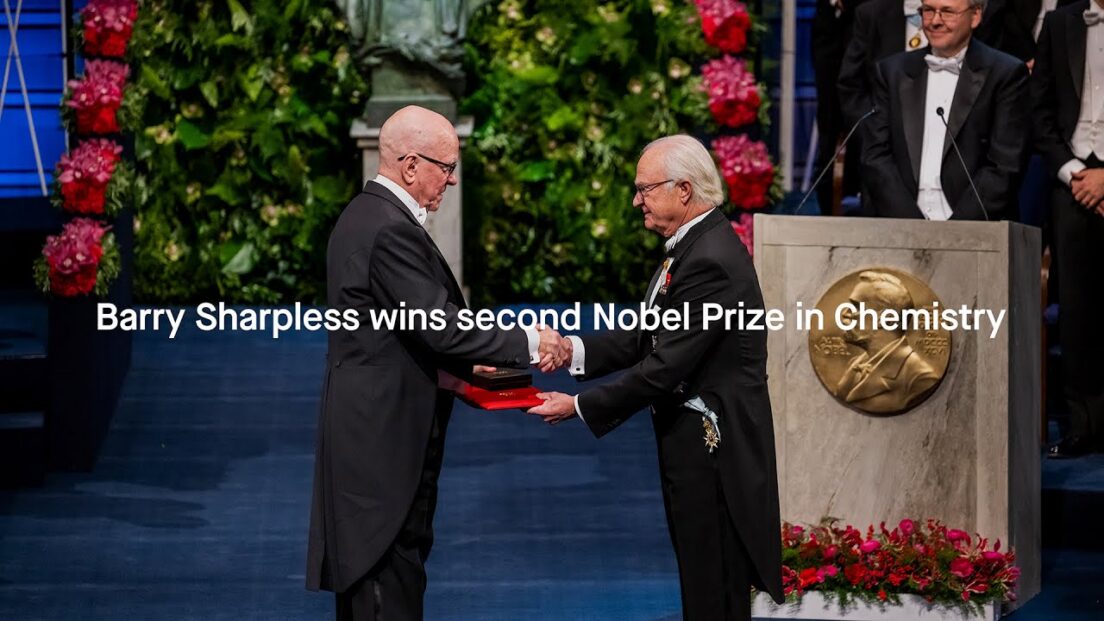
Historic honor: Barry Sharpless wins second Nobel Prize in Chemistry
The Scripps Research chemistry community shares their thoughts on K. Barry Sharpless' historic second Nobel Prize in Chemistry. He was awarded the 2022 prize for his groundbreaking research in developing “click chemistry,” an ingenious method for building molecules. Sharpless, the W.M. Keck Professor of Chemistry, shares the prize with Carolyn R. Bertozzi of Stanford University and Morten Meldal of the University of Copenhagen for the development of click chemistry and bioorthogonal chemistry, according to the Nobel Prize committee. Sharpless previously shared the 2001 Nobel Prize in Chemistry for his work on chirally catalyzed oxidation reactions, making him the second scientist ever to win two Nobel Prizes in Chemistry. Frederick Sanger won the Nobel Prize in Chemistry in 1958 and 1980.
New chemical reaction adds to ‘click-chemistry’ family, could speed drug discovery
A team including Nobel laureate chemist K. Barry Sharpless, PhD, has discovered an easy, efficient type of chemical reaction that could become widely useful in building potential new drug molecules and other valuable chemical products.