
Keren Lasker, PhD
Associate Professor
Department of Integrative Structural and Computational Biology

Research Focus
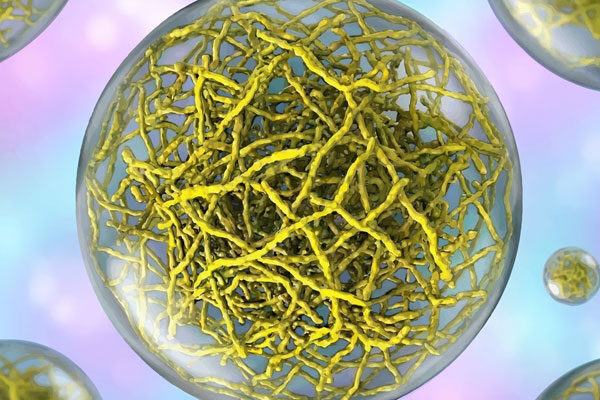
Cells organize much of their chemistry without membranes. Instead, proteins and nucleic acids can partition into biomolecular condensates: membraneless compartments that form and dissolve through phase separation. Although phase separation is now recognized as a fundamental principle of cellular organization, how cells regulate condensates to sense and adapt to their environment remains poorly understood. We discovered that PopZ, a disordered protein conserved across a-proteobacteria, forms a polar condensate required for cellular organization. By combining cryo-electron tomography, high-resolution live-cell imaging, quantitative biophysics, and integrative modeling, we connect the molecular architecture of PopZ condensates to their cellular functions: positioning cell-cycle regulators, supporting faithful division, and helping bacteria withstand stress.
We use PopZ as a tractable system to define how condensates can be engineered with controlled properties. By determining how PopZ assembles, tunes its material state, and selects client proteins, we are building synthetic condensates in human cells that can concentrate molecular cargo, deliver it to defined locations, or capture specific target proteins. We are applying this approach to disease-associated proteins that accumulate or misfold in neurodegenerative and age-related disorders. Rather than using condensates only as storage sites, we aim to design systems that couple target capture to endogenous degradation pathways, promoting the breakdown and removal of captured proteins. We are a collaborative, interdisciplinary lab that combines microbiology, biophysics, and cell engineering to define the principles of condensate assembly and function, and to apply them to programmable systems in living cells.


Select Publications
-
Scholl, Daniel; Boyd, Tumara; Latham, Andrew P.; Salazar, Alexandra; Khan, Asma M A M; Boeynaems, Steven; Holehouse, Alex S.; Lander, Gabriel C.; Sali, Andrej; Park, Donghyun; Deniz, Ashok A.; Lasker, Keren The filamentous ultrastructure of the PopZ condensate is required for its cellular function. 2026, 33, 420-432.
-
Stevens, Donté A.; Lasker, Keren Microbial biomolecular condensates: from conserved principles to synthetic biology opportunities . 2025, 88, 102677.
View -
Goodsell, David S.; Lasker, Keren Integrative Visualization of the Molecular Structure of a Cellular Microdomain.. Protein Science 2023, 32, e4577.
View -
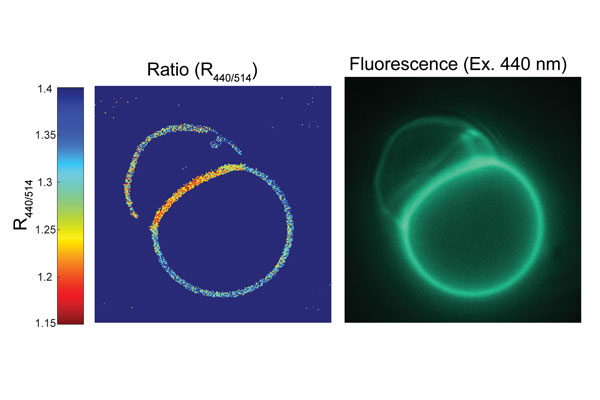
Lasker, Keren; Boeynaems, Steven; Lam, Vinson; Scholl, Daniel; Stainton, Emma; Briner, Adam; Jacquemyn, Maarten; Daelemans, Dirk; Deniz, Ashok; Villa, Elizabeth; Holehouse, Alex S.; Gitler, Aaron D.; Shapiro, Lucy The material properties of a bacterial-derived biomolecular condensate tune biological function in natural and synthetic systems. Nature communications 2022, 13, 5643.
View -
Lasker, Keren; von Diezmann, Lexy; Zhou, Xiaofeng; Ahrens, Daniel G.; Mann, T H.; Moerner, W E.; Shapiro, Lucy Selective sequestration of signalling proteins in a membraneless organelle reinforces the spatial regulation of asymmetry in Caulobacter crescentus. Nature Microbiology 2020, 5, 418-429.
View -
Watanabe, Reika; Buschauer, Robert; Böhning, Jan; Audagnotto, Martina; Lasker, Keren; Lu, Tsan- W.; Boassa, Daniela; Taylor, Susan; Villa, Elizabeth The In Situ Structure of Parkinson's Disease-Linked LRRK2. Cell 2020, 182, 1508-1518.e16.
View -
Lasker, Keren; Förster, Friedrich; Bohn, Stefan; Walzthoeni, Thomas; Villa, Elizabeth; Unverdorben, Pia; Beck, Florian; Aebersold, Ruedi; Sali, Andrej; Baumeister, Wolfgang Molecular architecture of the 26S proteasome holocomplex determined by an integrative approach. Proc Natl Acad Sci U S A 2012, 109, 1380-7.