Dorothee Kern, PhD
Professor
Department of Integrative Structural and Computational Biology

Research Focus
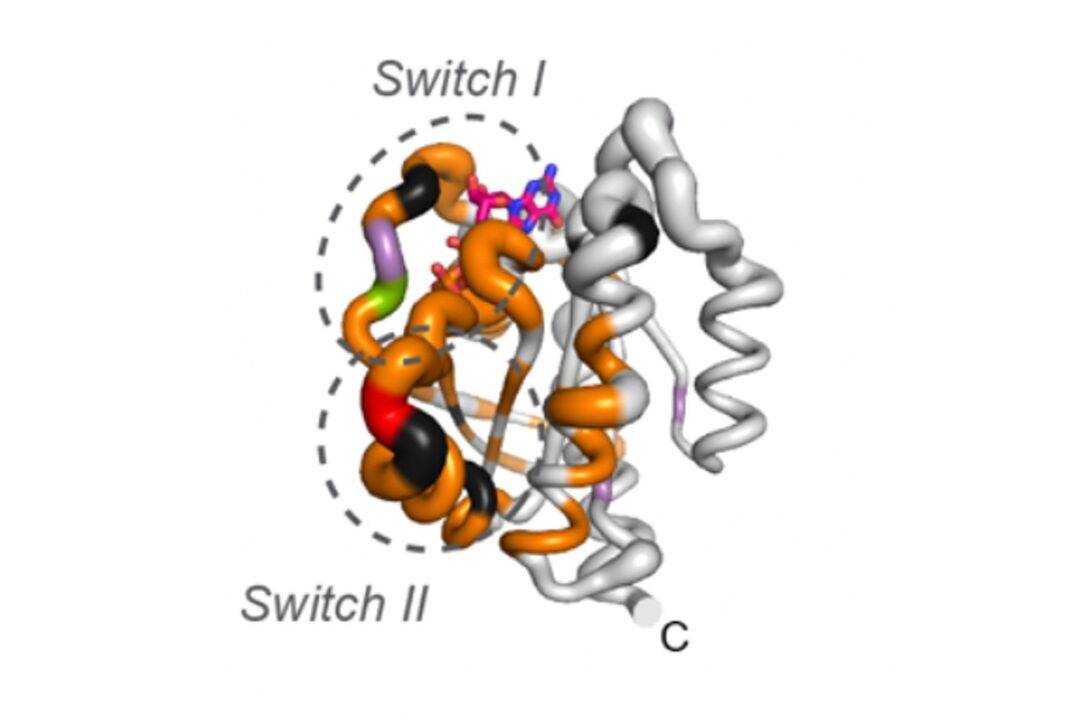
Structural biology and recent groundbreaking machine learning driven breakthroughs with AlphaFold and language models have given us atomic resolution static picture of proteins. Yet, there is no biology or function at cryogenic temperatures. Crucially, biological function is rooted in the dynamics of such structures, the “dance of proteins”. Therefore, our research team strives to understand how proteins function by illuminating how they move at atomic resolution, adding the fourth dimension to structural biology, the time domain. The lab combines experimental biophysical methods, such as nuclear magnetic resonance (NMR), x-ray crystallography, cryo-EM, fluorescence spectroscopy with an array of computational methods ranging from molecular dynamics simulations, bioinformatics tools such as ancestral sequence reconstruction to AI methods.
The goal is to visualize enzymes, signaling proteins, drug binding and other processes in real time by creating protein movies at atomic resolution. We call this the energy landscape of proteins, comprised of all the structures a protein samples, their relative populations, the frequencies of interconversion and the molecular pathways how they move from one conformation to the next. With such approaches we have demonstrated how protein dynamics dictates enzyme catalysis, signaling, protein-protein interactions, T cell maturation in immune response, drug transport through membranes, allosteric regulation and others.
To understand how nature has evolved such fascinating sophistication of functions we find today in modern proteins we study the evolution of proteins by reconstructing evolutionary trajectories over billions of years using ancestral sequence resurrection followed by making these ancestors in the lab and characterizing them experimentally. We are learning from nature’s evolution to then design better enzymes and drugs, our two major practical applications:
1. We are using fundamental biophysical principles learned from studying naturally occurring enzymes and their evolution to make better and novel green biocatalysts. The team currently combines directed evolution experimental methods with machine learning approaches for this goal.
2. With our discovery that protein dynamics is not only essential for the healthy function of proteins, but also a key for drug binding (see some of our publications), we started exploring a new vision of putting protein dynamics and allosteric networks at the heart of rational drug design! We had demonstrated that taking advantage of the differential protein dynamics of drug targets and their closest homologues enables making highly selective drugs that overcome the problem of side effects from off-target inhibition. In an exciting adventure we are developing fundamental concepts for allosteric drugs that have the premise of being more selective, and in addition provide the ability to develop activators, needed in many diseases. Another new approach from our team is double drugging targets with 2 molecules, an orthosteric and simultaneously an allosteric drug. Concepts developed in the Kern lab have successfully been translated into patient treatments in Relay Therapeutics and MOMA Therapeutics that I cofounded with the mission of exploiting protein dynamics for expanding therapeutics.
The ultimate goals would be to design highly efficient enzymes, and highly effective drugs. We are excited about our recent first steps exploiting AI approaches to predict conformational substates, and to train a novel generative model for predicting protein dynamics using NMR dynamics data.
To get a personal flair of our research, check out these two iBiology videos. iBiology’s mission is to bring the world’s best biology to you.
Select Publications
-
Wayment-Steele, Hannah K.; Ojoawo, Adedolapo; Otten, Renee; Apitz, Julia M.; Pitsawong, Warintra; Hömberger, Marc; Ovchinnikov, Sergey; Colwell, Lucy; Kern, Dorothee Predicting multiple conformations via sequence clustering and AlphaFold2. Nature 2024, 625, 832-839.
View -
Kern, Dorothee; Padua, Ricardo The mechanism of the simplest biological 24-hour clock. Nature 2023.
View -
Otten, Renee; Pádua, Ricardo A P; Bunzel, H Adria A.; Nguyen, Vy; Pitsawong, Warintra; Patterson, MacKenzie; Sui, Shuo; Perry, Sarah L.; Cohen, Aina E.; Hilvert, Donald; Kern, Dorothee How directed evolution reshapes the energy landscape in an enzyme to boost catalysis. Science 2020, 370, 1442-1446.
-
Hadzipasic, Adelajda; Wilson, Christopher; Nguyen, Vy; Kern, Nadja; Kim, Chansik; Pitsawong, Warintra; Villali, Janice; Zheng, Yuejiao; Kern, Dorothee Ancient origins of allosteric activation in a Ser-Thr kinase. Science 2020, 367, 912-917.
-
Nguyen, Vy; Wilson, Christopher; Hoemberger, Marc; Stiller, John B.; Agafonov, Roman V.; Kutter, Steffen; English, Justin; Theobald, Douglas L.; Kern, Dorothee Evolutionary drivers of thermoadaptation in enzyme catalysis. Science 2017, 355, 289-294.
-
Wilson, C; Agafonov, R V.; Hoemberger, M; Kutter, S; Zorba, A; Halpin, J; Buosi, V; Otten, R; Waterman, D; Theobald, D L.; Kern, D Kinase dynamics. Using ancient protein kinases to unravel a modern cancer drug's mechanism. Science 2015, 347, 882-6.