Video Tag: Neuroscience
-
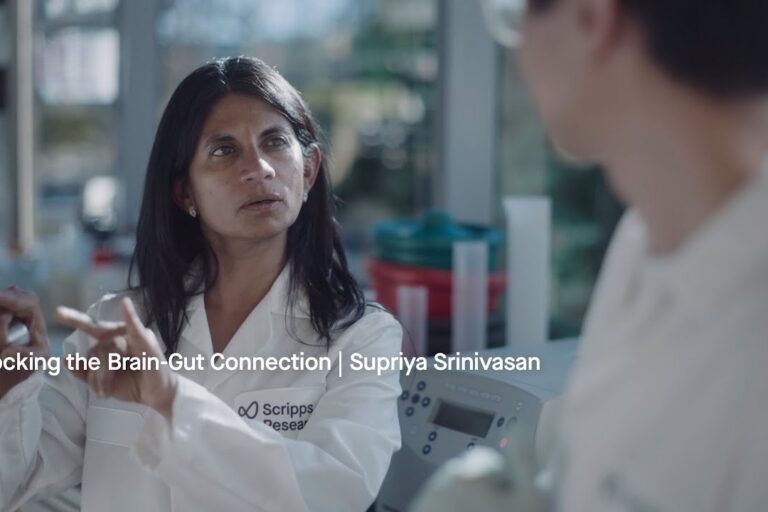
Unlocking the brain-gut connection | Behind the Bench with Supriya Srinivasan
How do our gut and brain communicate with one another, and how do they influence our metabolism, our behavior, and the aging process? Scripps Research neuroscience professor Supriya Srinivasan is dedicated to answering these pressing questions using modern genetic and molecular tools across different experimental systems. Discover how her work could lead to new therapies that restore a healthy metabolism and tackle dysregulation.
-
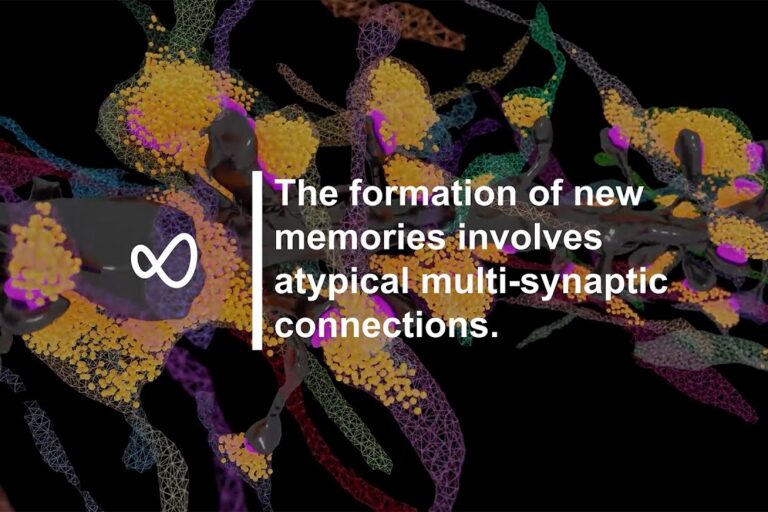
The formation of new memories involves atypical multi-synaptic connections
Using cutting-edge genetic tools, 3D electron microscopy, and artificial intelligence, Scripps Research scientists and colleagues have uncovered key structural hallmarks of long-term memory, called an engram. Their study, published in Science on March 20, 2025, paves the way for future advances in treating memory loss and other cognitive impairments associated with aging and neurodegenerative diseases.
-

The gut-brain axis: A key to metabolism and longevity
How do our gut and brain communicate with one another, and how do they influence our metabolism, our behavior, and the aging process? Scripps Research neuroscience professor Supriya Srinivasan is dedicated to answering these pressing questions using modern genetic and molecular tools across different experimental systems. In this Front Row lecture, Srinivasan revealed the intricacies of the gut-brain networks that regulate energy regulation and fat metabolism, as well as their impact on lifespan. Discover how her work could lead to new therapies that restore a healthy metabolism and tackle dysregulation.
-

Front Row spotlight with Supriya Srinivasan
How do our gut and brain communicate with one another, and how do they influence our metabolism, our behavior, and the aging process? Scripps Research neuroscience professor Supriya Srinivasan is dedicated to answering these pressing questions using modern genetic and molecular tools across different experimental systems. Srinivasan will reveal the intricacies of the gut-brain networks that regulate energy regulation and fat metabolism, as well as their impact on lifespan. Discover how her work could lead to new therapies that restore a healthy metabolism and tackle dysregulation.
-

How do you feel? Molecules that sense touch and other pressures
The inner workings of the brain have eluded neuroscientists for ages—including how we perceive sensations such as touch, pain, sound and even blood flow. In this Front Row lecture, Scripps Research professor and Nobel laureate Ardem Patapoutian discussed the molecular sensors that enable the mind to interpret different physical and chemical stimuli. These discoveries—for which Patapoutian was awarded the 2021 Nobel Prize in Physiology or Medicine—are helping answer long-standing questions in neuroscience, such as how cells communicate with each other, how we sense our body in time and space, how these sensors impact different diseases and more.
-

How experiences shape the developing brain and impact neurological diseases
As we age, learn and grow over our lifetimes, the brain continually responds and adapts to what we experience. In this Front Row lecture, Scripps Research Chair of the Department of Neuroscience Hollis Cline revealed how sensory experiences shape the brain during development and aging—particularly visual experiences. Cline’s work has been critical in revealing how key visual brain circuits become disrupted in neurodevelopmental disorders, as well as in mapping the different communication pathways between neurons.
-
Cracking the neural code: A century of science changing life
The brain remains one of the most complex and mysterious parts of the human body, controlling everything from how we move to where we store and process memory. Scripps Research neuroscientists are helping us understand the mechanisms of why we age, what drives neurodegenerative diseases like Alzheimer’s and Parkinson’s, how the brain communicates with the rest of the body, and more. By evaluating the brain at multiple levels, these researchers are shedding light on the mysteries that have perplexed the field for decades.
-

Editing genes to tackle neurological conditions
Networks of genes coordinate the formation of brain cells during early life development. However, diverse genetic variants can impact this process and ultimately manifest in different brain disorders and developmental disabilities. In this Front Row lecture, Scripps Research assistant professor Xin Jin shared how her lab is using cutting-edge technology to discover which brain regions and cell types are involved in disease pathology. Jin’s insights are revealing neurodevelopmental and other disorders, as well as defining a path for new diagnostic tools and therapeutic interventions.
-
Discovery reveals how nerves control the gut: Scripps Research study on PIEZO receptors
Gastrointestinal and digestive issues impact roughly 3 million people across the United States alone, and that number is growing. A new study from Scripps Research scientists shows how sensory neurons control our gastrointestinal tracts—critical information that could shape our understanding of related diseases and disorders. The study, published in the journal Cell on August 3rd, 2023, used a combination of human clinical data and animal models to reveal that the receptor PIEZO2 controls gastrointestinal transit through the stomach, small intestine and colon by sensing the presence of food and slowing the rate of gut motility accordingly. These findings could lead to therapeutic applications for a range of gastrointestinal conditions, such as inflammatory bowel disease and irritable bowel syndrome.
-

Q&A with a sleep scientist
Assistant Professor Stuti Jaiswal is a physician and sleep scientist. She's using new technology to study sleep patterns of thousands of people remotely. Here, she answers some common questions about sleep, like how many hours do you need? Do naps count? And what can shift workers do to avoid the health risks of poor sleep?