Video Tag: Molecular & Cellular Biology
-
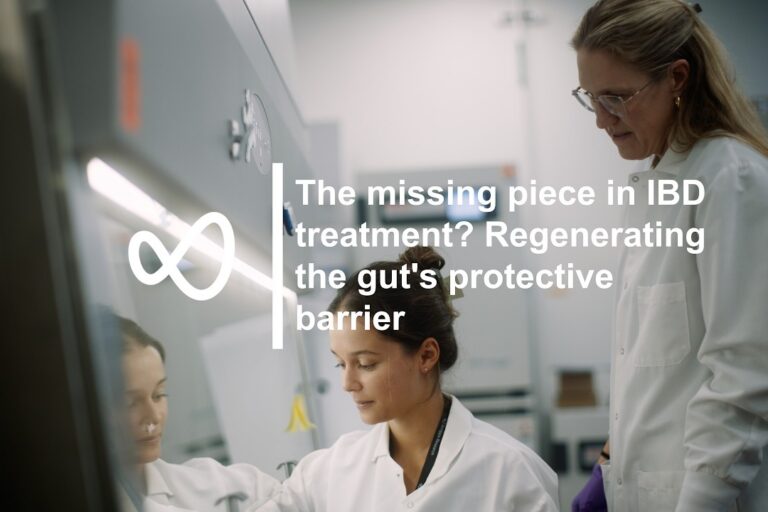
The missing piece in IBD treatment? Regenerating the gut’s protective barrier shows promise
Current therapies for inflammatory bowel disease (IBD) primarily focus on suppressing inflammation. But what if we could repair one of the underlying drivers of disease itself? Researchers at Calibr-Skaggs are developing CLF065, a potential first-in-class regenerative medicine designed to restore epithelial barrier function—the protective intestinal lining that regulates what passes from the gut into the body. CLF065 is designed with a dual mechanism of action: supporting barrier integrity and stimulating regeneration of the gut lining. A Phase 2 clinical trial has recently launched in chronic pouchitis, a painful inflammatory condition that can develop in some people with IBD following surgery. In addition, an Investigational New Drug (IND) application has been submitted to support a Phase 2 trial in Crohn's disease. Learn how regenerative medicine could help shift the treatment paradigm from managing symptoms to repairing the tissue damage at the root of disease.
-

Bringing precision therapy to mental disorders
Mental disorders like depression and schizophrenia affect the lives of millions of people around the world, and yet, available treatment options have remained the same for decades. In this Front Row lecture, Scripps Research professor Hugh Rosen shared how his pioneering research has led to the development of the drug navacaprant, which precisely targets one of the brain’s behavioral circuits and is currently in clinical testing for major depressive disorder. Harnessing his expertise as a physician-scientist, Rosen has discovered and developed multiple other medicines, including ozanimod—a breakthrough treatment approved for multiple sclerosis and ulcerative colitis.
-

The link between circadian rhythms and your health: Scripps Research scientist explains
Circadian rhythms are processes that follow a 24-hour cycle, enabling organisms to keep track of the time of day and adjust their physiology to recurring daily changes in the external environment. In this video, Scripps Research associate professor Katja Lamia discusses the molecular processes that occur when circadian rhythms are disrupted, and how it affects human health.
-

Paving the way to new therapies for neurodegenerative disease
Learning, memory and behavior depend on the continuous movement of valuable cellular components along axons, narrow nerve fibers through which neurons send signals to other neurons. But when this transport system fails, molecular traffic jams can cause neuronal damage associated with diseases like Alzheimer's, Parkinson's and prion disorders. In this Front Row lecture, Scripps Research associate professor Sandra Encalada shared how her lab is unraveling the cellular pathways that lead to the formation of toxic protein clumps seen at traffic jams inside brain cells undergoing neurodegeneration. Her breakthroughs are transforming the way scientists view brain health and identifying new molecules that could treat, and even reverse, complex neurological conditions.