Video Tag: Events
-

Bringing precision therapy to mental disorders
Mental disorders like depression and schizophrenia affect the lives of millions of people around the world, and yet, available treatment options have remained the same for decades. In this Front Row lecture, Scripps Research professor Hugh Rosen shared how his pioneering research has led to the development of the drug navacaprant, which precisely targets one of the brain’s behavioral circuits and is currently in clinical testing for major depressive disorder. Harnessing his expertise as a physician-scientist, Rosen has discovered and developed multiple other medicines, including ozanimod—a breakthrough treatment approved for multiple sclerosis and ulcerative colitis.
-
Scripps Research Day highlights
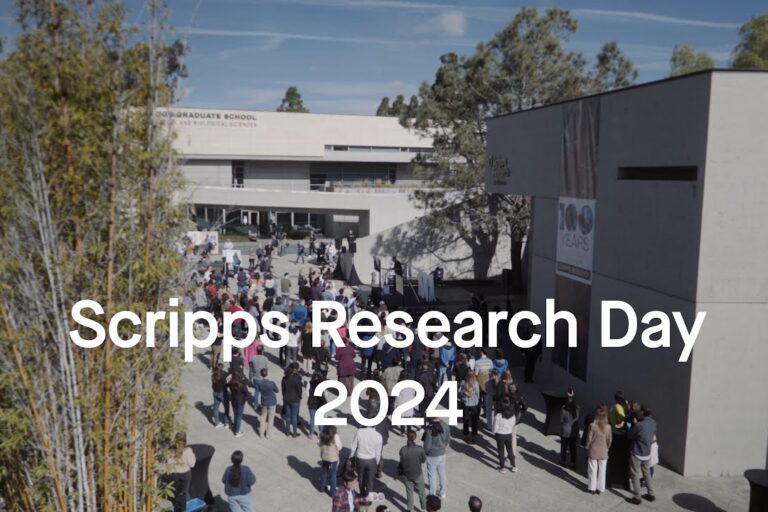
On February 15, 2024, Scripps Research celebrated its 100-year anniversary with “Scripps Research Day,” as declared by the City of San Diego. The event marked a century of life-saving discoveries, while also looking toward the future of scientific achievement. Scripps Research President and CEO Pete Schultz and San Diego Mayor Todd Gloria gave remarks and shared the official city proclamation with Institute staff, scientists and students. Attendees enjoyed a photo booth, music, food, games and a historic archives booth presented by Scripps Research Library.
-
How experiences shape the developing brain and impact neurological diseases
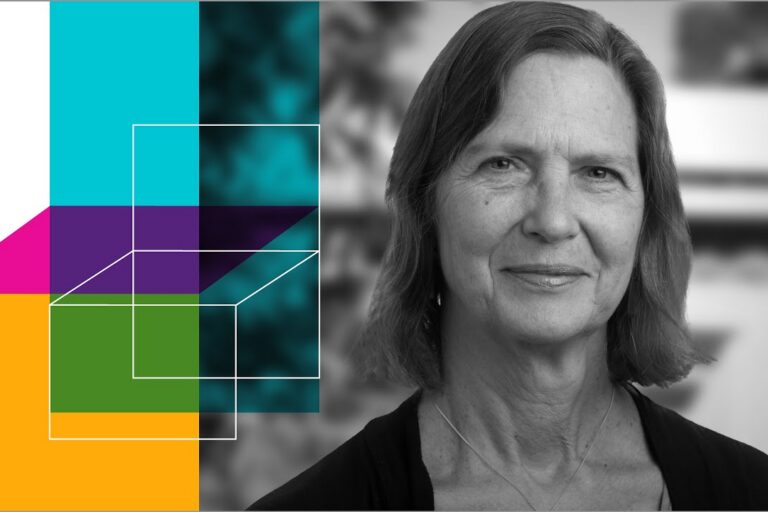
As we age, learn and grow over our lifetimes, the brain continually responds and adapts to what we experience. In this Front Row lecture, Scripps Research Chair of the Department of Neuroscience Hollis Cline revealed how sensory experiences shape the brain during development and aging—particularly visual experiences. Cline’s work has been critical in revealing how key visual brain circuits become disrupted in neurodevelopmental disorders, as well as in mapping the different communication pathways between neurons.
-

Making science matter: A vision for a new century of life-changing science
In the inaugural lecture of the 2024 Centennial Front Row series, President and CEO Peter Schultz illuminated how Scripps Research is building on its storied past—a remarkable century of discovery and innovation—to establish a new paradigm for the future of science and medicine. Under Schultz’s leadership, Scripps Research is expanding its global impact by empowering exceptional scientists to pursue groundbreaking ideas and seamlessly blending curiosity-fueled science with impact-driven drug discovery. Schultz shared how this unique approach is already giving rise to a new generation of first-in-class medicines against cancers, heart disease, deadly pathogens, neurological disorders and many other health threats.
-

Editing genes to tackle neurological conditions
Networks of genes coordinate the formation of brain cells during early life development. However, diverse genetic variants can impact this process and ultimately manifest in different brain disorders and developmental disabilities. In this Front Row lecture, Scripps Research assistant professor Xin Jin shared how her lab is using cutting-edge technology to discover which brain regions and cell types are involved in disease pathology. Jin’s insights are revealing neurodevelopmental and other disorders, as well as defining a path for new diagnostic tools and therapeutic interventions.
-
Preventing heart disease with machine learning and smartphone technology
Heart disease is the leading cause of death in the United States, yet our ability to predict and lower our own risk has been limited. In this Front Row lecture, Scripps Research professor Ali Torkamani shared how his team is developing app-based digital tools that can analyze genetic markers and predict someone’s future cardiovascular disease risk. Torkamani’s research is being integrated into remote clinical trials that can provide personalized behavioral and therapeutic interventions to improve long-term health outcomes.
-

A Celebration of Gratitude 2023
On Thursday, October 5, 2023, invitees gathered for the second annual donor appreciation event: A Celebration of Gratitude. The event celebrates the donor impact on the transformative research and groundbreaking discoveries taking place at Scripps Research. This year’s program included a panel discussion and live Q&A featuring Arnab Chatterjee, Katja Lamia and Tom Daniel. After the program, guests were invited to explore interactive science stations.
-
Re-engineering a sustainable world
Since the dawn of life, nature has balanced the composition of our planet’s atmosphere by evolving elegant ways of capturing carbon dioxide. Today, humanity’s overuse of fossil fuels has altered this atmospheric balance to bring about environmental disruptions, and nature is poorly equipped to correct them. In this Front Row lecture, Scripps Research assistant professor Ahmed Badran shared how his lab is developing strategies inspired by plants to help sequester the rising levels of carbon dioxide. His breakthroughs in synthetic biology are guiding revolutionary environmental approaches that could make a lasting impact on the atmosphere and agricultural food systems.
-

Visualizing the invisible machinery of life and death
Within each of our cells, countless microscopic molecular machines work to keep the body healthy. But when these machines break down, chronic diseases arise. In this Front Row lecture, Scripps Research professor Gabriel Lander shared how his lab is using the most powerful microscopes on the planet to visualize the ways these biological motors operate and how they can be controlled to fight chronic diseases. His discoveries are helping us understand how cellular machines communicate within the body, providing avenues for therapeutic intervention in cancer, heart disease and neurodegeneration.
-

Decoding sugar messages to create new diagnostics and therapeutics
Sugary molecules called glycans encapsulate our cells, serving as beacons to direct key biological activities, from tissue communication and growth to immune system activation. However, scientists have historically had limited ways to study glycans. In this Front Row lecture, Scripps Research associate professor Mia Huang shared the innovative tools her lab is using to decode the language of glycans. Her expertise in chemical biology is guiding the creation of new ways to diagnose or treat complex conditions, such as cancer and liver disease.