Video Tag: Events
-
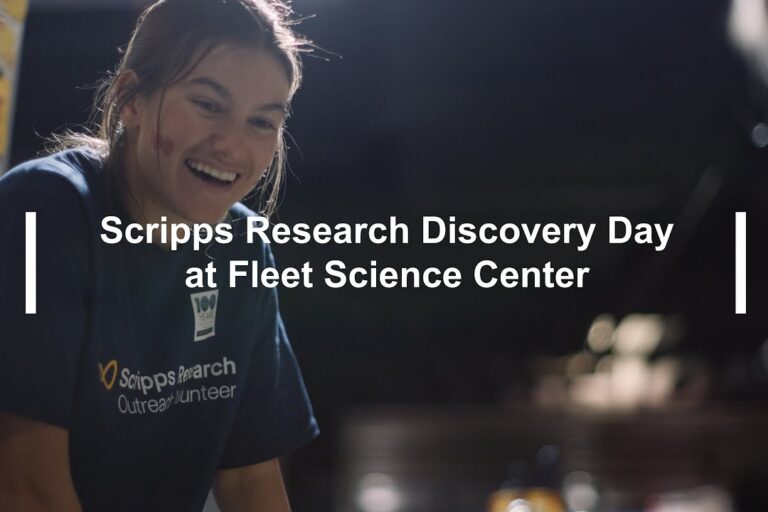
Scripps Research Discovery Day at Fleet Science Center 2024
On November 10, 2024, Scripps Research continued its year of centennial celebrations with an afternoon of interactive discovery at the Fleet Science Center in San Diego’s Balboa Park. The event coincided with the annual World Science Day for Peace and Development and highlighted the renowned institute’s 100-year anniversary.
-
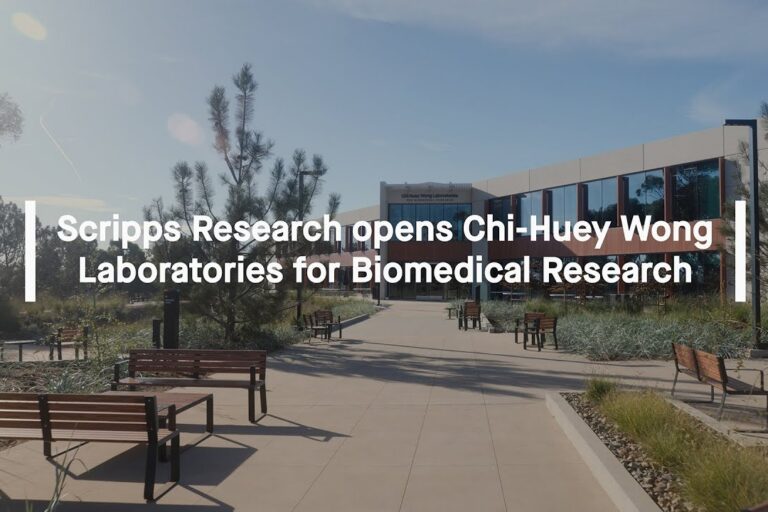
Opening the Chi-Huey Wong Laboratories for Biomedical Research
Scripps Research leadership, philanthropists and scientists celebrated the recent dedication of the new Chi-Huey Wong Laboratories for Biomedical Research on October 23, 2024, with a special ribbon-cutting ceremony and reception. Philanthropic support from several donors made this exciting addition to Scripps Research’s award-winning Hazen campus possible. Notably, Samuel Yin, Taiwanese businessman, prominent philanthropist and creator of the Tang Prize, provided generous seed funding to construct the new facility. His son, Chung-Yao Yin, attended the event and delivered remarks on his father’s behalf. Professor Chi-Huey Wong, the building’s namesake, also attended, as well as Scripps Research supporter Jim Zolin, who named the building’s first-floor conference room. The state-of-the-art Chi-Huey Wong Laboratories is one of the largest facilities built by the institute and marks a significant milestone in Scripps Research’s efforts to enable interdisciplinary collaborations across chemical and life sciences.
-

Peering into the mitochondria to reveal cellular stress and disease
The mitochondria are well known for being cellular “powerhouses,” given their important role in energy generation. Yet emerging research is now suggesting these organelles also play a key role as the stress-sensors for the cell. In this Front Row lecture, Scripps Research assistant professor Danielle Grotjahn explored how mitochondria change shape in response to different genetic and environmental stressors. By harnessing cutting-edge imaging technologies to examine mitochondria in these never-before-seen-ways, Grotjahn is revealing how these organelles can predict overall cellular health and even disease, including neurodegenerative disorders and cancer.
-

How do you feel? Molecules that sense touch and other pressures
The inner workings of the brain have eluded neuroscientists for ages—including how we perceive sensations such as touch, pain, sound and even blood flow. In this Front Row lecture, Scripps Research professor and Nobel laureate Ardem Patapoutian discussed the molecular sensors that enable the mind to interpret different physical and chemical stimuli. These discoveries—for which Patapoutian was awarded the 2021 Nobel Prize in Physiology or Medicine—are helping answer long-standing questions in neuroscience, such as how cells communicate with each other, how we sense our body in time and space, how these sensors impact different diseases and more.
-
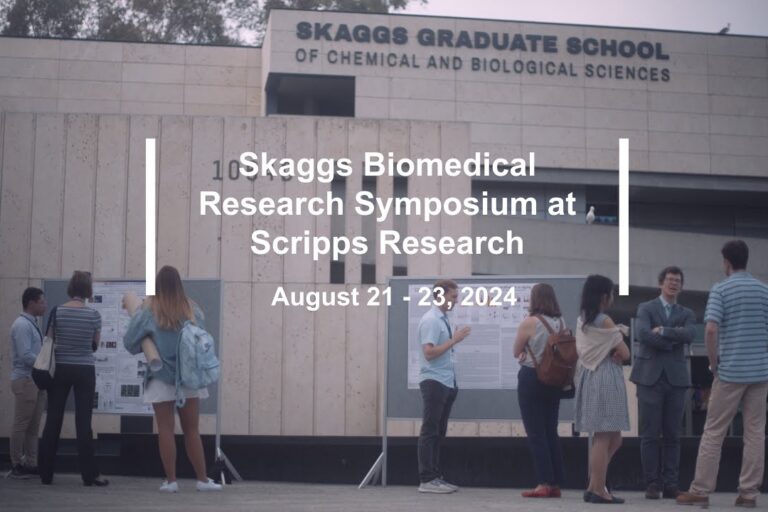
Skaggs Biomedical Research Symposium at Scripps Research
Students, faculty, and leadership from seven institutions across the west came together at Scripps Research for the 2024 Skaggs Biomedical Research Symposium—a celebration of life-changing innovations originating from our labs. Throughout three days of oral presentations, poster sessions and networking, participants shared and explored the groundbreaking science made possible by the generosity of the Skaggs family.
-

How donations empower future scientists | The Skaggs family’s impact
Why are donations important in empowering the future leaders of science? As a nonprofit organization, Scripps Research relies on generous contributions from individuals, foundations and corporations to support our many biomedical research and educational programs, including our top-10 ranked doctoral program. The most impactful and enduring of these contributions came from the Skaggs family, who have a long and storied history of supporting nonprofit biomedical research and education programs across the western United States. In 2018, Scripps Research announced that the Skaggs family made a lead gift through The ALSAM Foundation toward the institute’s $100 million campaign to establish endowed fellowships for students in its Graduate Program. In honor of this gift, the program was renamed the Skaggs Graduate School of Chemical and Biological Sciences.
-
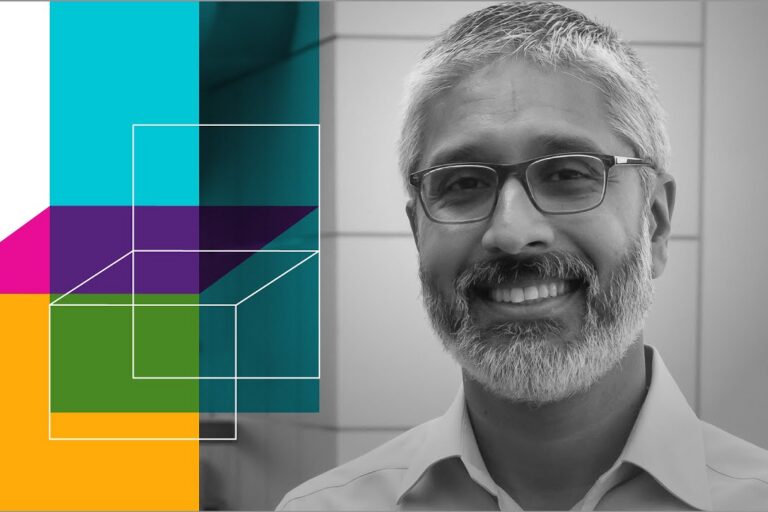
Delivering medicines for a global population
Infectious diseases like tuberculosis and malaria pose an ever-increasing risk to communities around the world. Meanwhile, a lack of investment, long treatment protocols and drug resistance have stymied innovation in this area. In this Front Row lecture, Vice President of Medicinal Chemistry Arnab Chatterjee discussed how the Calibr-Skaggs Institute of Innovative Medicines—the drug discovery and development arm of Scripps Research—is using innovative new approaches and technologies to overcome these historic barriers. His work at the Calibr-Skaggs Institute is helping accelerate the delivery of safe, effective and accessible medicines to countries spanning the globe.
-

Regenerating tissues to treat disease
Regenerative medicine involves harnessing the body’s own capacity to repair tissues and organs. In this Front Row lecture, Associate Professor Michael Bollong shared how he's identifying and targeting the pathways controlling regeneration. By combining traditional drug discovery tools with modern biological techniques, Bollong and his lab are developing novel medicines that can intervene in the processes that cause a spectrum of human diseases and medical conditions, including heart disease, inflammatory disease and fibrosis.
-
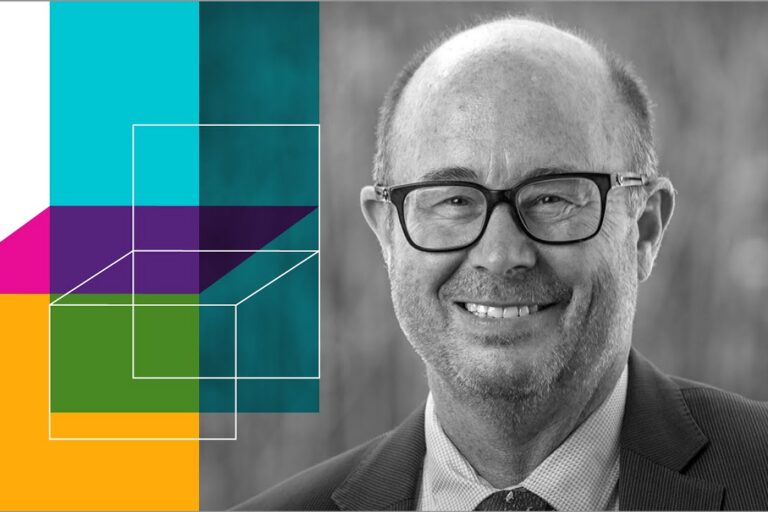
Fixing the misfolded proteins that cause dementia and heart failure
All proteins have a correct way of “folding” themselves into their 3D structures. When this folding process goes awry, including processes leading to protein misassembly, a number of devastating diseases can result. In this Front Row lecture, Scripps Research professor Jeffery Kelly shared how he's developing novel therapeutic strategies to target these protein misfolding diseases, which lead to deterioration of the heart and brain. His multi-disciplinary research has already led to the development of an FDA-approved drug available in the pharmacy called tafamidis (Vyndaqel® and Vyndamax®): a medicine that slows the progression of the neurodegenerative disease familial amyloid polyneuropathy and the degenerative heart disease called TTR cardiomyopathy.
-

Front Row spotlight with Jeffery Kelly
Scripps Research professor Jeffery Kelly received an unexpected visit from a patient whose life was dramatically improved by tafamidis—a revolutionary drug for treating neurodegenerative and heart diseases, developed by Kelly himself. Kelly is a leading figure at Scripps Research, spearheading efforts to address some of the most pressing medical challenges, including Alzheimer’s and various amyloid diseases. His cutting-edge research on protein misfolding has not only led to the development of tafamidis but has also broadened our understanding of protein aggregation disorders.