Topic: Drug Discovery
-
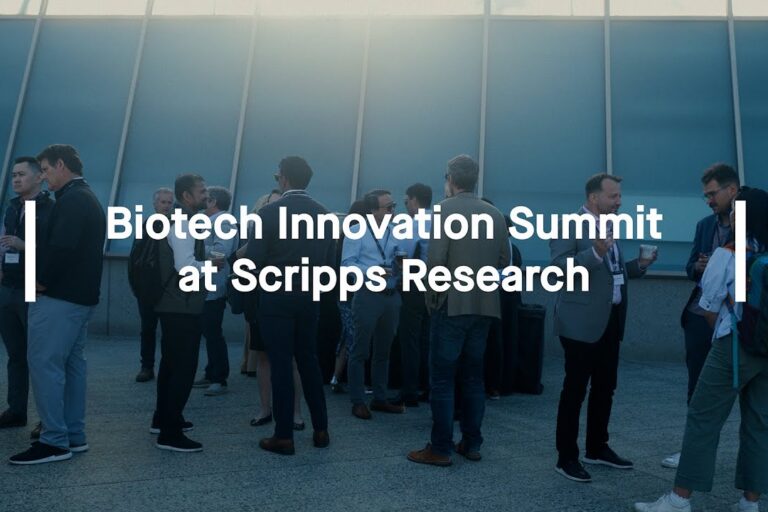
Biotech Innovation Summit 2025 | Scripps Research
The second annual Scripps Research Biotech Innovation Summit convened in La Jolla this October, bringing together thought leaders from across the biotech spectrum for a dynamic program of keynote presentations, fireside chats, pitches and collaborative networking opportunities. Event attendees engaged directly with Scripps Research investigators pioneering early-stage innovation and the programming showcased how strategic partnerships between academia and industry can transform breakthrough discoveries into therapies that address urgent medical needs.
-
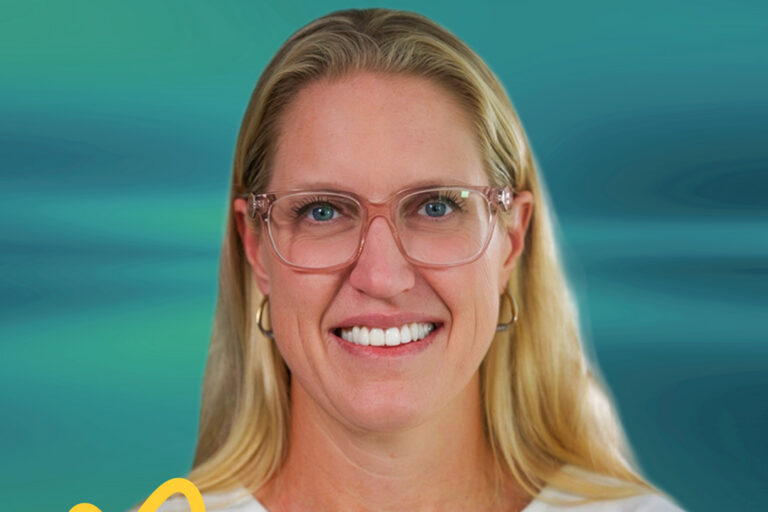
What’s next for IBD care: Insights from a surgeon-scientist
The data is clear: inflammatory bowel diseases like ulcerative colitis and Crohn’s are on the rise worldwide. In this episode, we sit down with Dr. Amy Lightner—VP of Clinical Development at Calibr-Skaggs and colorectal surgeon at Scripps Clinic—to explore what drives these diseases, an upcoming phase 2 clinical trial for a new regenerative medicine, and how she balances life between the operating room and the research lab.
-
A new metastatic breast cancer trial with a “switchable” CAR-T therapy
The Calibr-Skaggs Institute for Innovative Medicines, the drug development division of Scripps Research, announced a milestone in cancer treatment with the dosing of the first patient in a phase 1 trial evaluating CLBR001 + ABBV-461, a modular, switchable chimeric antigen receptor T cell (sCAR-T) therapy in patients with advanced or metastatic breast cancer who have no suitable treatment options. This is the first study of the sCAR-T platform in solid tumors. CAR-T therapy has been transformative for patients with hematological malignancies who failed numerous prior treatments. However, conventional CAR-T therapies have not yet been as successful at treating patients with solid tumors. This challenge is what Calibr-Skaggs’ switchable CAR-T cell therapy platform was designed to address.
-
Precision immunotherapy: How “switchable” CAR-Ts work in cancer and autoimmune diseases
What if we could control powerful CAR-T cell therapies like flipping a switch? At the Calibr-Skaggs Institute for Innovative Medicines at Scripps Research, we're pioneering a next-generation "switchable" CAR-T (sCAR-T) platform—designed to tackle cancer and autoimmune diseases with greater precision, safety and durability. Traditional CAR-T has been highly successful, but multiple barriers remain: off-target toxicity, T-cell ‘exhaustion’ (weakening of CAR-T cell response over time), and manufacturing challenges restrict the widespread use and application of traditional CAR-T to solid tumors. Our platform features a universal design with antibody-based “switches” that are selective for multiple disease-related targets—increasing specificity while reducing potential off-target effects. Preliminary results from our phase 1 trial in B-cell malignancies are promising, and we're now gearing up to expand into solid tumors and autoimmune conditions. Watch to see how this innovative approach could transform the future of immunotherapy.
-
Can a “switchable” CAR-T reverse autoimmune diseases—without chemotherapy? | Upcoming clinical trial
CAR-T cell therapy has shown remarkable promise in treating autoimmune diseases by effectively “resetting” the immune system—improving patient outcomes and reducing the need for lifelong immunosuppressive drugs. However, traditional CAR-T therapies require lymphodepletion, a chemotherapy-based process that can lead to significant side effects and limit accessibility. At the Calibr-Skaggs Institute for Innovative Medicines at Scripps Research, we're advancing a novel “switchable” CAR-T platform designed to eliminate the need for lymphodepletion. This approach may significantly reduce treatment-related toxicity and broaden the availability of CAR-T therapy to a wider patient population. Our upcoming phase 1 clinical trial will evaluate the safety and efficacy of our switchable CAR-T cell therapy (CLBR001) and antibody switch (SWI019) in patients with myositis, systemic sclerosis, lupus and rheumatoid arthritis—with the potential to expand into additional indications in the future.
-

Catalyst: the future of science and medicine
-
New regenerative lung therapy begins phase 1 trials | CMR316 & IPF treatment
The Calibr-Skaggs Institute for Innovative Medicines, part of Scripps Research, has begun testing a new regenerative lung therapy called CMR316. This inhaled treatment could change the way we treat lung diseases like idiopathic pulmonary fibrosis (IPF) and potentially even chronic obstructive pulmonary disease by stimulating stem cells to restore damaged lung tissue. In this phase 1 clinical trial, they're checking the safety and effects of this once-weekly drug in both healthy volunteers and IPF patients.
-

Delivering medicines for a global population
Infectious diseases like tuberculosis and malaria pose an ever-increasing risk to communities around the world. Meanwhile, a lack of investment, long treatment protocols and drug resistance have stymied innovation in this area. In this Front Row lecture, Vice President of Medicinal Chemistry Arnab Chatterjee discussed how the Calibr-Skaggs Institute of Innovative Medicines—the drug discovery and development arm of Scripps Research—is using innovative new approaches and technologies to overcome these historic barriers. His work at the Calibr-Skaggs Institute is helping accelerate the delivery of safe, effective and accessible medicines to countries spanning the globe.
-

Regenerating tissues to treat disease
Regenerative medicine involves harnessing the body’s own capacity to repair tissues and organs. In this Front Row lecture, Associate Professor Michael Bollong shared how he's identifying and targeting the pathways controlling regeneration. By combining traditional drug discovery tools with modern biological techniques, Bollong and his lab are developing novel medicines that can intervene in the processes that cause a spectrum of human diseases and medical conditions, including heart disease, inflammatory disease and fibrosis.
-
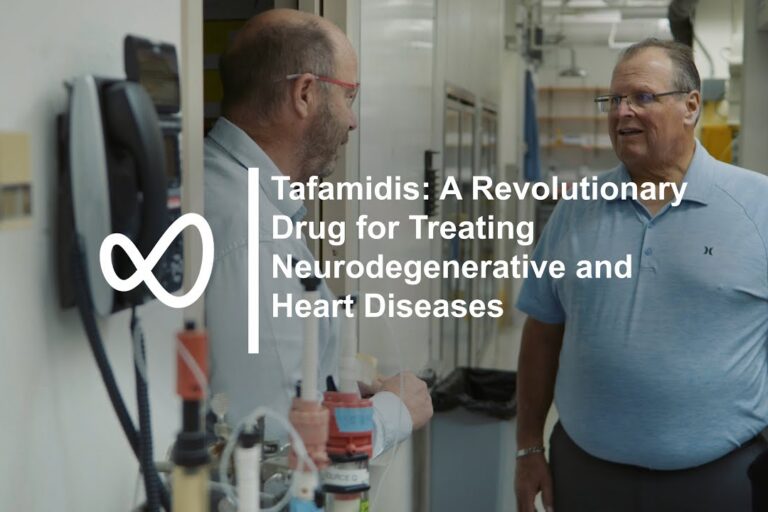
Tafamidis: A revolutionary drug for treating neurodegenerative and heart diseases
Scripps Research professor Jeffery Kelly received an unexpected visit from a patient whose life was dramatically improved by tafamidis—a revolutionary drug for treating neurodegenerative and heart diseases, developed by Kelly himself. Kelly is a leading figure at Scripps Research, spearheading efforts to address some of the most pressing medical challenges, including Alzheimer’s and various amyloid diseases. His cutting-edge research on protein misfolding has not only led to the development of tafamidis but has also broadened our understanding of protein aggregation disorders.