Topic: Calibr-Skaggs
-

Calibr-Skaggs awarded $5.1M by NIH to develop long-acting hepatitis B virus therapy
A new program aims to replace a daily HBV drug with once-monthly—or even quarterly—injections for people managing both HIV and HBV.
-

Calibr-Skaggs advances CLF065, a regenerative GLP-2 therapy, into two Phase 2 IBD studies
CLF065, a long-acting, once-weekly GLP-2 receptor agonist, advances in two inflammatory bowel disease indications. The studies aim to bring a regenerative treatment option to patients living with IBD, who currently have few therapies that repair the damaged intestinal lining at the root of their disease.
-
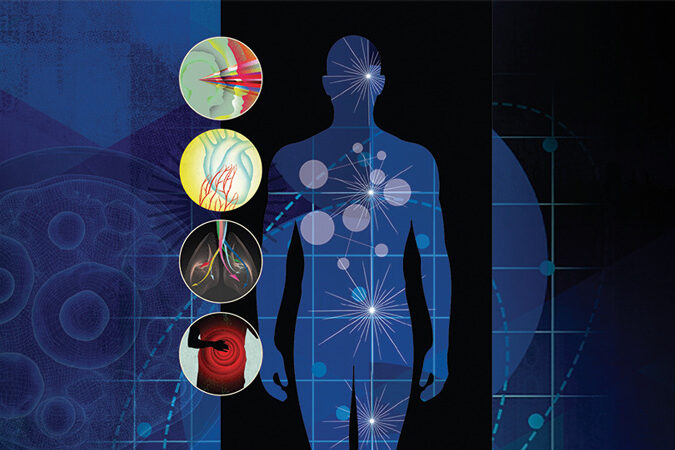
Helping the body heal itself
-

Calibr-Skaggs and Kainomyx launch collaboration to pioneer novel malaria treatments
Partnering to speed up the discovery of new malaria drugs that target parasite cytoskeletal pathways, with a focus on global access and affordability.
-

What’s next for IBD care: Insights from a surgeon-scientist
The data is clear: inflammatory bowel diseases like ulcerative colitis and Crohn’s are on the rise worldwide. In this episode, we sit down with Dr. Amy Lightner—VP of Clinical Development at Calibr-Skaggs and colorectal surgeon at Scripps Clinic—to explore what drives these diseases, an upcoming phase 2 clinical trial for a new regenerative medicine, and how she balances life between the operating room and the research lab.
-

Reprogramming the immune system: Precision immunotherapy for cancer and autoimmune disease
Your immune system is your body’s natural defense, capable of identifying what belongs and what doesn’t. But when it falters, it can let cancer grow unchecked or mistakenly attack your own healthy tissues, leading to autoimmune diseases. What if we could reprogram the immune system to tip the balance in our favor, gaining an advantage over both cancers and autoimmune disorders? In this Front Row lecture, Calibr-Skaggs’ vice president of biologics, Travis Young, shared how Scripps Research is using genetic engineering to reprogram patients’ own immune cells to create personalized “switchable” CAR-T cell therapies. This approach represents a new class of precision immunotherapy designed to induce deep and durable remissions in patients with a wide range of cancers, from lymphoma to breast cancer, as well as in chronic autoimmune conditions such as lupus, rheumatoid arthritis and systemic sclerosis. Young explained how this breakthrough strategy works and what it could mean for the future of medicine.
-

Researchers identify promising new compound to treat tuberculosis
Study led by Scripps Research, Texas A&M and additional institutions highlights that the world’s deadliest infectious disease needs novel, effective antibiotics.
-
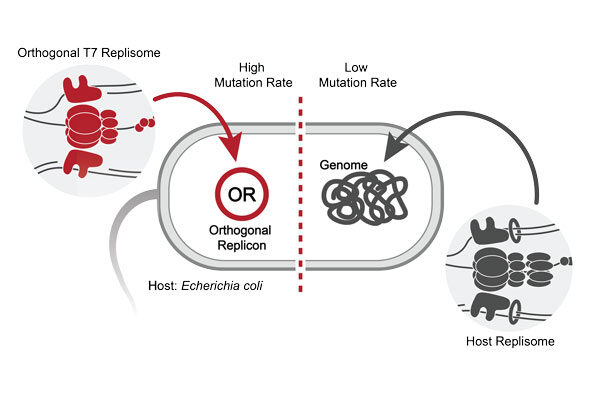
Scientists build an “evolution engine” to rapidly reprogram proteins
A new platform developed at Scripps Research enables fast, scalable protein evolution—opening the door to new therapies and diagnostics, and to predicting resistance mutations across many disease areas.
-

Viome and Scripps Research partner to develop first at-home RNA screening test to prevent colon cancer before it strikes
First-of-its-kind 1,000-patient clinical study will use RNA-based stool and saliva tests to detect colon polyps — early warning signs of colorectal cancer — before they become cancerous.Study aims to enhance colorectal cancer prevention by identifying polyp molecular signals, offering improved sensitivity over at-home DNA tests, which have limited ability to detect precancerous lesions.
-

Calibr-Skaggs doses first patient with switchable CAR-T cell therapy in a phase 1 trial for metastatic breast cancer
CLBR001 + ABBV-461 is a novel, investigational, two-part, switchable chimeric antigen T cell (sCAR-T) immunotherapy designed to treat solid tumors.