Two Scripps Research assistant professors named 2026 Baxter Young Investigators
June 11, 2026

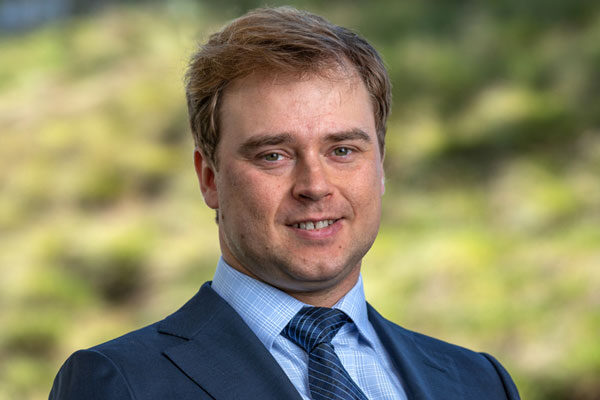
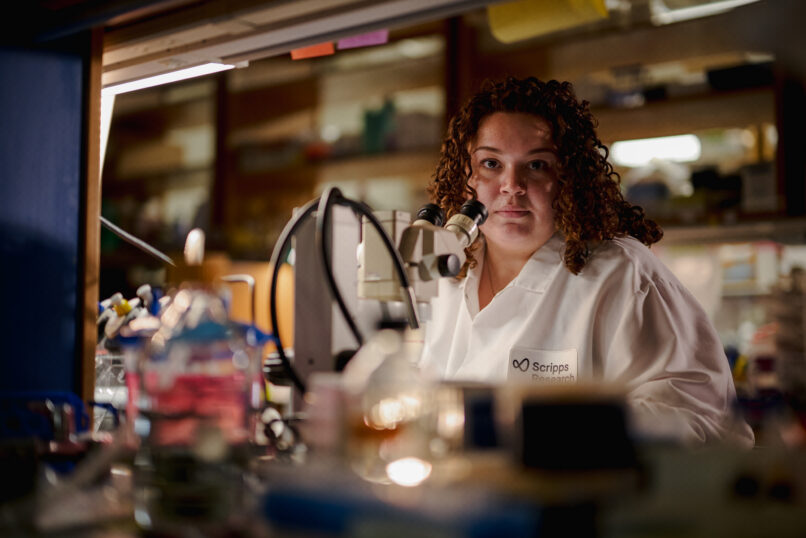
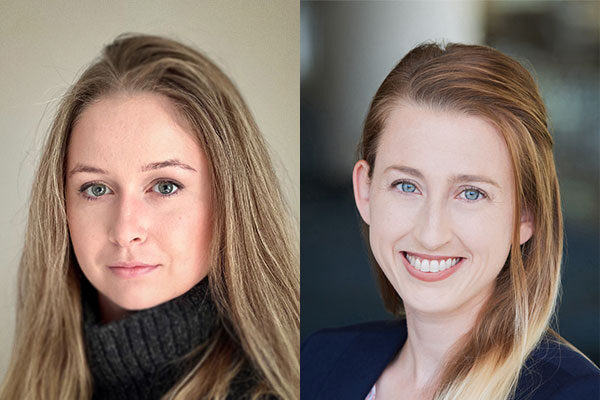
From left, Shannon Miller and Ilia Droujinine. Credit: Scripps Research
LA JOLLA, CA—What do decoding communication between organs and reimagining the future of genome editing have in common? They’re among the scientific questions being pursued by this year’s Baxter Young Investigators Award recipients: Ilia Droujinine, assistant molecular and cellular biology professor, and Shannon Miller, assistant chemistry professor, respectively.
The Donald E. and Delia B. Baxter Foundation annually supports early-career researchers whose work in science and technology holds promise for improving patient care. Through bold ideas and impactful research, Droujinine and Miller now join several other Scripps Research scientists who have been previously recognized by the foundation.
With support from the award, Droujinine will investigate how organs communicate with each other, and what happens when these signaling networks break down in metabolic and inflammatory diseases and aging. Despite having specialized functions, human organs coordinate numerous biological processes including metabolism, growth, nutrient absorption and reproduction. Disruptions to these communication pathways can contribute to disease, yet many of the mechanisms driving these changes remain unknown. To better understand these networks, Droujinine has previously developed a platform in which all proteins that are secreted from a specific organ are labeled and easily identifiable in another organ. Droujinine’s team labels various organs in the body to determine how protein secretions from these organs are regulated. By revealing these mechanisms, this work could enable diagnostic biomarkers and disease-modifying therapeutics that target the underlying drivers of metabolic diseases, ultimately improving how they are diagnosed and treated.
“Our organs are constantly sending signals to each other to keep the body operating properly. In metabolic and inflammatory diseases, those signals become disrupted, which itself can further progress the disease,” Droujinine says. “However, we don’t yet know exactly how this happens. We want to uncover these yet-unknown mechanisms and ideally use the knowledge that we learn to improve how the diseases are treated.”
Shannon Miller is a researcher working at the frontiers of genome editing and protein engineering. While genome editing holds promise as a one-time curative therapy by permanently correcting the DNA mutation that causes a genetic disease, significant hurdles still limit broader clinical use. Miller is committed to overcoming these barriers. For example, she is developing strategies that enable more efficient gene insertion and support a “mutation-agnostic” approach—allowing a single edit to potentially treat the hundreds of distinct mutations that can underlie a genetic disorder. Her work also addresses challenges related to safely and precisely targeting cells and tissues, as well as overcoming immune responses that undermine gene editing effectiveness. Using protein engineering, directed evolution and protein design, Miller and her team are identifying new strategies and optimizing existing methods to engineer human stem cells and evaluate one-time, mutation-agnostic, curative therapies.
“Over the past century, we have made significant progress toward our ability to probe, interrogate and understand the drivers of human health and disease,” Miller adds. “While we now understand that a majority of human disease has genetic causes, progress toward our ability to correct these genetic changes remains limited. I aim to change that.”

Shannon Miller: Gene editing, CRISPR, and drawing the line between science and fiction
Thanks to revolutionary technologies like CRISPR, we’re now living in an age where it’s becoming possible to rewrite the very building blocks of life itself—our DNA. We sit down with Scripps Research Fellow and CRISPR expert Shannon Miller, PhD, to discover how these gene editing technologies are poised to reverse a range of diseases. Listen in as we explore Shannon’s unique journey into science—beginning not with a single eureka moment, but instead with a passion for creativity and discovery.