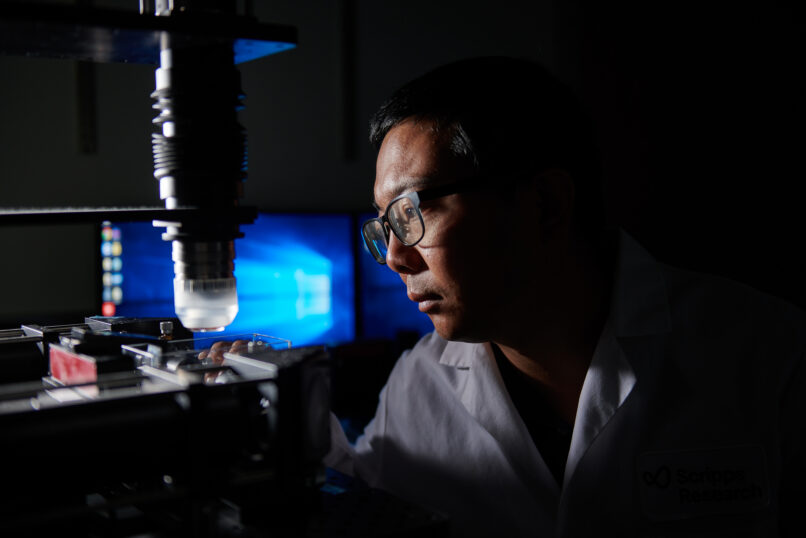
Scripps Research chemist Donna Blackmond elected to the Royal Society of the U.K.
May 16, 2024

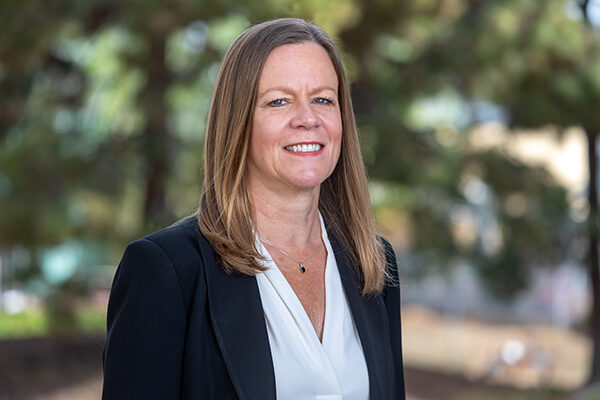
Donna Blackmond, PhD. Credit: Scripps Research
LA JOLLA, CA — Donna Blackmond, PhD, a renowned Scripps Research professor and the John C. Martin Endowed Chair in Chemistry, has been elected as a fellow of the Royal Society of the United Kingdom, one of the world’s oldest scientific academies.
The Royal Society dates to the 17th century when King Charles II granted it a royal charter. The title of a Royal Society Fellow, or FRS, is a rare honor limited to top leaders in their fields, including Sir Isaac Newton. Key missions of the society include promoting scientific research in the U.K. by fostering international cooperation, informing public policy, and improving communication between scientists and the public.
“It’s a privilege to be honored by such a prestigious and longstanding organization,” says Blackmond. “The society embodies the spirit of science, and I am humbled to be part of this learned society.”
Blackmond’s research has spanned many disciplines, including chemical engineering, organic chemistry and physical organic chemistry. At Scripps Research, Blackmond has accomplished groundbreaking work on the molecular geometry that exists in the building blocks of the natural world—a property known as “chirality”—which has implications ranging from designing effective therapeutics to the very origins of life on Earth. Most recently, she published two studies in Nature and the Proceedings of the National Academy of Sciences suggesting how this molecular “handedness” emerged in early biology.
Prior to joining Scripps Research in 2010, Blackmond served in numerous roles, including as professor and chair in catalysis at Imperial College London, and as associate professor of chemical engineering at the University of Pittsburgh, where she also earned both her bachelor’s degree and master’s degree in chemical engineering in the early 1980s. She earned her doctorate in chemical engineering from Carnegie Mellon University.
Blackmond has also carried out research in a pharmaceutical setting, serving as the associate director of technical operations at Merck, where she spearheaded a group called the Reaction Engineering Laboratory, accelerating drug development and reducing production costs through fundamental studies of organic reaction mechanisms. While there, she developed a technique called Reaction Progress Kinetic Analysis (RPKA), which significantly streamlines mechanistic studies and process development of chemical reactions. This method is now an academic and industry-wide standard for reactions of pharmaceutical interest, and most of her current research efforts are devoted to kinetic and mechanistic studies of complex organic catalytic reactions.
Blackmond has held academic positions in the U.S., Germany and the U.K. Throughout her career, she has received numerous honors and awards, including the Max-Planck Gesellschaft Award for Outstanding Women Scientists, the Royal Society Wolfson Research Merit Award, the Arthur C. Cope Scholar and the James Flack Norris Awards, both from the American Chemical Society, an Alexander von Humboldt-Stiftung Forschungspreis, and the IUPAC Award for Distinguished Women in Chemistry and Chemical Engineering.
She was elected to the National Academy of Engineering in 2013, the American Academy of Arts and Sciences in 2016, the German National Academy of Sciences in 2020, and the National Academy of Sciences in 2021.

Donna Blackmond: Solving the origins of life and other mysteries in chemistry
Donna Blackmond never thought her career would lead to solving how life first formed on the prebiotic Earth. But as she points out in this episode of Science Changing Life, does any scientist start out knowing where their research will take them? Blackmond, who is a professor and the John C. Martin Endowed Chair in Chemistry at Scripps Research, shares how her wide-ranging background across chemistry and chemical engineering is helping answer some of today’s biggest questions in science and medicine.
Exploring the atomic World: A century of science changing life
Chemistry is known as the “central science,” playing a fundamental role in enabling and integrating other scientific disciplines. Scripps Research is home to some of the world’s leading chemists, who advance our ability to design and produce molecules, develop life-changing therapies, and tackle global sustainability challenges. Former Scripps Research president Richard Lerner was integral to establishing the Institute as a world leader in chemistry and chemical biology. Serving as the institute’s leader from 1987 through 2012, Lerner believed chemistry and biology were inextricably linked, and studying these connections would unlock a new era in science and medicine.