Scripps Research chemist receives prestigious Royal Society of Chemistry Award
May 8, 2018
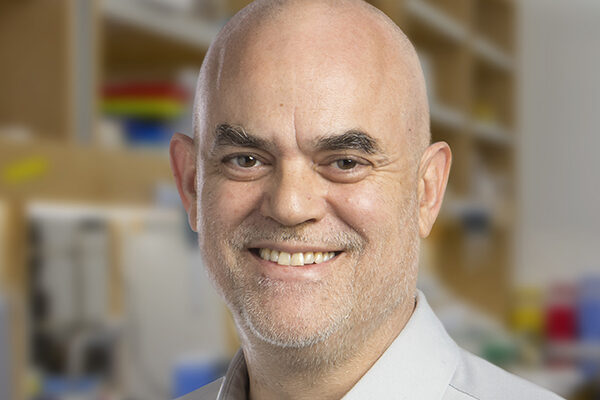
Floyd Romesberg, professor at The Scripps Research Institute
Romesberg’s work supports the development of new molecules that add to the genetic code. His recent studies have expanded the natural library of four DNA bases to include two artificial bases. This advance in bioorganic chemistry and synthetic biology has fueled new research to produce unnatural proteins and semi-synthetic organisms for use in drug development.
“I am honoured to receive the RSC Bioorganic Chemistry Award,” says Romesberg. “As an undergraduate and graduate student, my studies were focused strictly on chemistry, especially physical organic chemistry, but as a postdoctoral student working in the lab of Peter Schultz (now Scripps Research president and CEO) at UC Berkeley, I got a glimpse of how addressing biological problems really benefits from the rigor of physical organic approaches, and I have strived to maintain the same rigor in my independent career.
“My group’s work to develop a third base pair and deploy it in DNA in a living cell began in 1998. The project most recently culminated with the demonstration that our unnatural base pair not only can be replicated and maintained in the genome of bacteria, but also that bacteria can be used in an unnatural codon to produce proteins with more than the 20 natural amino acids, work which truly exemplifies what can be achieved by combining chemistry and biology.”
RSC awards also acknowledge the importance of teamwork across the chemical sciences, and the abilities of individuals to develop successful collaborations. According to Robert Parker, PhD, chief executive of the Royal Society of Chemistry:
“The chemical sciences are vital for the wellbeing of our world and chemical scientists help to change people’s lives for the better. That’s why we’re so proud to celebrate the innovation and expertise of our community through our Prizes and Awards.
“This year’s inspiring and influential winners come from a range of specialisms, backgrounds, countries and communities. Each has done their bit to advance excellence in the chemical sciences – to improve the lives of people around the world now and in the future.”
Calibr-Skaggs advances CLF065, a regenerative GLP-2 therapy, into two Phase 2 IBD studies
CLF065, a long-acting, once-weekly GLP-2 receptor agonist, advances in two inflammatory bowel disease indications. The studies aim to bring a regenerative treatment option to patients living with IBD, who currently have few therapies that repair the damaged intestinal lining at the root of their disease.
Advancing the vision: An experiment in rethinking the nonprofit biomedical research model
In his Front Row lecture, President and CEO Pete Schultz highlighted the progress Scripps Research has made in pioneering a new model for non-profit biomedical research. He described how integrating basic science and translational research under one roof is accelerating next-generation medicines—from new immunotherapies for cancer and innovative medicines for infectious disease to regenerative treatments for heart, lung and intestinal tissues. At a time of uncertainty in federal science funding, this model isn't only advancing human health but also helping to generate sustainable support for innovative scientific research and for training the next generation of scientific leaders.
Viome and Scripps Research partner to develop first at-home RNA screening test to prevent colon cancer before it strikes
First-of-its-kind 1,000-patient clinical study will use RNA-based stool and saliva tests to detect colon polyps — early warning signs of colorectal cancer — before they become cancerous.Study aims to enhance colorectal cancer prevention by identifying polyp molecular signals, offering improved sensitivity over at-home DNA tests, which have limited ability to detect precancerous lesions.
Enzyme engineering opens door to novel therapies for Parkinson’s, cancers and other hard-to-target protein diseases
Researchers reprogrammed a botulinum toxin protease to selectively break down disease-causing proteins in human cells, providing proof of concept for developing new therapies for a wide range of illnesses.