LA JOLLA, CA – January 9, 2018 – The California Institute for Biomedical Research (Calibr), the nonprofit drug discovery affiliate of The Scripps Research Institute (TSRI), today announced that it will begin treating osteoarthritis (OA) patients in March with an investigational drug developed as a collaboration between the two institutes. Known as KA34, the drug is a small molecule that “encourages adult stem cells already residing in the joint to mature toward chondrocytes, the cells that produce and maintain healthy cartilage,” explains Peter Schultz, PhD, president of TSRI and Calibr. “Current medicines only treat the symptoms of OA,” he adds, “while KA34 was created to address its underlying causes through the regeneration of cartilage. We’re very enthusiastic about its potential to restore mobility and quality of life to individuals with OA.”
An investigational new drug (IND) application detailing the first in-patient study with KA34 was accepted by the FDA in May of 2017. The California Institute for Regenerative Medicine (CIRM), which supported the KA34 preclinical research effort from inception, has awarded Calibr an additional $8.4 million to test KA34 in a Phase 1 trial in approximately 60 OA patients.
According to the Arthritis Foundation, OA is the most common type of arthritis, affecting more than 30 million people in the U.S. The foundation estimates that between 2008 and 2011, earning losses due to OA have cost an estimated $80 billion.
“KA34 is a flagship program that represents our combined mission at TSRI and Calibr,” says Schultz, “which is to accelerate the creation and delivery of much needed new medicines to patients suffering from disease.”
Calibr-Skaggs advances CLF065, a regenerative GLP-2 therapy, into two Phase 2 IBD studies
CLF065, a long-acting, once-weekly GLP-2 receptor agonist, advances in two inflammatory bowel disease indications. The studies aim to bring a regenerative treatment option to patients living with IBD, who currently have few therapies that repair the damaged intestinal lining at the root of their disease.
Advancing the vision: An experiment in rethinking the nonprofit biomedical research model
In his Front Row lecture, President and CEO Pete Schultz highlighted the progress Scripps Research has made in pioneering a new model for non-profit biomedical research. He described how integrating basic science and translational research under one roof is accelerating next-generation medicines—from new immunotherapies for cancer and innovative medicines for infectious disease to regenerative treatments for heart, lung and intestinal tissues. At a time of uncertainty in federal science funding, this model isn't only advancing human health but also helping to generate sustainable support for innovative scientific research and for training the next generation of scientific leaders.
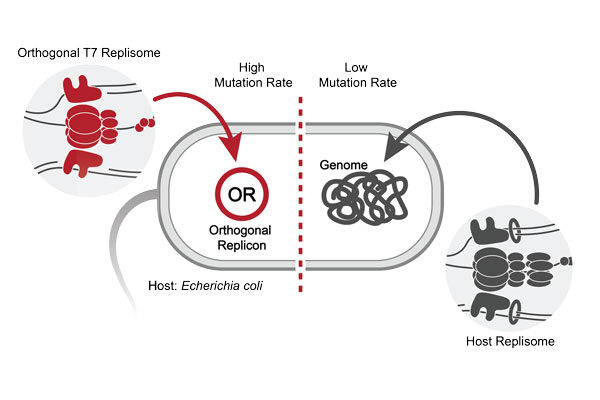
Scientists build an “evolution engine” to rapidly reprogram proteins
A new platform developed at Scripps Research enables fast, scalable protein evolution—opening the door to new therapies and diagnostics, and to predicting resistance mutations across many disease areas.
Viome and Scripps Research partner to develop first at-home RNA screening test to prevent colon cancer before it strikes
First-of-its-kind 1,000-patient clinical study will use RNA-based stool and saliva tests to detect colon polyps — early warning signs of colorectal cancer — before they become cancerous.Study aims to enhance colorectal cancer prevention by identifying polyp molecular signals, offering improved sensitivity over at-home DNA tests, which have limited ability to detect precancerous lesions.
Welch Award Honors 2 Scientists for Innovations in Chemical Biology
President and CEO Pete Schultz is honored for expanding the genetic code and the development and application of large scale “diversity-based” approaches to the discovery of novel proteins, drugs and modern materials.