News Category: Press Release
-

Mutated coronavirus shows significant boost in infectivity
A tiny genetic mutation to the virus that causes COVID-19 leads to a significant change in the virus’ ability to infect cells, according to new research from Hyeryun Choe, PhD, and Michael Farzan, PhD.
-

Data scientists inventing new tools to rapidly analyze the spread, evolution of novel coronavirus
Scripps Research is collaborating with top computational scientists at Johns Hopkins University and UCLA.
-
The D614G mutation in the SARS-CoV-2 spike protein reduces S1 shedding and increases infectivity
-
Scientists in solidarity
On behalf of the institute, the leadership team at Scripps Research voices its recommitment to expanding diversity and inclusion across its campuses.
-
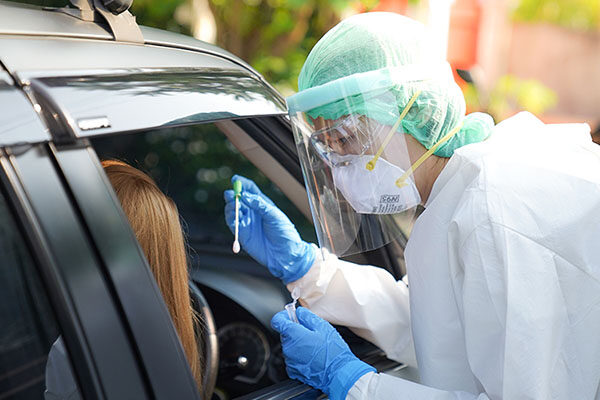
Up to 45 percent of SARS-CoV-2 infections may be asymptomatic, new analysis finds
Analysis of data from 16 groups of COVID-19 patients suggest “silent” carriers may exacerbate efforts to stop spread of the disease
-
Powerful drug discovery technique leads to potential compound for obesity and diabetes
Scientists discovered a way to enhance the activity of an enzyme long suspected of playing a role in metabolism. In a study involving mice, the compound reversed signs of diabetes.
-

A Statement from the Institute
Response to essay published in Angewandte Chemie.
-
In pivotal phase 3 trial, ozanimod demonstrates a clear benefit among patients with moderate-to-severe ulcerative colitis
The drug, developed at Scripps Research, recently gained U.S. and European regulatory approval for the treatment of multiple sclerosis. It is also being studied for Crohn’s disease.
-
Ozanimod, a drug created at Scripps Research, gains European Commission approval for treatment of multiple sclerosis
The news comes less than two months after the therapy gained approval from the U.S. Food and Drug Administration. Ozanimod is also in advanced clinical development for moderate-to-severe ulcerative colitis and Crohn’s disease.
-
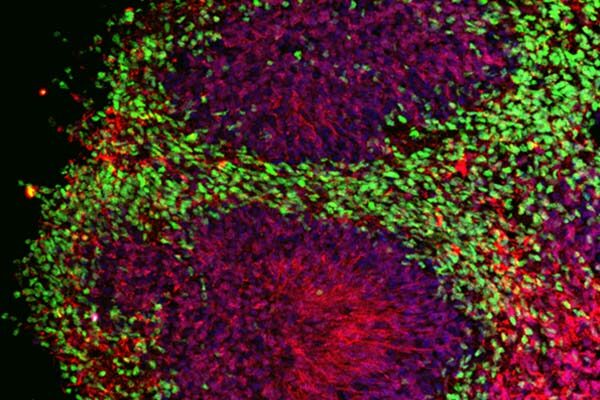
In human mini-brain experiments, drug preserves and rebuilds nerve connections that are lost to Alzheimer’s
In experiments on human 'mini-brains,' the drug preserved nerve connections that are lost to Alzheimer’s. The drug is also being evaluated for COVID-19, as it is known to inhibit viral activity.