

News Category: Press Release
-

Developing a vaccine for the “zombie drug” xylazine
Scripps Research chemical biologists design an early “proof-of-concept” vaccine that could lead to the first effective treatment of xylazine overdose in people.
-
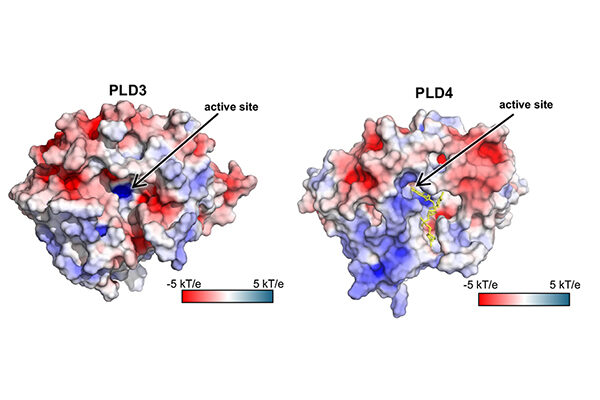
New enzyme models reveal key disease insights
Scripps Research scientists create near-atomic-level structural models of enzymes associated with autoimmune and inflammatory diseases, including lupus and Alzheimer’s.
-

How blocking a neural receptor responsible for addiction could reduce alcohol use
A Scripps Research team found that a new therapeutic that targets the kappa opioid receptor in the brain may reduce alcohol dependence.
-
How neural inhibition could reduce alcohol use
A Scripps Research team shows that suppressing the activity of certain stress neurons may decrease alcohol use—but not anxiety—in comorbid cases of post-traumatic stress disorder and alcohol use disorder.
-
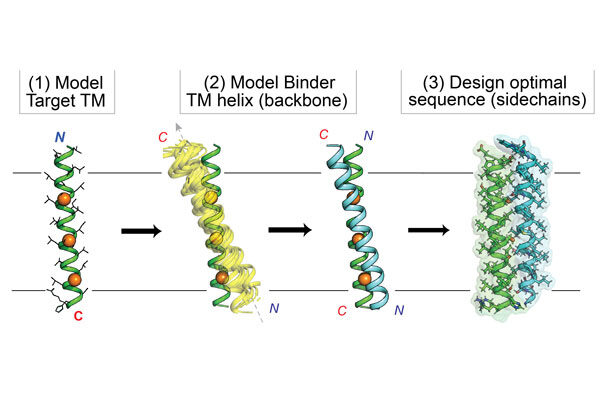
New computational strategy boosts the ability of drug designers to target proteins inside the membrane
Customized-design approach could streamline the design of novel proteins targeting the hard-to-access cell membrane region.
-

Using wrist-worn activity trackers to help patients reduce long COVID symptoms
New Scripps Research trial aims to validate the use of wearables in guiding participants to effectively monitor mental, physical and emotional exertion—a strategy called pacing.
-

Scripps Research scientists honored with prestigious CZI awards to address diseases tied to aging
Christopher Parker and Giordano Lippi are unraveling the metabolic and protein mechanisms, respectively, that go awry in aging and disease—including Alzheimer’s.
-

Scripps Research scientists reveal how first cells could have formed on Earth
New phospholipid discovery brings researchers closer to understanding how primordial cells emerged during origin of life.
-
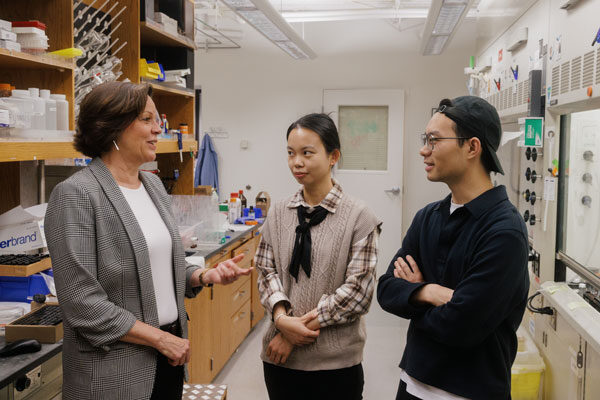
How molecular “handedness” emerged in early biology
Scripps Research chemists fill a major gap in origin-of-life theories.
-

Snaking toward a universal antivenom
Scripps Research scientists discovered antibodies that protect against a host of lethal snake venoms.